

(1) This Act may be cited as the Value Added Tax Act [Chapter 23:12].
(2) This Act shall come into operation on a date to be fixed by the President by statutory instrument. The Act was promulgated on the 2nd MAY 2003.Brought into force by SI 284/2003 – Editor.
No matches found.
ATLA's AI Assistant
Preamble
Preamble
Acts 12/2002; 10/2003; 18/04, 29/2004; 2/05, 8/2005; 6/06, 12/2006; 16/2007; 3/09, 5/09, 10/2009; 3/2010, *5/2010; 8/11, 9/2011; 4/12, 6/2012; 1/14, 5/14, 8/14, 11/2014; 8/15, 9/2015; 3/2016; 2/2017; 1/2018; 1/19, 4/19, 13/2019; 10/2020; 7/2021, 8/22,10/2022; 13/2023; and 2/2024.
ACT
To provide for taxation in respect of the supply of goods and services and the importation and exportation of goods; to provide for the repeal of the Sales Tax Act [Chapter 23:08]; and to provide for matters connected therewith.
ENACTED by the President and the Parliament of Zimbabwe.
[*Date of Commencement: 1st January 2004.]
PART I PRELIMINARY
1 Short title and date of commencement
2 Interpretation
(1) In this Act—
“ancillary transport services” means cargo inspection services, preparation of customs documentation and storage of transported goods or goods to be transported;
“association not for gain” means—
(a) any religious institution of a public character; or
(b) any other society, association, organisation or educational institution of a public character, whether incorporated or not, which—
(i) is carried on otherwise than for the purposes of profit or gain to any proprietor, member or shareholder; GTO Association v The Commissioner General of ZIMRA 19-HH-464
and
(ii) is, in terms of its memorandum, articles of association, written rules or other document constituting or governing the activities of that society, association or organisation—
A. required to utilise any property or income solely in the furtherance of its aims and objects; and;
B. prohibited from transferring any portion thereof directly or indirectly in any manner whatsoever so as to profit any person other than by way of the payment in good faith of reasonable remuneration to any officer or employee of the society, association or organisation for any services rendered to such society, association or organisation; and
C. upon the winding-up or liquidation of such society, association or organisation, obliged to give or transfer its assets remaining after the satisfaction of its liabilities to some other society, association or organisation with objects similar to those of the said society, association or organisation;
“Authority” means the Zimbabwe Revenue Authority established by section 3 of Chapter 23:11;
“business day” means any day which is not a Saturday, Sunday or public holiday;
“capital goods” means any asset, or any component of any asset, which is of a character subject to a deduction of expenditures incurred as provided in terms of paragraphs (c) and (f) of subsection (2) of section 15 of the Taxes Act;
“cash value”, in relation to the supply of goods supplied under an instalment credit agreement, means—
(a) where the seller or lessor is a banker or financier, an amount equal to or exceeding the sum of the cost to the banker or financier of the goods, including any cost of erection, construction, assembly or installation of the goods borne by the banker or financier and the tax leviable in terms of paragraph (a) of subsection (1) of section six in respect of such supply by the banker or financier;
or
(b) where the seller or lessor is a dealer, an amount equal to or exceeding the price, including tax, at which the goods are normally sold by him for cash or may normally be acquired from him for cash, including tax and any charge, including tax, made by the seller or lessor in respect of the erection, construction, assembly or installation of the goods if such charge is financed by the seller or lessor under the instalment credit agreement;
“Charging Act” means the Finance Act [Chapter 23:04] or any other enactment by which credits and rates of tax are fixed;
“clearing agent” means a person licenced or required to be licenced in terms of section 216A of the Customs and Excise Act [Chapter 23:02]; Definition inserted by the Finance Act 8/2015 w.e.f. 13th November, 2015.
“commercial rental establishment” means—
(a) accommodation in any hotel, motel, inn, boarding house, hostel or similar establishment in which lodging is regularly or normally provided to 5 or more persons at a daily, weekly, monthly or other periodic charge; or
(b) accommodation in any house, flat, apartment or room, other than accommodation in respect of which paragraph (a) or (c) apply which is regularly or systematically let or held for letting as residential accommodation for continuous periods not exceeding 45 days in the case of each occupant of such house, flat, apartment or room, if the total annual receipts and accruals from the letting of all thereof have exceeded the prescribed amount or there are reasonable grounds for believing that such total annual receipts and accruals will exceed that amount; or
(c) accommodation in any house, flat, apartment, room, caravan, houseboat, caravan or camping site which constitutes an asset, including a leased asset, of a business undertaking or a separately identifiable part of a business undertaking carried on by any person who—
(i) lets or holds for letting as residential accommodation 5 or more houses, flats, apartments, rooms, caravans, houseboats, camping or caravan sites in the course of such business undertaking;
(ii) derives total annual receipts and accruals from the letting of all such houses, flats, apartments, rooms, caravans, houseboats, camping and caravan sites which exceed the prescribed amount or there are reasonable grounds for believing that such total annual receipts and accruals will exceed that amount; and
(iii) regularly or normally lets or holds for letting as residential accommodation such houses, flats, apartments, rooms, caravans, houseboats, caravans or camping sites for continuous periods not exceeding 45 days in the case of each occupant; or
(d) … para (d) repealed by the Finance Act 10 of 2003 from the 1st January, 2004.
“connected persons” means—
(a) any natural person, including the estate of a natural person if such person is deceased or insolvent, and—
(i) any near relative of that natural person, being a near relative as defined in section 2 of the Taxes Act or the estate of any such relative if the relative is deceased or insolvent; or
(ii) any trust fund in respect of which any such near relative or such estate of such near relative is or may be a beneficiary; or
(b) any trust fund and any person who is or may be a beneficiary in respect of that fund; or
(c) any partnership or business registered in terms of the *Corporations Act; replaced by the Companies and Other Business Entities Act [Chapter 24:31] on the 13th February, 2020 -Editor
and—
(i) any member thereof; or
(ii) any other person where that person and a member of such partnership or business registered in terms of the Corporations Act, as the case may be, are connected persons in terms of this definition;
or
(d) any company other than a business registered in terms of the *Corporations Act, replaced by the Companies and Other Business Entities Act [Chapter 24:31] on the 13th February, 2020 -Editor
and—
(i) any person, other than a company, where that person, his spouse or minor child or any trust fund in respect of which that person, his spouse or minor child is or may be a beneficiary, is separately interested or 2 or more of them are in the aggregate interested in 5% or more of the company’s paid-up capital or 5% or more of the company’s equity share capital or 5% or more of the voting rights of the shareholders of the company, whether directly or indirectly; or
(ii) any other company the shareholders in which are mainly the same persons as the shareholders in the first-mentioned company, or which is controlled by the same persons who control the first-mentioned company; or
(iii) any person where that person and the person referred to in subparagraph (i) or his spouse or minor child or the trust fund referred to in that subparagraph or the other company referred to in subparagraph (ii) are connected persons in terms of this definition; or
(e) any separate trade, branch or division of a registered operator which is separately registered as a registered operator under section fifty-one and any other such trade, branch or division of the registered operator; or
(f) any branch, division or separate trade of an association not for gain which is deemed by subsection (5) of section twenty-three to be a separate person for the purposes of that section and any other branch, division or separate trade of that association, whether or not such other branch, division or separate trade is a registered operator; or
(g) any person and any superannuation scheme referred to in the definition of “financial services” the members of which are mainly the employees or office holders or former employees or office holders of that person;
“consideration”, in relation to the supply of goods or services to any person, includes any payment made or to be made, including any deposit on any returnable container and tax, whether in money or otherwise, or any act or forbearance, whether or not voluntary, in respect of, in response to, or for the inducement of, the supply of any goods or services, whether by that person or by any other person, but does not include any payment made by any person as an unconditional gift to any association not for gain: Law Society of Zimbabwe v ZIMRA 18-HH-409
Provided that a deposit, other than a deposit on a returnable container, whether refundable or not, given in respect of a supply of goods or services shall not be considered as payment made for the supply unless and until the supplier applies the deposit as consideration for the supply or such deposit is forfeited;
“consideration in money” includes consideration expressed as an amount of money;
“Corporations Act” means the *Private Business Corporations Act [Chapter 24:11]; Now *replaced by the Companies and Other Business Entities Act [Chapter 24:31] w.e.f. 13th February, 2020 – Editor.
“Customs Act” means the Customs and Excise Act [Chapter 23:02];
“domestic goods and services” means the provision to a natural person of the right to occupy for residential purposes the whole or part of the accommodation provided in any commercial rental establishment, including, where it is provided as part of the right of occupation, the provision of—
(a) cleaning and maintenance;
(b) electricity, gas, air conditioning or heating;
(c) a telephone, television set, radio, satellite dish, decoder or other similar article;
“donated goods or services” means goods or services which are donated to an association not for gain and are intended for use in the carrying on or carrying out of the purposes of that association;
“dwelling” means any building, premises, structure or any other place, or any part thereof, used predominantly as a place of residence or abode of any natural person or which is intended for use as a place of residence or abode of any natural person, together with any appurtenances or structure belonging thereto and enjoyed therewith, but does not include a commercial rental establishment;
“electronic commerce operator” means an operator selling, providing or delivering services from outside Zimbabwe by the use of a telecommunications network or electronic means (and whether mediated by computers, mobile telephones or other devices) to customers or users in Zimbabwe; Definition inserted by section 17 of Finance Act 8/2022 gazetted on the 24th October, 2022.
“employee organisation” means an organisation in which a number of employees in any particular undertaking, industry, trade, occupation or profession are associated together for the purpose of regulating relations between themselves or some of them and their employers or some of their employers or mainly for that purpose, disregarding the provision of sickness, accident or unemployment benefits for the members of the organisation or for the widows, children, dependants or nominees of deceased members;
“entertainment” means the provision of any food, beverages, accommodation, entertainment, amusement, recreation or hospitality of any kind by a registered operator whether directly or indirectly to anyone in connection with a trade carried on by him;
“exempt supply” means a supply that is exempt from tax under section eleven; Water- GTO Association v The Commissioner General of ZIMRA 19-HH-464
“export country” means any country other than Zimbabwe and includes any part of Zimbabwe declared in terms of subsection (1) of section 20 of the Export Processing Zones *Act [Chapter 14:07], to be an export processing zone; Editor’s note: this *EPA Chapter 14:07 was eventually replaced by the Zimbabwe Investment and Development Agency Act [Chapter 14:38] on the 7thst February 2020 which makes reference to this definition. -Editor S.T (Pvt) Ltd v Zimra 16-HH-696 argued on the 20 May 2015.
“exported”, in relation to any movable goods supplied by any registered operator under a sale or an instalment credit agreement, means— A.T. International Ltd v ZIMRA 15-HH-823
(a) consigned or delivered by the registered operator to the recipient at an address in an export country as evidenced by documentary proof acceptable to the Commissioner; or
(b) delivered by the registered operator to the owner or charterer of any foreign-going aircraft when such aircraft is going to a destination in an export country and such goods are for use or consumption in such aircraft; or
(c) removed from Zimbabwe by the recipient, who is a resident of Zimbabwe, for conveyance to an export country in accordance with an export incentive scheme approved by the Minister; S.T. (Pvt) Ltd v ZIMRA 16-HH-696 status of EPZ lost by repealing Act AMD Services (Pvt)Ltd v ZIMRA 20-HH-344
(d) removed from Zimbabwe by the recipient, who is not a resident of Zimbabwe, for conveyance to an export country, subject to such conditions as may be set by the Commissioner by notice in a statutory instrument;
“farm land” means land used for agricultural and pastoral activities but does not include—
(a) land referred to as Communal Land in terms of section 3 of the Communal Land Act [Chapter 20:04];
(b) land which is a municipal area, town area or local government area as defined in the Urban Councils Act [Chapter 29:15];
(c) a town ward of a rural district council or an area that has been declared a specified area in terms of the Rural District Councils Act [Chapter 29:13]; or
(d) land in the area of any township as defined in the Land Survey Act [Chapter 20:12]; or
(e) State land the layout of which has been approved in terms of section 43 of the Regional, Town and Country Planning Act [Chapter 29:12];
“financial lease” means a written agreement for the letting and hiring of capital goods to be used by the purchaser for the purposes of his trade, where the seller is — definition inserted by the Finance Act 10 of 2003
(a) a banking institution registered or required to be registered in terms of the Banking Act [Chapter 24:20]; or
(b) a building society registered or required to be registered in terms of the Building Societies Act [Chapter 24:02];
“financial services” means—
Definition repealed by the Finance Act 10 of 2003 gazetted on the 30th December, 2003 with deemed effect on the 1st January,2004. The original definition may be obtained from jeremy.lewis@optimalaw.online , where a participatory security was defined
(1a) any service provided by a banking institution registered or required to be registered in terms of the Banking Act [Chapter 24:20]; definition (para 1a) inserted by the Finance Act 1 of 2018 gazetted on the 14th March,2018 with deemed effect from the 1st January, 2017.
or
(a) any service provided by or on behalf of a banking or other institution that is a participant in a payment system registered in terms of the National Payment Systems Act [Chapter 24:23]; para (a) substituted by the Finance Act 2 of 2017 with effect from the 23rd March, 2017.
or
(b) any service provided by a building society registered or required to be registered in terms of the Building Societies Act [Chapter 24:02]; or
(c) the exchange of banknotes or other currency of any country, except where they are to be used as collectors’ items; or
(d) the provision of any deposit, loan or credit, including the provision of any guarantee, indemnity, security or bond in respect of the performance of obligations related to a deposit, loan or credit; or
(e) the issue or transfer of ownership of any share in a company or interest in a private business corporation; or
(f) services rendered by an insurer registered in terms of the Insurance Act [Chapter 24:07]; or
(g) the services of an actuary, insurance agent, insurance broker as defined in the Insurance Act [Chapter 24:07] or fund administrator as defined in the Pension and Provident Funds Act [Chapter 24:09], to the extent that those services are rendered to or on behalf of an insurer registered in terms of the Insurance Act [Chapter 24:07] or to or on behalf of a pension fund registered in terms of the Pension and Provident Funds Act [Chapter 24:09]. para (g) substituted by the Finance Act 12 of 2006 w.e.f. 5th January, 2007.
“fiscalised electronic register” means an electronic sales register having such features as may be prescribed; Definition substituted by the Finance (No.2) Act 8 of 2014 w.e.f. 17th October, 2014.
“fiscalised recording regulations”….
Definition repealed by the Finance (No.2) Act 8 of 2014 w.e.f. 17th October, 2014.
“fixed date” means the date fixed in terms of subsection (2) of section one as the date of commencement of this Act;
“fixed property” means land other than farm land, together with improvements affixed thereto, and includes any share or unit in a company which confers a right to or an interest in the use of immovable property, and, in relation to a property time-sharing scheme, any time-sharing interest, and any real right in any such land, unit, share or time-sharing interest;
“foreign-going aircraft” means any aircraft engaged in the transportation for reward of passengers or goods wholly or mainly on flights between airports in Zimbabwe and airports in export countries or between airports in export countries;
“goods” means corporeal movable things, fixed property and any real right in any such thing or fixed property, a defunct carpet factory TG v ZIMRA 19-HH-578 personal or real right - MMI (Pvt) Ltd v The Commissioner General Zimra 19-HH-700
but excluding—
(a) money;
(b) any right under a mortgage bond or pledge of any such thing or fixed property; and
(c) any stamp, form or card which has a money value and has been sold or issued by the State for the payment of any tax or duty levied under any Act of Parliament, except when subsequent to its original sale or issue it is disposed of or imported as a collector’s piece or investment article;
“imported services” means a supply of services that is made by a supplier who is not resident in Zimbabwe or carries on business outside Zimbabwe to a recipient who is a resident of Zimbabwe to the extent that such services are utilised or consumed in Zimbabwe; Definition substituted by Finance Act 1 of 2019 gazetted 20th February 2019 w.e.f. 1st January, 2019.
“input tax”, in relation to a registered operator, means—
(a) tax charged under section six and payable in terms of that section by—
(i) a supplier on the supply of goods or services made by that supplier to the registered operator; or
(ii) the registered operator on the importation of goods by him; or
(iii) the registered operator on the importation of services by him or her; or
Subpara (iii) inserted by Finance Act (No.3) 13/2019 w.e.f. 1st January, 2020.
(b) an amount equal to the tax fraction, being the tax fraction applicable at the time the supply is deemed to have taken place, of the lesser of any consideration in money given by the registered operator for or the open market value of the supply, not being a taxable supply, to him by way of a sale on or after the fixed date by a resident of Zimbabwe of fixed property in respect of the acquisition of which stamp duty is, in terms of Stamp Duties Act [Chapter 23:09] payable or would have been payable had an exemption from stamp duty, whether in terms of the Stamp Duties Act [Chapter 23:09] or any other Act of Parliament, not been applicable:
Provided that such amount shall not exceed the amount of stamp duty, which is or would have been payable in respect of such acquisition; or Editor has substituted the word “or” in lieu of “and” at the end of this proviso
(c) an amount equal to the tax fraction of the consideration in money deemed by subsection 9(13) to be for the supply, not being a taxable supply, by a debtor to the registered operator of goods repossessed under an instalment credit agreement: para (c) amended by Finance Act (No.3) 13/2019 w.e.f. 1st January, 2020.
Provided that the tax fraction applicable under this paragraph shall be the tax fraction applicable *at the time of supply of the goods to the debtor under such agreement as contemplated in paragraph (c) of subsection (3) of section eight, where the goods or services concerned are acquired by the registered operator wholly for the purpose of consumption, use or supply in the course of making taxable supplies or, where the goods or services are acquired by the registered operator partly for such purpose, to the extent, as determined in accordance with section sixteen, that the goods or services concerned are acquired by the registered operator for such purpose; *Jinda. B & M v Viewbit Investments (Pvt) Ltd & Registrar of Deeds 17-HH-014
“instalment credit agreement” means any agreement entered into on or after the fixed date whereby any goods consisting of corporeal movable goods or of any machinery or plant, whether movable or immovable—
(a) are supplied under a sale under which—
(i) the goods are sold by the seller to the purchaser against payment by the purchaser to the seller of a stated or determinable sum of money at a stated or determinable future date or in whole or in part in instalments over a period in the future; and
(ii) such sum of money includes finance charges stipulated in the agreement of sale; and
(iii) the aggregate of the amounts payable by the purchaser to the seller under such agreement exceeds the cash value of the supply; and
(iv) the—
A purchaser does not become the owner of those goods merely by virtue of the delivery to or the use, possession or enjoyment by him thereof; or
B seller is entitled to the return of those goods if the purchaser fails to comply with any term of that agreement; or
(b) are supplied under a lease under which—
(i) the rent consists of a stated or determinable sum of money payable at a stated or determinable future date or periodically in whole or in part in instalments over a period in the future; and
(ii) such sum of money includes finance charges stipulated in the lease; and
(iii) the aggregate of the amounts payable under such lease by the lessee to the lessor for the period of such lease, disregarding the right of any party thereto to terminate the lease before the end of such period, and any residual value of the leased goods on termination of the lease, as stipulated in the lease, exceeds the cash value of the supply; and
(iv) the lessee accepts the full risk of destruction or loss of, or other disadvantage to, those goods and assumes all obligations of whatever nature arising in connection with the insurance, maintenance and repair of those goods while the agreement remains in force;
“insurance” means insurance or guarantee against loss, damage, injury or risk of any kind whatever, whether pursuant to any contract or law, and includes reinsurance; and “contract of insurance” includes a policy of insurance, an insurance cover, and a renewal of a contract of insurance:
Provided that nothing in this definition shall apply to any insurance specified in the definition of “financial services”;
“invoice” means a document notifying an obligation to make payment;
“local authority” means—
(a) any rural district council, municipal council or town council;
(b) any other body, council, board, committee or institution established or deemed to be established by or under any law which has functions similar to those of the councils referred to in paragraph (a) and which may levy rates on the value of immovable property within its area of jurisdiction or receive payments for services rendered or to be rendered as approved by the Minister responsible for local government; and
(c) any catchment or sub-catchment council constituted in terms of the Water Act [Chapter 20:24] or any other institution which has powers similar to those of a local authority;
“Minister” means the Minister of Finance and Economic Development or any other Minister to whom the President may, from time to time, assign the administration of this Act; Administration assigned to the Minister of Finance, Economic Development and Investment Promotion by SI 197/2023 w.e.f. 20th October, 2023.
“money” means—
(a) coins of current mass or bank notes which the Reserve Bank of Zimbabwe has issued in Zimbabwe in accordance with Part VI of the Reserve Bank of Zimbabwe Act [Chapter 22:15] and which have not been demonetized;
(b) any—
(i) coin, other than a coin made wholly or mainly from a precious metal, or bank note which is the currency of any country, other than Zimbabwe, and which is used or circulated or is intended for use or circulation as currency;
(ii) bill of exchange, promissory note, bank draft, postal order or money order; except when disposed of or imported as a collector’s piece, investment article or item of numismatic interest;
“motor dealer” means a registered operator who makes a taxable supply of any motor vehicle in the ordinary course of trade which continuously or regularly supplies motor vehicles, whether such supply is made by way or solely under an instalment credit agreement or by way of rental agreement at an economic rental consideration; inserted by the Finance Act 10 of 2003
“motor vehicle”… repealed by Act 8 of 2005 w.e.f. 31st December, 2005.
“non-governmental organisation” repealed by Act 2 of 2005 w.e.f. 12 September, 2005.
“open market value” in relation to the supply of goods or services, means the open market value thereof determined in accordance with section three;
“output tax”, in relation to any registered operator, means the tax charged under paragraph (a) of subsection (1) of section six, in respect of the supply of goods and services by the registered operator;
“person” includes any public authority, local authority, company or body of persons, whether corporate or unincorporated, the estate of any deceased or insolvent person and any trust fund;
“postal licensee” means any person, other than the successor postal company, licensed in terms of the Postal and Telecommunications Act [Chapter 12:05] to provide the postal services;
“precious metal” means gold, silver, platinum, iridium and other metal of the platinum group, and any other metal which the Minister, after consultation with the Minister responsible for mines, may by notice in the Gazette declare to be a precious metal for the purpose of this Act;
“prescribed amount” means any amount prescribed by the Charging Act or in regulations made in terms of section seventy-eight;
“prescribed rate” in relation to any interest payable in terms of this Act, means the prescribed rate of interest fixed in terms of section seventy-eight or, where such rate has not been so prescribed, at the rate fixed in terms of the Prescribed Rate of Interest Act [Chapter 8:10] ;
“private voluntary organisation” means an organisation registered in terms of the Private Voluntary Organisations Act [Chapter 17:05] and approved by the Commissioner-General by notice in a statutory instrument; Inserted by Act 2 of 2005 with effect from 12 September, 2005.
“public authority” means any department or division of the *Civil Service, and includes the Zimbabwean Defence Force, the Zimbabwean Republic Police and the Zimbabwean Prisons and Correctional Service Commission; Public Service is now referred to as the *Civil Service i.t.o. PART I of Act 3 of 2016 w.e.f. 1st July, 2016 - Editor.
“recipient”, in relation to any supply of goods or services, means the person to whom the supply is made;
“registered operator” means any person who is or is required to be registered under this Act:
Provided that where the Commissioner has under section twenty-three or fifty-three determined the date from which a person is a registered operator that person shall be deemed to be a registered operator from that date;
“registration number”, with respect to any registered operator, means the number allocated to him by the Commissioner for the purposes of this Act;
“rental agreement” means any agreement entered into before, on or after the fixed date for the letting of goods, other than a lease referred to in paragraph (b) of the definition of “instalment credit agreement” in this section or a “financial lease” as defined in the repealed Act;
“repealed Act” means the Sales Tax Act [Chapter 23:08];
“Reserve Bank” means the Reserve Bank of Zimbabwe established by the Reserve Bank of Zimbabwe Act [Chapter 22:15];
“resident of Zimbabwe” means a person, other than a company, who is ordinarily resident in Zimbabwe or a company which is incorporated in Zimbabwe:
Provided that any other person or any other company shall be deemed to be a resident of Zimbabwe to the extent that such person or company carries on in Zimbabwe any trade or other activity and has a fixed or permanent place in Zimbabwe relating to such trade or other activity; Foreign organisations deemed to be resident G (Pvt) Ltd v Zimra 22-HH-011
“residential rental establishment” means any commercial rental establishment contemplated in paragraph (a) or (c) of the definition of “commercial rental establishment” in which not less than 70% of the persons to whom domestic goods and services are supplied reside, or are expected to reside, for a period of 45 days or longer;
“returnable container” means any container belonging to a class of containers in relation to which, at the time of delivery of the contents thereof, ownership of that container is not transferred to the recipient of the contents and a specifically identified amount is usually charged as a deposit by the supplier of the contents upon the express undertaking of the supplier that upon the return of that container such deposit will be refunded or allowed as a credit to such recipient or any other person returning such container;
“Revenue Act” means the Revenue Authority Act [Chapter 23:11];
“sale” means an agreement of purchase and sale and includes any transaction or act whereby or in consequence of which ownership of goods passes or is to pass from one person to another;
“second-hand goods” means goods which were previously owned and used but does not include—
(a) animals; and
(b) gold coins as contemplated in paragraph (i) of subsection (1) of section ten;
“services” means anything done or to be done, including the granting, assignment, cession or surrender of any right or the making available of any facility or advantage, but excludes the supply of goods, money or any stamp, as contemplated in paragraph (c) of the definition of “goods”; Travel agents purchasing a ticket on behalf of passengers from a chosen airline through the central reservation system constitute ‘a vatable service’ T(Pvt) Ltd v ZIMRA 15-HH-285
“short term insurance” means any insurance other than life insurance, whether provided pursuant to any contract or law, including any policy of insurance, an insurance cover, and a renewal of a contract of insurance, and includes reinsurance; Definition inserted by the Finance Act 8/2015 w.e.f. 13th November,2015.
“Stamp Act” means the Stamp Duties Act [Chapter 23:09];
“successor postal company” means the company licensed in terms of section 113 of the Postal and Telecommunications Act [Chapter 12:05] to provide the postal services previously carried on by the Posts and Telecommunications Corporation established by the repealed Posts and Telecommunications Corporation Act [Chapter 12:02];
“supplier”, in relation to any supply of goods or services, means the person supplying the goods or services;
“supply” includes all forms of supply, irrespective of where the supply is effected, and any derivative of “supply” shall be construed accordingly; To fulfil any want or any deficiency suffered by a third party Mylo (Pvt) Ltd v Zimra 16-HH-717
“tax” means any tax imposed by this Act;
“tax fraction” means the fraction calculated in accordance with the formula—
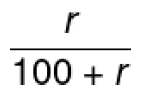
in which formula “r” represents the rate of tax applicable under subsection (1) of section six;
“tax invoice” means a fiscal tax invoice provided by a registered operator, and printed by a fiscalised electronic register or fiscal memory device used by a registered operator for the purpose of section twenty; Substituted by Act 4 of 2012 w.e.f. 17th September, 2012; substituted further by Finance Act 7/2021 gazetted on the 31 December, 2021 w.e.f.1st January, 2022.
“tax period”, in relation to a registered operator, means a tax period determined in terms of section twenty-seven;
“taxable supply” means any supply of goods or services which is chargeable with tax under paragraph (a) of subsection (1) of section six, including tax chargeable at the rate of zero % under section ten;
“Taxes Act” means the Income Tax Act [Chapter 23:06];
“trade” means—
(a) in the case of any registered operator, other than a local authority, any trade or activity which is carried on continuously or regularly by any person in Zimbabwe or partly in Zimbabwe and in the course or furtherance of which goods or services are supplied to any other person for a consideration, whether or not for profit, including any trade or activity carried on in the form of a commercial, financial, industrial, mining, farming, fishing or professional concern or any other concern of a continuing nature or in the form of an association or club; A.T. International Ltd v ZIMRA 15-HH-823 GTO Association v The Commissioner General of ZIMRA 19-HH-464
(b) without limiting the applicability of paragraph (a) in respect of any activity carried on in the form of a commercial, financial, industrial, mining, farming, fishing or professional concern—
(i) the making of supplies by any public authority of goods or services which the Minister, having regard to the circumstances of the case, is satisfied are of the same kind or are similar to taxable supplies of goods or services which are or might be made by any person other than such public authority in the course or furtherance of any trade, if the Commissioner, in pursuance of a decision of the Minister under this subparagraph, has notified such public authority that its supplies of such goods or services are to be treated as supplies made in the course or furtherance of a trade;
(ii) the activities of any private voluntary organisation referred to in the definition of “private voluntary organisation” in section 2(1) of the Private Voluntary Organisations Act [Chapter 17:05];
Substituted by Act 2 of 2005 from 12th September, 2005.
(c) in the case of a registered operator which is a local authority—
(i) the supply of water;
(ii) the supply of services consisting of the drainage, removal or disposal of sewage or garbage;
(iii) the supply of goods or services incidental to or necessary for the supply of goods or services in respect of which sub-paragraph (i) or (ii) apply;
(iv) the making of supplies of goods or services in the course of any business carried on by such local authority, if—
A. such supplies are of the same kind or are similar to taxable supplies of goods or services which are or might be made by any person other than such local authority in the course or furtherance of any trade; and
B. the revenue normally derived by such local authority for its own benefit from making such supplies, together with any grant or subsidy paid to that local authority by the State or any person for the purposes of such business, is, or may reasonably be expected to be, sufficient to fund the expenditure, excluding expenditure of a capital nature but including a reasonable provision for depreciation in the value of the assets of the business by reason of wear and tear and obsolescence, incurred by that local authority in the production of such revenue:
Provided that—
I. anything done in connection with the commencement or termination of any such trade or activity shall be deemed to be done in the course or furtherance of that trade or activity; trading in renting and disposing of properties E.J (Pvt) Ltd v ZIMRA 19-HH-528 sale in liquidation of defunct carpet factory TG v ZIMRA 19-HH-578
II. the supply outside Zimbabwe of goods or services by any concern from any branch or main business thereof where such branch or main business is permanently located at premises outside Zimbabwe, if—
(a) the branch or main business can be separately identified; and
(b) an independent system of accounting is maintained by the concern in respect of the branch or main business,
shall be deemed not to be effected in the course or furtherance of any trade or activity carried on by such concern;
III. the rendering of services by an employee to his employer in the course of his employment or the rendering of services by the holder of any office in performing the duties of his office, shall not be deemed to be the carrying on of a trade to the extent that any amount constituting remuneration as contemplated in the definition of “remuneration” in paragraph 1 of the Thirteenth Schedule to the Taxes Act is paid or is payable to such employee or office holder, as the case may be, and shall not apply in relation to any employment or office accepted by any person in carrying on any trade carried on by him independently of the employer or concern by whom the amount of remuneration is paid or payable;
IV. any activity carried on by a natural person essentially as a private or recreational pursuit or hobby or any activity carried on by a person other than a natural person which would, if it were carried on by a natural person, be carried on essentially as a private or recreational pursuit or hobby shall not be deemed to be the carrying on of a trade;
V. any activity, shall to the extent to which it involves the making of exempt supplies, be deemed not to be the carrying on of a trade;
“trust fund” means any fund consisting of cash or other assets, the administration and control of which is entrusted to any person acting in a fiduciary capacity by any person, whether under a deed of trust or by agreement, or by a deceased person under a will made by that person;
“unconditional gift” means a payment voluntarily made to any association not for gain for the carrying on or the carrying out of the purposes of that association and in respect of which no identifiable direct valuable benefit arises or may arise in the form of a supply of goods or services to the person making that payment or in the form of a supply of goods or services to any other person who is a connected person in relation to the person making the payment, but does not include any payment made by a public authority or a local authority.
(2) For the purposes of subsection (1)—
(a) “cheque” means a cheque as defined in section 72 of the Bills of Exchange Act [Chapter 14:02], a postal order, a money order, a traveller’s cheque, or any order or authorisation, whether in writing, by electronic means, or otherwise, to a financial institution to credit or debit any account;
(b) “currency” means any banknote or other currency of any country, other than when used as a collector’s piece, investment article, item of numismatic interest, or otherwise than as a medium of exchange;
(c) “debt security” means any interest in or right to be paid money that is, or is to be, owing by any person, but does not include a cheque;
(d) “equity security” means any interest in or right to a share in the capital of a juristic person or the interest of a member in a private business corporation incorporated in terms of the Corporations Act;
(e) “life insurance policy” means any policy of insurance issued in the ordinary course of carrying on life insurance business as defined in section 3 of the Insurance Act [Chapter 24:07];
(f) “participatory security” includes a unit in a unit trust scheme but does not include an equity security, a debt security, money or a cheque;
(g) “superannuation scheme” means a scheme whereby provision is made for the payment or granting of benefits by a benefit fund or pension fund, as defined in section 2 of the Taxes Act;
(3) Notwithstanding subsection (2), the terms “debt security”, “equity security” and “participatory security” shall not include any of the following—
(a) a life insurance policy or any other policy of insurance;
(b) any ownership or interest in land, other than an interest as mortgagee;
(c) an interest in a superannuation scheme.
(4) Notwithstanding anything in this section, the term “financial services” does not include—
(a) the cession, assignment, transfer or other supply of any right to receive payment in relation to any taxable supply where, as a result of any such cession, assignment, transfer or supply, output tax in relation to that taxable supply would not be or become attributable to any tax period for the purposes of subsection (3) of section fifteen; or
(b) the transfer of any interest in or a right to be paid money that is, or is to be, owing by any person under a rental agreement.
3 Determination of “open market value”
(1) For the purposes of this section—
(a) “similar supply”, in relation to a supply of goods or services, means any other supply of goods or services that, in respect of the characteristics, quality, quantity, functional components, materials and reputation of the first mentioned goods or services, is the same as, or closely or substantially resembles, that supply of goods or services;
(b) the open market value of a supply shall include any tax charged under paragraph (a) of subsection (1) section six on that supply.
(2) For the purposes of this Act, the open market value of any supply of goods or services at any date shall be the consideration in money which the supply of those goods or services would generally fetch if supplied in similar circumstances at that date in Zimbabwe, being a supply freely offered and made between persons who are not connected persons. R (Pvt) Ltd v Zimra 19-HH-792
(3) For the purposes of this Act the open market value of any consideration, not being consideration in money, for a supply of goods or services shall be ascertained in the same manner, with any necessary modifications, as the open market value of any supply of goods or services is ascertained under this section. R (Pvt) Ltd v Zimra 19-HH-792
(4) Where the open market value of any supply of goods or services cannot be determined under subsection (2), the open market value shall be the consideration in money which a similar supply would generally fetch if supplied in similar circumstances at that date in Zimbabwe, being a supply freely offered and made between persons who are not connected persons. ZS (Pvt) Ltd v Zimra 20-FAC-113
(5) Where the open market value of any supply of goods or services cannot be determined in terms of subsections (2) or (4), the open market value shall be determined in accordance with a method approved by the Commissioner which provides a sufficiently objective approximation of the consideration in money which could be obtained for that supply of those goods or services.
PART II ADMINISTRATION
4 Act to be administered by Commissioner
The Commissioner shall be responsible for carrying out the provisions of this Act.
5 Delegation of functions by Commissioner
(1) Subject to the Revenue Act, the Commissioner may delegate to any officer employed in the Authority any function that is conferred or imposed upon him by this Act, other than this power of delegation.
(2) An officer to whom a function has been delegated in terms of subsection (1) shall exercise it subject to the Commissioner’s directions.
(3) A delegation in terms of subsection (1)—
(a) may be revoked or modified by the Commissioner at any time; and
(b) shall not preclude the exercise by the Commissioner of the function so delegated.
(4) Anything done by an officer in the exercise of a function delegated to him by the Commissioner in terms of subsection (1)—
(a) may be set aside or revised, subject to this Act, by that officer or by the Commissioner; and
(b) shall be deemed, until set aside, to have been done by the Commissioner
(5) This section shall be construed as being additional to, and not as derogating from, the Commissioner’s powers of delegation under any other law.
PART III VALUE-ADDED TAX
6 Value-added tax
(1) Subject to this Act, there shall be charged, levied and collected, for the benefit of the Consolidated Revenue Fund a tax at such rate as may be fixed by the Charging Act on the value of— just ‘a tax’ Delta Beverages (Pvt) Ltd v ZIMRA 23-HH-577
(a) the supply by any registered operator of goods or services supplied by him on or after the fixed date in the course or furtherance of any trade carried on by him: Travel agents T(Pvt) Ltd v ZIMRA 15-HH-285 A.T. International Ltd v ZIMRA 15-HH-823 to fulfil any want or any deficiency suffered by a third party, as in a barter transaction Mylo (Pvt) Ltd v Zimra 16-HH-717 Law Society of Zimbabwe v ZIMRA 18-HH-409 GTO Association v The Commissioner General of ZIMRA 19-HH-464 trading in renting and disposing of properties E.J (Pvt) Ltd v ZIMRA 19-HH-528 NRM (Pvt) Ltd & 2 Ors v ZIMRA 19-HH-566 -sale by liquidator of defunct carpet factory TG v ZIMRA 19-HH-578 -rights to mining claims and mining sites MMI (Pvt) Ltd v Zimra 19-HH-700 Afritrade International Limited v Zimra 21-SC-003 Triangle Ltd & Hippo Valley Estates v ZIMRA and 10 ors 21-SC-082
Provided that this paragraph shall not apply to the supply of second-hand motor vehicles that are subject to special excise duty on sales or disposals of second-hand motor vehicles referred to in section 172B of the Customs and Excise Act [Chapter 23:02]. proviso inserted by Act 6 of 2006 w.e.f. 1st January, 2006.
and
(b) the importation of any goods into Zimbabwe by any person on or after the fixed date;
Goods manufactured in an Export Processing Zone disposed of in Zimbabwe S.T (Pvt) Ltd v Zimra 16-HH-696 EPZ status lost by repeal of enabling Act AMD Services (Pvt)Ltd v Zimra 20-HH-344 Afritrade International Limited v Zimra 21-SC-003
and
(c) the supply of any imported services by any person on or after the fixed date; and
(d) goods and services sold through an auctioneer (as defined in section fifty-six(6)) by persons who are not registered operators: Auction City (Pvt) Ltd v El Elion Investments (Pvt) Ltd 15-HH-315
Provided that this paragraph shall not apply to the supply of second-hand motor vehicles that are subject to special excise duty on sales or disposals of second-hand motor vehicles referred to in section 172B of the Customs and Excise Act [Chapter 23:02]; Para (d) repealed by Act 8 of 2005 w.e.f. 31st December, 2005; inserted by Act 16 of 2007 w.e.f. 4th January, 2008; proviso inserted by the Finance (No.3) Act 10 of 2009 with effect from the 1st January, 2010.
(2) Except as otherwise provided in this Act, the tax payable in terms of—
(a) paragraph (a) of subsection (1) shall be paid by the registered operator referred to in that paragraph; and
(b) paragraph (b) of subsection (1) shall be paid by the person referred to in that paragraph; amended by the Finance Act 10 of 2003 S.T. (Pvt) Ltd v ZIMRA 16-HH-696
and
(c) paragraph (c) of subsection (1) shall be paid by the recipient of the imported services ; amended by the Finance Act 10 of 2003 A.T. International Ltd v ZIMRA 15-HH-823
and
(d) paragraph (d) of subsection (1) shall be paid by the auctioneer. Para (d) inserted by Act 10 of 2003; repealed by Act 8 of 2005 w.e.f. 31st December,2005; inserted by Act 16 of 2007 w.e.f. 4th January, 2008.
(3) Where any goods manufactured in Zimbabwe, being of a class or kind subject to excise duty under Part II of the Second Schedule of the Customs Act, have been supplied at a price which does not include such excise duty and tax has become payable in respect of such supply in terms of paragraph (a) of subsection (1), a tax shall be levied and paid on a value which is the sum of the value for excise purposes plus the excise duty, or such other value as may be determined by the Minister by notice in a statutory instrument.
(4) The tax payable in terms of subsection (3) shall be paid by the person liable in terms of the Customs Act for the payment of the said excise duty.
(5) Subject to this Act, any provision of the Customs Act relating to the clearance of goods which are subject to the payment of excise duty and payment thereof shall, mutatis mutandis, be effected as if enacted in terms of this Act.
7 Certain supplies of goods or services deemed to be made or not made
(1) For the purposes of this Act, where—
(a) goods acquired, manufactured, assembled, constructed or produced by a person are sold, under a power exercisable by another person, in or towards satisfaction of a debt owed by the person whose goods are sold; and
(b) the person whose goods are sold has not furnished, to the person exercising the power of sale, a statement in writing that the supply of those goods would not be a taxable supply if those goods were sold by the person whose goods are sold, and stating fully the reasons why that supply would not be a taxable supply;
those goods shall be deemed to be supplied in the course of a trade.
(2) For the purposes of this Act, where a person ceases to be a registered operator, any goods (other than any goods in respect of the acquisition of which by the registered operator a deduction of input tax under subsection (3) of section fifteen was denied in terms of subsection (2) of section sixteen or would have been denied if those sections had been applicable prior to the fixed date) or right capable of assignment, cession or surrender which in either case then forms part of the assets of his trade, shall be deemed to be supplied by him in the course of his trade immediately before he ceased to be a registered operator, unless the trade is carried on by another person who in terms of section fifty-five is deemed to be a registered operator:
Provided that—
(a) where such right is so deemed to be supplied that supply shall be deemed to be a supply of a service;
(b) this subsection shall not apply to any such goods or right in respect of the acquisition of which by such registered operator a deduction in terms of subsection (3) of section fifteen has not been allowed or will not be allowed, where such registered operator was registered pursuant to an application for registration under section twenty-three due to a bona fide error on the part of any person.
(3) For the purposes of this Act, any door to door sale, whereby credit is granted at a place other than the creditor’s normal place of business and the agreement of sale is subject to a “cooling-off” period within which the purchaser may cancel the agreement without prejudice to himself, shall be deemed not to be a supply of goods or services unless the credit receiver has failed to exercise the right to terminate the agreement within the period available to him under the agreement.
(4) For the purposes of this Act—
(a) any lay-by agreement, whereby goods are sold for a consideration not exceeding zw$12,500 or US$ 25 or the prescribed amount and are reserved by deposit for delivery when the purchase price or a determined portion thereof is paid, shall not be deemed to be a supply of goods or services unless and until the goods are delivered to the purchaser; Threshold increased by Finance Act 10/2020 w.e.f. 31st December, 2020; increased by section 56 of the Finance Act 7/2021 w.e.f. 31 December, 2021; Further by Finance Act 13/2023 w.e.f. 29th December, 2023. – see Interpretation section 2 above – Editor.
(b) where such agreement is cancelled or terminates for any other reason and the seller retains any amount paid by the purchaser or recovers any amount owing by the purchaser under such agreement, the seller shall be deemed to have supplied a service in respect of such agreement.
(5) For the purposes of this Act, a registered operator shall be deemed to supply services to any public authority or local authority to the extent of any payment made by the authority concerned to or on behalf of the registered operator in respect of the taxable supply of goods or services by the registered operator to any person.
(6) For the purposes of this Act, the disposal of a trade as a going concern, or a part thereof which is capable of separate operation, shall be deemed to be a supply of goods made in the course or furtherance of such trade. Trading in renting and disposing of properties E.J (Pvt) Ltd v ZIMRA 19-HH-528
(7) For the purposes of this Act, except subsection (3) of section fifteen, where a registered operator receives any indemnity payment under a contract of insurance or is indemnified under a contract of insurance by the payment of an amount of money to another person, that payment or indemnification, as the case may be, shall, to the extent that it relates to a loss incurred in the course of carrying on a trade, be deemed to be consideration received for a supply of services performed on the day of receipt of that payment or on the date of payment to such other person, as the case may be, by that registered operator in the course or furtherance of his trade:
Provided that—
(a) this subsection shall not apply in respect of any indemnity payment received or indemnification under a contract of insurance where the supply of services contemplated by that contract is not a supply subject to tax under paragraph (a) of subsection (1) of section six;
(b) this subsection shall not apply in respect of any indemnity payment received by a registered operator under a contract of insurance to the extent that such payment relates to the total reinstatement of goods, stolen or damaged beyond economic repair, in respect of the acquisition of which by the registered operator a deduction of input tax under subsection (3) of section fifteen was denied in terms of subsection (2) of section sixteen or would have been denied if these sections had been applicable prior to the fixed date.
(8) For the purposes of this Act, where any registered operator in carrying on a trade in Zimbabwe transfers goods or provides any service to or for the purposes of his branch or main business in respect of which paragraph II of the proviso to the definition of “trade” in section two are applicable, the registered operator shall be deemed to supply such goods or service in the course or furtherance of his trade.
(9) For the purposes of this Act, where any goods are repossessed under an instalment credit agreement, a supply of such goods shall be deemed to be made by the debtor under such instalment credit agreement to the person exercising his right of possession, and where such debtor is a registered operator the supply shall be deemed to be made in the course or furtherance of his trade unless such goods did not form part of the assets held or used by him for the purposes of his trade.
(10) For the purposes of this Act, a supply of the use or right to use or the grant of permission to use any goods, whether with or without a driver, pilot, crew or operator, under any rental agreement, instalment credit agreement, charter party, agreement for charter or any other agreement under which such use or permission to use is granted, shall be deemed to be a supply of goods.
(11) For the purposes of this Act, where any person bets an amount on the outcome of a race or on any other event or occurrence, the person with whom the bet is placed shall be deemed to supply a service to such first-mentioned person.
(12) For the purposes of this Act, except subsection (3) of section fifteen, where any registered operator who makes taxable supplies of services contemplated in subsection (11), receives any amount paid by any other registered operator as a prize or winnings in consequence of a supply of such services made by the last-mentioned registered operator to the first-mentioned registered operator, the first-mentioned registered operator shall be deemed to supply a service to the last-mentioned registered operator.
(13) For the purposes of this Act, where a single supply of goods or services would, if separate considerations had been payable, have been charged with tax in part at the rate applicable under paragraph (a) of subsection (1) of section six and in part at the rate applicable under section ten, each part of the supply concerned shall be deemed to be a separate supply. MMI (Pvt) Ltd v The Commissioner General Zimra 19-HH-700
(14) The supply by a registered operator of—
(a) any goods (other than fixed property acquired prior to the fixed date by a registered operator who is a natural person if such property was used by him mainly as his private residence and no deduction of any amount has been made by him under subsection (3) of section fifteen in respect of such property) or services, where such goods or services were acquired or imported by him partly for the purpose of consumption, use or supply in the course of making taxable supplies, including supplies which would have been taxable supplies if section six of this Act had been applicable prior to the fixed date, and were held or utilised by him partly for the said purpose *immediately prior to the supply by him of such goods or services, shall be *deemed to be made wholly in the course or furtherance of his trade; trading in renting and disposing of properties E.J (Pvt) Ltd v ZIMRA 19-HH-528 *sale in liquidation 4 years after closure of defunct carpet factory TG v ZIMRA 19-HH-578
(b) fixed property acquired prior to the fixed date by such registered operator, being a natural person, shall be deemed to be made otherwise than in the course or furtherance of his trade:
Provided that—
(a) such property was used by him prior to such supply mainly as his private residence; and
(b) no deduction of any amount has been made by him under subsection (3) of section fifteen in respect of such property.
(15) For the purposes of this Act, where, together with the supply of a share coupled with an exclusive right of occupation as defined in section 27 of the Deeds Registries Act [Chapter 20:05] referred to in the interpretation of “fixed property” in subsection (1) of section two, any amount of the total loan obligation of the company or association administering the property concerned is allocated or any amount of the loan obligation thus allocated is delegated, or any interest in or right to be paid money that is, or is to be, owing by the company or association under its loan obligation is transferred to any person who is or will be a shareholder of such company or association, such allocation, delegation or transfer, as the case may be, shall be deemed to form part of the supply of such share.
(16) For the purposes of the definition of “input tax” in subsection (1) of section two and subsections (4) and (5) of section seventeen, as applicable to any company or association referred to in subsection (15), any taxable supply of a share referred to in subsection (15) made on or after a date fixed by the Minister by notice in the Gazette by a developer who registers a notarial deed referred to in section 27 of the Deeds Registries Act [Chapter 20:05], shall be deemed to have been made by the company or association created by or under such deed, to the extent that—
(a) the supply of such share to such developer was not a taxable supply by such company or association to such developer; or
(b) such developer was not or will not in terms of subsection (3) of section fifteen be entitled to make a deduction of “input tax” in section two in respect of the supply of such share to him.
(17) For the purposes of this Act, where an importation of goods is deemed to have been made by an agent in the circumstances contemplated in subsection (4) of section fifty-six, such agent shall be deemed to make a supply of goods to the recipient of the supply by the principal. Subsection (17) amended by the Finance Act 10 of 2003.
8 Time of supply
(1) For the purposes of this Act, a supply of goods or services shall, except as is otherwise provided for in this Act, be deemed to take place— Subsection (1) substituted by Finance Act 1 of 2019 gazetted 20th February 2019 w.e.f. 1st January, 2019.
(a) at the time an invoice is issued by the supplier or the recipient in respect of that supply; or
(b) the time any payment of consideration is received by the supplier in respect of that supply; or
(c) in the case of a supply of a moveable good, at the time of its removal from the place of sale; or
(d) in the case of a supply of an immoveable goods, at the time the recipient takes possession of it; or
(e) in the case of a supply of a service at the time the service is performed;
whichever time is earlier.
(1a) For the purposes of this Act, a supply of imported services shall, except as is otherwise provided for in this Act, be deemed to take place—
(a) at the time an invoice is issued by the supplier or the recipient in respect of that supply; or
(b) at the time any payment of consideration is received by the supplier in respect of that supply; or
(c) at the time the service is performed;
whichever time is earlier. Subsection (1a) inserted by Finance Act 13/2023 w.e.f. 29th December, 2023.
(2) A supply of goods or services shall be deemed to take place—
(a) where the supplier and the recipient are connected persons—
(i) in the case of a supply of goods which are to be removed, at the time of the removal; and
(ii) in the case of a supply of goods which are not to be removed, at the time when they are made available to the recipient; Jinda. B & M v Viewbit Investments (Pvt) Ltd & Registrar of Deeds 17-HH-014
and
(iii) in the case of a supply of services, at the time the services are performed:
Provided that this paragraph shall not apply in any case where an invoice is issued in respect of that supply or any payment is made in respect of that supply on or before—
(i) the day on which the return is furnished for the tax period during which that supply would, but for this proviso, have been made; or
(ii) the last day prescribed by this Act for furnishing the return for the tax period during which that supply would, but for this proviso, have been made;
(b) where that supply is a supply to which subsection (3) of section seven refers, on the day after the last day of the period during which the recipient may exercise the right to terminate the agreement;
(c) where that supply is a supply to which subsection (4) of section seven refers, at the time at which the goods are delivered to the recipient:
Provided that in any case in which a supply of services is deemed to take place under paragraph (b) of subsection (4) of section seven, that supply of services shall be deemed to take place at the time that the agreement of sale is cancelled or terminates;
(d) where the supply is for a consideration in money received by the supplier by means of any machine, meter or other device operated by a coin or token—
(i) in the case of such supplier, at the time any such coin or token is taken from that machine, meter or other device by or on behalf of the supplier; and
(ii) in the case of the recipient of such supply, at the time the coin or token is inserted into that machine, meter or other device by or on behalf of the recipient;
(e) where subsection (8) of section seven applies in respect of a transfer of goods or the provision of any service by a registered operator to his branch at the time the goods are delivered to such branch or the service is performed, as the case may be.
(3) Notwithstanding anything in subsection (1) or (2)—
(a) where goods are supplied under any rental agreement or where services are supplied under any agreement or law which provides for periodic payments, they shall be deemed to be successively supplied for successive parts of the period of the agreement or as determined by such law, and each of the successive supplies shall be deemed to take place when a payment becomes due or is received, whichever is the earlier;
(b) where and to the extent that—
(i) goods are supplied progressively or periodically under any agreement or law which provides for the consideration for that supply to be paid in instalments or periodically and in relation to the progressive or periodic supply of those goods; or
(ii) goods or services supplied directly in the construction, repair, improvement, erection, manufacture, assembly or alteration of goods are supplied under any agreement or law which provides for the consideration for that supply to become due and payable in instalments or periodically in relation to the progressive nature of the work;
those goods or services shall be deemed to be successively supplied, and each such successive supply shall be deemed to take place whenever any payment in respect of any supply becomes due, is received, or any invoice relating only to that payment is issued, whichever is the earliest;
(c) where goods are supplied under an instalment credit agreement, that supply shall, subject to paragraph (b) of subsection (2), be deemed to take place at the time the goods are delivered or the time any payment of consideration is received by the supplier in respect of that supply, whichever time is earlier;
(d) where goods consisting of fixed property or any real right therein are supplied under a sale, that supply shall be deemed to take place— Jinda. B & M v Viewbit Investments (Pvt) Ltd & Registrar of Deeds 17-HH-014
(i) where registration of transfer of the goods is effected in a deeds registry, on the date of such registration; or
(ii) on the date on which any payment is made in respect of the consideration for such supply;
whichever date is earlier;
(e) where goods consisting of fixed property or any real right therein are supplied under a sale, that supply shall be deemed to take place, where no transfer has occurred and no payment is made in consideration, on the date of the agreement;
(f) where any supply of a service is deemed to be made as contemplated in subsection (11) of section seven, the service shall be deemed to be supplied to the extent that payment of any amount of the bet is made, and each such supply shall be deemed to take place whenever any payment in respect of such supply is received by the supplier;
(g) where any supply of a service is deemed to be made as contemplated in subsection (12) of section seven, the supply shall be deemed to take place whenever any amount is paid out as a prize or winnings by the supplier of the services contemplated in subsection (11) of section seven.
(4) Subject to paragraph (a) of subsection (2) and subsection (6), where goods are supplied under an agreement, other than an instalment credit agreement or rental agreement, and the goods or part of them are appropriated under that agreement by the recipient in circumstances where the whole of the consideration is not determined at the time they are appropriated, that supply shall be deemed to take place when and to the extent that any payment in terms of the agreement is due or is received or an invoice relating to the supply is issued by the supplier or the recipient, whichever is the earliest.
(5) Where any goods or any right capable of assignment, cession or surrender is deemed to be supplied by a registered operator in the course of his trade as contemplated in subsection (2) of section seven the time of supply shall be deemed to be the time contemplated in that section.
(6) Where any supply of goods or services is deemed to be made as contemplated in subsection (1) of section seventeen the time of supply shall be deemed to be the time that the goods or services are applied as contemplated in the said subsection.
(7) The supply of goods or services which is deemed to be made by any registered operator as contemplated in subsection (3) of section seventeen shall be deemed to take place at the end of the month in respect of which the cash equivalent of the benefit or advantage concerned, as determined under paragraph (f) of subsection (1) of section 8 of the Taxes Act, or a portion of such cash equivalent, is in terms of the Thirteenth Schedule to that Act required to be included in the remuneration of the employee or office holder to whom the benefit or advantage is granted or, where such cash equivalent is not required to be included in the remuneration of the employee or office holder in terms of the said Thirteenth Schedule, on the last day of the year of assessment in terms of the said Act, as applicable to that employee or office holder, during which the benefit or advantage was granted to him.
(8) Where a supply of repossessed goods is deemed by subsection (9) of section seven to be made by a debtor under an instalment credit agreement, the time of that supply shall be deemed to be the day on which the goods are repossessed or, where the debtor may under any law be reinstated in his rights and obligations under such agreement, the day after the last day of any period during which the debtor may under such law be so reinstated.
(9) Where any supply of goods is deemed to be made as contemplated in subsection (17) of section seven, that supply shall be deemed to take place at the time the tax payable on importation of the goods is paid by the agent.
9 Value of supply of goods or services
(1) For the purposes of this Act this section shall apply for determining the value of any supply of goods or services.
(2) The value to be placed on any supply of goods or services shall, save as is otherwise provided in this section, be the value of the consideration for such supply, as determined in accordance with subsection (3), less so much of such value as represents tax:
Provided that—
(a) there shall be excluded from such consideration the value of any postage stamp as defined in section 2 of the Postal and Telecommunications Act [Chapter 12:05], when used in the payment of consideration for any service supplied by the successor postal company or any postal licensee;
(b) where the portion of the value of the said consideration which represents tax is not accounted for separately by the registered operator, the said portion shall be deemed to be an amount equal to the tax fraction of that consideration. the tax fraction is to be calculated from that consideration: not in addition to that consideration. Triangle Ltd & Hippo Valley Estates v ZIMRA & 10 ors 20-HMA-028 -on appeal 21-SC-082
3) For the purposes of this Act the value of any consideration referred to in this section shall be—
(a) to the extent that such consideration is a consideration in money, the amount of the money; and
(b) to the extent that such consideration is not a consideration in money, the open market value of that consideration.
(4) Where—
(a) a supply is made by a person for no consideration or for a consideration in money which is less than the open market value of the supply; and
(b) the supplier and recipient are connected persons in relation to each other; and
(c) if a consideration for the supply equal to the open market value of the supply had been paid by the recipient, he would not have been entitled under subsection (3) of section fifteen to make a deduction of the full amount of tax in respect of that supply, ZS (Pvt) Ltd v ZIMRA 20-FAC-113]
the consideration in money for the supply shall be deemed to be the open market value of the supply: R (Pvt) Ltd v Zimra 19-HH-792
Provided that this subsection shall not apply to the supply of a benefit or advantage of employment contemplated in subsection (3) of section seventeen.
(5) Where goods or services are deemed to be supplied by a registered operator in terms of subsection (2) or (8) of section seven, the supply shall be deemed to be made for a consideration in money equal to the lesser of— a method aimed at assisting in the computation of the consideration of the deemed supply of goods or services Triangle Ltd & Hippo Valley Estates v ZIMRA & 10 ors 20-HMA-028 – on appeal 21-SC-082
(a) the cost to the registered operator of the acquisition, manufacture, assembly, construction or production of such goods or services, including—
(i) any tax charged in respect of the supply to the registered operator of such goods or services or of any components, materials or services utilised by him in such manufacture, assembly, construction or production;
(ii) where such goods or any right referred to in subsection (2) of section seven, when held by the registered operator, constituted trading stock as defined in section 2 of the Taxes Act, any further costs, including tax, incurred by him in respect of such goods or right;
(iii) any costs, including tax, incurred by the registered operator in respect of the transportation or delivery of such goods or the provision of such services in connection with the transfer of such goods or the provision of such services as contemplated in subsection (8) of section seven; and
(iv) where such goods or services were acquired under a supply in respect of which the consideration in money was in terms of subsection (4) of this section deemed to be the open market value of the supply or would in terms of that provision have been deemed to be the open market value of the supply were it not for the fact that the recipient would have been entitled under subsection (3) of section fifteen to make a deduction of the full amount of tax in respect of that supply, such open market value to the extent that it exceeds the consideration in money for that supply;
or
(b) the open market value of such supply.
(6) For the purposes of this Act, where goods are supplied under an instalment credit agreement, the consideration in money for the supply shall be deemed to be the cash value of that supply.
(7) Where goods or services are deemed by subsection (1) of section seventeen to be supplied by a registered operator, the supply shall, subject to subsection (8), be deemed to be made for a consideration in money equal to the open market value of such supply.
(8) Where goods or services are deemed by subsection (2) of section seventeen to be supplied by a registered operator, the supply shall be deemed to be made for a consideration in money determined in accordance with the formula—
A x (B-C)
in which formula—
“A” represents the lesser of—
(a) the cost, including any tax forming part of such cost, to the registered operator of the acquisition, manufacture, assembly, construction or production of those goods or services:
Provided that—
(i) where the goods or services were acquired under a supply in respect of which the consideration in money was in terms of subsection (4) deemed to be the open market value of the supply or would in terms of that section have been deemed to be the open market value of the supply were it not for the fact that the recipient would have been entitled under subsection (3) of section fifteen to make a deduction of the full amount of tax in respect of that supply, the cost of those goods or services shall be deemed to include such open market value to the extent that it exceeds the consideration in money for that supply; or
(ii) where the registered operator was at some time after the acquisition of such goods or services deemed by subsection (4) of section seventeen to have been supplied with such goods or services, the amount which was represented by “B” in the formula contemplated in subsection (4) of section seventeen when such goods or services were deemed to be supplied to the registered operator; or
(iii) where the registered operator was at some time after the acquisition of the goods or services required to make an adjustment contemplated in subsections (2) or (5) of section seventeen, the amounts then represented by “A” in the said formula or by “B” in the formula contemplated in subsection (5) of section seventeen respectively, in the most recent adjustment made under subsections (2) or (5) of section seventeen by the registered operator prior to such deemed supply of goods or services;
and
(b) the open market value of the supply of those goods or services at the time any reduction in the extent of the consumption or use of the goods is deemed by subsection (6) of section seventeen to take place;
“B” represents the percentage that the use or application of the goods or services for the purposes of making taxable supplies was of the total use or application of such goods or services determined under subsection (1) of section sixteen, subsections (4) or (5) of section seventeen or this subsection, whichever was applicable in the period immediately preceding the 12 month period contemplated in “C”; and
“C” represents the percentage that, during the 12 month period during which the decrease in use or application of the goods or services is deemed to take place, the use or application of the goods or services for the purposes of making taxable supplies, in respect of which, if such goods or services had been acquired at the time of such use or application, a deduction of input tax would not have been denied in terms of paragraph (a) of subsection (2) of section sixteen, was of the total use or application of the goods:
Provided that where the percentage contemplated in “B” does not exceed the said percentage by more than 10% of the total use or application, the said percentage shall be deemed to be the percentage determined in “B”.
(9) Where a service is under paragraph (b) of subsection (4) of section seven deemed to be supplied, the consideration in money for the supply shall be deemed to be an amount equal to the amount retained or recovered as contemplated in that section.
(10) Where any supply of goods is a supply which would, but for the proviso to subsection (1) of section ten, be charged with tax at the rate of zero%, the consideration in money for that supply shall be deemed to be an amount equal to the purchase price of those goods to the supplier:
Provided that—
(a) in any case where the deduction of input tax referred to in that proviso has been made by any other person, where that supplier and that other person are connected persons, the consideration in money for that supply shall be deemed to be an amount equal to the greater of the purchase price of those goods to that supplier and the purchase price of those goods to that other person;
(b) for the purposes of this subsection, the purchase price of any goods shall not be reduced by any amount of input tax deducted under subsection (3) of section fifteen by the supplier or, as the case may be, any other person where the supplier and that other person are connected persons.
(11) Where goods or services are deemed to be supplied by a registered operator under subsection (3) of section seventeen, the consideration in money for the supply shall be deemed to be an amount equal to the cash equivalent of the benefit or advantage granted to the employee or office holder, as contemplated in subsection (7) of section eight.
(12) Where services are or are deemed by subsection (5) of section seven to be supplied to any public authority or local authority by any registered operator the consideration in money for such supply shall be deemed to be the amount of any payment made from time to time by the authority concerned to or on behalf of the registered operator as contemplated in the said section.
(13) Where by reason of the repossession of goods from a debtor under an instalment credit agreement a supply of such goods is deemed by subsection (9) of section seven to be made by that debtor, the consideration in money for that supply shall be deemed to be an amount equal to the balance of the cash value of the goods, being the cash value thereof applied under subsection (6) in respect of the supply of the goods to the debtor under the said agreement, which has not been recovered on the date on which the supply of the goods by the debtor is deemed by subsection (8) of section eight to be made:
Provided that the said balance shall be deemed to be the amount remaining after deducting from the cash value so much of the sum of the payments made by the debtor under the said agreement as, on the basis of an apportionment in accordance with the rights and obligations of the parties to the said instalment credit agreement, may properly be regarded as having been made in respect of the cash value.
(14) Where a service is deemed by subsection (11) of section seven to be supplied to any person, the consideration in money for such supply shall be deemed to be the amount that is received in respect of the bet.
(15) Where a service is deemed by subsection (12) of section seven to be supplied to any registered operator, the consideration in money for such supply shall be deemed to be the amount that is received as a prize or winnings.
(16) Where a right to receive goods or services to the extent of a monetary value stated on any token, voucher or stamp, other than a postage stamp as defined in section 2 of the Postal and Telecommunications Act [Chapter 12:05], and any token, voucher or stamp contemplated in subsection (17) is granted for a consideration in money, the supply of such token, voucher or stamp shall be disregarded for the purposes of this Act, except to the extent, if any, that such consideration exceeds such monetary value.
(17) Where any token, voucher or stamp, other than a postage stamp as defined in section 2 of the Postal and Telecommunications Act [Chapter 12:05], is issued for a consideration in money and the holder thereof is entitled on the surrender thereof to receive goods or services specified on such token, voucher or stamp or which by usage or arrangement entitles the holder to specified goods or services, without any further charge, the value of the supply of the goods or services made upon the surrender of such token, voucher or stamp shall be deemed to be nil.
(18) Where any token, voucher or stamp is issued by any registered operator for no consideration and the holder thereof is entitled on surrender thereof to another person, being the supplier of goods or services, to a discount on the price of goods or services supplied to the holder, the consideration in money for the supply of such goods or services shall be deemed to include the monetary value stated on such token, voucher or stamp:
Provided that such monetary value shall be deemed to include tax.
(19) Where any supply of entertainment is made by a registered operator and in terms of section sixteen no deduction of input tax was made in terms of subsection (3) of section fifteen in respect of the acquisition by the registered operator of goods or services for the purpose of such entertainment, the value of such supply shall be deemed to be nil.
(20) Where any supply of medical or dental services or other goods or services is made as contemplated in paragraph (c) of subsection (2) of section sixteen by a scheme referred to in that section, the value of such supply shall be deemed to be nil.
(21) Where a taxable supply is not the only matter to which a consideration relates, the supply shall be deemed to be for such part of the consideration as is properly attributable to it.
(22) Where any supply of goods is deemed to be made as contemplated in subsection (17) of section seven, the consideration in money for such supply shall be deemed to be the total amount of the value placed on the importation of the goods in terms of subsection (2) of section twelve and the amount of tax levied on the importation in terms of paragraph (b) of subsection (1) of section six.
(23) Save as otherwise provided in this section, where any supply is made for no consideration the value of that supply shall be deemed to be nil.
(23a) Every clearing agent shall be deemed to charge a clearance fee of at least US$ 25 (or other prescribed amount) on each bill of entry. Subsection inserted by the Finance Act 8/2015 gazetted on the 13th November w.e.f. 1st September,2015; fee increased by Finance Act 8/2022 to w.e.f. 24th October, 2022; further by Finance Act 13/2023 w.e.f. 29th December, 2023.
10 Zero rating
(1) Where, but for this section, a supply of goods would be charged with tax at the rate referred to in subsection (1) of section six, such supply of goods shall, subject to compliance with subsection (3) of this section, be charged with tax at the rate of zero % if—
(a) the supplier has supplied the goods, being movable goods, in terms of a sale or instalment credit agreement and has exported the goods; or
(b) the goods have been supplied in the course of repairing, renovating, modifying or treating any goods to which subparagraphs (ii) or (iv) of paragraph (g) of subsection (2) refers and the goods supplied—
(i) are wrought into, affixed to, attached to or otherwise form part of those other goods; or
(ii) being consumable goods, become unusable or worthless as a direct result of being used in that repair, renovation, modification or treatment process;
or
(c) the goods are supplied to a lessee or other person under a rental agreement, charter party or agreement for chartering, if the goods are used exclusively in an export country; or
(d) the goods are supplied to a lessee or other person under a rental agreement, charter party or agreement for chartering, if such goods are used by such lessee or other person exclusively in any commercial, financial, industrial, mining, farming, fishing or professional concern conducted in an export country and payment of rent or other consideration under such agreement is effected from such export country; or
(e) the supply is to a registered operator of a trade or of a part of a trade which is capable of separate operation, where the supplier and the recipient have agreed in writing that such trade or part, as the case may be, is disposed of as a going concern: trading in renting and disposing of properties who are registered Operator at the time E.J (Pvt) Ltd v ZIMRA 19-HH-528 MMI (Pvt) Ltd v The Commissioner General Zimra 19-HH-700
Provided that—
(i) such trade or part of a trade, as the case may be, shall not be disposed of as a going concern unless—
A. such supplier and such recipient have, at the time of the conclusion of the agreement for the disposal of the trade or part of a trade, as the case may be, agreed in writing that such trade or part of a trade, as the case may be, will be an income-earning activity on the date of transfer thereof; and
B. the assets which are necessary for carrying on such trade or part of a trade, as the case may be, are disposed of by such supplier to such recipient;
(ii) where the trade or part of a trade, as the case may be, disposed of as a going concern has been carried on in, on or in relation to goods or services applied mainly for purposes of such trade or part of a trade, as the case may be, and partly for other purposes, such goods or services shall, where disposed of to such recipient, for the purposes of this paragraph and section eighteen be deemed to form part of such trade or part of a trade, as the case may be, notwithstanding paragraph (e) of the proviso to the definition of “trade” in section two;
or
(f) the supply is to the Reserve Bank, or any bank registered under the Banking Act [Chapter 24:20], of gold in the form of bars, blank coins, ingots, buttons, wire, plate or granules or in solution, which has not undergone any manufacturing process other than the refining thereof or the manufacture or production of such bars, blank coins, ingots, buttons, wire, plate, granules or solution; or
(g) the supply is of such goods or services as are prescribed in regulations made in terms of section seventy-eight, but subject to such conditions as may be prescribed therein; amended by the Finance Act 10 of 2003] ;
or
(h) the goods are supplied, as contemplated in subsection (8) of section seven, by a registered operator to or for the purposes of his branch or main business situated in an export country in respect of which paragraph (b) of the proviso to the definition of “trade” in section two are applicable; or
(i) the goods are gold coins supplied as such and which the Reserve Bank has issued in Zimbabwe in accordance with Part VI of the Reserve Bank of Zimbabwe Act [Chapter 22:15], or which remain in circulation:
(j) the goods consist of medicines or allied substances within the meaning of the Medicines and Allied Substances Control Act [Chapter 15:03] which are prescribed for the purposes of this subsection; repealed and substituted by Act 29 of 2004 with effect from the 1st January, 2005.
Provided that paragraphs (a), (b) (c) and (d) of this section shall not apply in respect of any supply of goods by a registered operator if in respect of such goods input tax contemplated in paragraph (b) of the definition of “input tax” in section two has been deducted in terms of subsection (3) of section sixteen by that registered operator or any other person where that registered operator and that other person are connected persons.
(2) Where, but for this section, a supply of services would be charged with tax at the rate referred to in subsection (1) of section six, such supply of services shall, subject to compliance with subsection (3) of this section, be charged with tax at the rate of zero per centum where—
(a) the services, not being ancillary transport services, comprise the transport of passengers or goods—
(i) from a place outside Zimbabwe to another place outside Zimbabwe; or
(ii) from a place in Zimbabwe to a place in an export country; Travel agents T(Pvt) Ltd v ZIMRA 15-HH-285
or
(iii) from a place in an export country to a place in Zimbabwe;
or
(b) the services comprise the transport of passengers from a place in Zimbabwe to another place in Zimbabwe to the extent that that transport is by aircraft and constitutes “international carriage” as defined in Article 1 of the Convention set out in the First Schedule to the Carriage by Air Act [Chapter 13:04]; or
(c) the services, including any ancillary transport services, comprise the transport of goods from a place in Zimbabwe to another place in Zimbabwe to the extent that those services are supplied by the same supplier as part of the supply of services to which paragraph (a) applies; or
(d) … repealed by the Finance Act 10 of 2003
(e) the services comprise the transport of goods or any ancillary transport services supplied directly in connection with the exportation from or the importation into Zimbabwe of goods or the movement of goods through Zimbabwe from one export country to another export country, where such services are supplied directly to a person who is not a resident of Zimbabwe and is not a registered operator, otherwise than through an agent or other person; or
(f) the services are supplied directly in connection with land, or any improvement thereto, situated in any export country; or
(g) the services are supplied directly in respect of—
(i) movable property situated in any export country at the time the services are rendered; or
(ii) goods temporarily admitted into Zimbabwe which are exempt from tax on importation in terms of regulations made in terms of section seventy-eight ; amended by the Finance Act 10 of 2003
or
(iii) goods in respect of which paragraph(b) or (c) of the definition of “exported” in section two apply; or
(iv) the repair, maintenance, cleaning or reconditioning of a foreign-going aircraft; or
(h) the services comprise—
(i) the handling, pilotage, salvage or towage of any foreign-going aircraft while situated in Zimbabwe; or;
(ii) services provided in connection with the operation or management of any foreign-going aircraft; or
(iii) services which are prescribed in regulations made in terms of section seventy-eight ; amended by the Finance Act 10 of 2003];
or
(i) the services of arranging—
(i) the supply of goods as contemplated in paragraph (b) or (c) of the definition of “exported”; or
(ii) the supply of services referred to in subparagraph (iv) of (g) or (h); or
(iii) the transport of goods, including ancillary transport services, within Zimbabwe;
for a person who is not a resident of Zimbabwe and is not a registered operator; or
(j) the services comprise the repair, maintenance, cleaning or reconditioning of a railway train operated by a person who is not a resident of Zimbabwe and is not a registered operator; or
(k) the services, not being telecommunication services, are physically rendered elsewhere than in Zimbabwe, supplied to any person who utilises such services in Zimbabwe; or
(l) the services are supplied for the benefit of and contractually to a person who is not a resident of Zimbabwe and who is outside Zimbabwe at the time the services are rendered, not being services which are supplied directly in connection with— requirements are cumulative G (Pvt) Ltd v Zimra 22-HH-011
(i) land or any improvement thereto situated inside Zimbabwe; or
(ii) movable property situated inside Zimbabwe at the time the services are rendered, except movable property which—
A is exported to the said person subsequent to the supply of such services; or
B forms part of a supply by the said person to a registered operator and such services are supplied to the said person for purposes of such supply to the registered operator;
and not being services which are the acceptance by any person of an obligation to refrain from carrying on any trade, to the extent that the carrying on of that trade would have occurred within Zimbabwe; or
(m) the services comprise—
(i) the filing, prosecution, granting, maintenance, transfer, assignment, licensing or enforcement, including the incidental supply by the supplier of such services of any other services which are necessary for the supply of such services, of intellectual property rights, including patents, designs, trade marks, copyrights, know-how, confidential information, trade secrets or similar rights; or
(ii) the acceptance by any person of an obligation to refrain from pursuing or exercising in whole or in part any such rights;
where and to the extent that those rights are for use outside Zimbabwe; or
(n) the services comprise the carrying on by a private voluntary organisation of the activities referred to in the definition of “private voluntary organisation” in section 2 of the Private Voluntary Organizations Act [Chapter 17:05] and those services are in terms of subsection (5) of section seven, deemed to be supplied by that organisation to a public authority or local authority; or
(o) the services are supplied, as contemplated in of subsection (8) of section seven, by a registered operator to or for the purposes of his branch or main business situated in an export country in respect of which paragraph II of the proviso to the definition of “trade” in section two are applicable; or
(p) the services are in terms of subsection (5) of section seven, deemed to be supplied to a public authority to the extent that the payment contemplated in that section consists of a transfer payment.
(q) the services are supplied by—
(i) the operator of a facility designated in terms of the Tourism Act [Chapter 14:20] as a tourist facility of a class specified in the First Schedule to the Tourism (Designated Tourist Facilities) (Declaration and Requirements for Registration) Regulations, 1996, published in SI 106/1996 (as amended or replaced from time to time); VSL (Pvt) Ltd & 3 ors v ZIMRA 19-HH-023
(ii) the owner of any place (other than a place wherein the owner ordinarily resides) where persons are provided to persons not resident in Zimbabwe, on the payment of a charge, with residential accommodation, whether with or without meals, commonly known as, but not limited to, a “boarding house” or “back-packers' lodge”;
(iii) the operator of a hunting safari:
Provided that regulations made in terms of section seventy-eight may specify that any such class of services shall not be charged with tax at the rate of zero% but be charged with tax at the rate referred to in section six(1). Editor’s note : - The above paragraph (q) was initially not part of this Act yet its subpara (i) was drafted into the Finance Bill of 2003: until it was inserted and amended late by Finance Act (No.3) 11 of 2014 to validate- with retrospective effect- these regulations to the commencement of VAT on the 1st January 2004. Section 15 of the VAT Regulations SI 273/2003 was nevertheless gazetted on the 12th December, 2003 w/o mention hereof.
(3) Where a rate of zero% has been applied by any registered operator under a provision of this section, the registered operator shall obtain and retain such documentary proof substantiating the registered operator’s entitlement to apply the said rate under that provision as is acceptable to the Commissioner. VSL (Pvt) Ltd & 3 ors v ZIMRA 19-HH-023 para 238 E.J (Pvt) Ltd v ZIMRA 19-HH-528]
11 Exempt supplies
The supply of any of the following goods or services shall be exempt from the tax imposed in terms of paragraph (a) of subsection (1) of section six—
(a) the supply of any financial services, but excluding — engaged in vatable banc assurance business- courts not to declare a lawful conduct unlawful Ice Class Properties (Pvt) Ltd v NMB Bank and ZIMRA 19-HH-028
(i) the supply of short-term insurance by insurance agents or brokers liable to property and insurance commission tax under section 36H of the Income Tax Act [Chapter 23:06]:
For the purpose of this subparagraph the short-term insurance in question shall be deemed to be a supply of financial services by the agents or brokers in question, and not by the insurance company or reinsurance company on behalf of which the brokers or agents buy or sell any policy of insurance:
Provided tax shall be payable on the amount of the commission earned by such agents or brokers and not on the value of the policy of insurance: subpara (i) substituted by Sect 8 of the Finance (No.2) Act 9 of 2015 w.e.f. 1st January, 2016.
and
(ii) the supply of financial services other than the supply of short-term insurance which, but for this paragraph, would be charged with tax at the rate of zero% under section ten; para (a) substituted by the Finance Act 8/2015 gazetted on the 13th November w.e.f. 1st September,2015
(b) the supply by any association not for gain of any donated goods or services or any other goods made or manufactured by such association if at least 80% of the value of the materials used in making or manufacturing such other goods consists of donated goods;
(c) the supply of any accommodation in a dwelling—
(i) under an agreement for the letting and hiring of the accommodation; or
(ii) where the supplier is the employer of the recipient, including any employer as defined in paragraph 1 of the Thirteenth Schedule to the Taxes Act, the recipient is entitled to occupy the accommodation as a benefit of his office or employment and his right thereto is limited to the period of his employment or the term of his office or a period agreed upon by the supplier and the recipient;
(d) the supply of leasehold land by way of letting, not being a grant or sale of the lease of that land, to the extent that that land is used or is to be used for the principal purpose of accommodation in a dwelling erected or to be erected on that land;
(e) the supply of land, together with any improvements to such land existing on the date on which the supplier became contractually obliged to supply such land and such existing improvements to the recipient, where such land is situated outside Zimbabwe and such supply is made by way of sale or by way of letting;
(f) the supply by any person in the course of a transport business of any service comprising the transport by that person in a vehicle operated by him of fare-paying passengers and their personal effects by railway or road not being a supply of any such service which, but for this paragraph, would be charged with tax at the rate of zero% in terms of paragraph (a) of subsection (2) of section ten;
(g) the supply of any educational or training services in respect of pre-school, primary, secondary, university or technical education, including the education or training of physically or mentally handicapped persons, in any institution which is registered under any law administered by the Ministry responsible for education or higher education;
For the purposes of this paragraph “educational or training services” do not include —
(i) the provision of sporting facilities to persons other than students of any institution which is registered under any law administered by the Ministry responsible for education or higher education;
(ii) the supply of accommodation to persons other than to students referred to in subparagraph (i);
(iii) hostel or canteen services supplied to students referred to in subparagraph (i), if such services are provided independently under a contract or other arrangement with an institution referred to in subparagraph (i);
(iv) hostel or canteen services supplied by an institution referred to in subparagraph (i) to persons other than students referred to in subparagraph (i);
(v) other services supplied by an institution referred to in subparagraph (i) to persons other than students referred to in subparagraph (i). substituted by the Finance Act 10 of 2003.
(h) the supply of any medical services by any person or institution;
(i) the supply of any goods or services by an employee organisation to any of its members to the extent that the consideration for such supply consists of membership contributions;
(j) the supply of such goods or services as are prescribed in *Regulations made in terms of section seventy-eight. amended by the Finance Act 10 of 2003 GTO Association v The Commissioner General of ZIMRA 19-HH-464 See PART 1 of the FIRST SCHEDULE of the Regulations SI 273 of 2003 Zimudzi E v ZIMRA, Minister of Finance & AG 21-HH-713
(k) …. inserted by Act 9 of 2004 w.e.f. 1st January, 2005, substituted by Act 2 of 2005 w.e.f. 12th September,2005 , and then repealed by Act 8 of 2005 w.e.f. 30th December, 2005.
12 Collection of tax on importation of goods, determination of value thereof and exemptions from tax
(1) For the purposes of this Act goods shall be deemed to be imported into Zimbabwe on the date on which the goods are, in terms of section 36 of the Customs Act, deemed to be imported:
Provided that—
(a) goods which are entered for home consumption in terms of the Customs Act shall be deemed to have been imported on the date on which they are so entered;
(b) where any goods have been imported and entered in a warehouse licensed in terms of the Customs Act, but have not been entered for home consumption, any supply of such goods before they are entered for home consumption shall be disregarded for the purposes of this Act.
(2) For the purposes of this Act the value to be placed on the importation of goods into Zimbabwe which are entered for home consumption in terms of the Customs Act shall be deemed to be the value thereof for customs duty purposes, plus any duty, excluding surtax, levied in terms of the said Act in respect of the importation of such goods. amended by s.10 of Act 18 of 2004 with effect from the 5th November,2004. Duty included in the valuation by the Finance (No.3) Act 10 of 2009 with effect from the 1st January, 2010.
(3) The importation of such goods as are prescribed in regulations made in terms of section seventy-eight shall be exempt from the tax imposed in terms of paragraph (b) of subsection (1) of section six: amended by the Finance Act 10 of 2003 See section 10 of SI 273/2003-editor
(4) The Commissioner and the successor postal company and any other postal licensee may make such arrangements as they may deem necessary—
(a) for the collection, in such manner as they may determine, by the company or licensee on behalf of the Commissioner of the value-added tax payable in terms of this Act in respect of the importation of any goods into Zimbabwe; and
(b) for the exchange of such information as is necessary for the carrying out of such arrangements.
(5) Subject to paragraph (b) of subsection (1) of section six and this section, any provision of the Customs Act relating to the importation, transit and clearance of any goods and the payment and recovery of duty shall apply, mutatis mutandis, as if enacted in terms of this Act, whether or not the said provisions apply for the purposes of any duty levied in terms of the Customs Act.
12A Deferment of collection of tax on capital goods
(1) Subject to this section and to such conditions as maybe prescribed, where a person— Subsections (1), (1a) and (1b) substituted by the Finance Act 2024 gazetted on the 28th October, 2024.
(a) produces proof to the satisfaction of the Minister that he or she has imported goods of a capital nature for use in the industries specified in subsection 4; and
(b) provides a statement by the Commissioner confirming that, from the scrutiny of the Zimbabwe Revenue Authority’s records, that the person has not defaulted on payment of any of the taxes payable in terms of the Capital Gains Tax Act [Chapter 23:01], Customs and Excise Act [Chapter 23:02], Income Tax Act [Chapter 23:06] and Value Added Tax Act [Chapter 23:12], including tax deferred on prior importations;
the Commissioner shall authorise a deferment of payment of tax on such goods for a prescribed period not exceeding one hundred and eighty (180) days from the date on which the goods are, in terms of section 36 of the Customs and Excise Act [Chapter 23:02] deemed to have been imported:
Provided that the Minister may prescribe different periods for different classes or values of goods of a capital nature.
(1a) Where any person in favour of whom deferment of tax has been authorised in terms of subsection (1) fails to pay the deferred tax by the date which the Commissioner fixes in terms of subsection (1) as the date on which payment of the deferred tax is due, that person shall not be permitted to benefit from any future deferment under subsection (1).
(1b) With effect from 1st January, 2024, notwithstanding the maximum prescribed period of deferment of tax specified in subsection (1), the Minister may, considering the quantum of investment, and the gestation period prior to commencement of sale of products therefrom, approve a period of up to three (3) years for investment projects in industries described in subsection (4)(a) and a period of up to two (2) years for investment projects described in subsection (4)(b).
(2) Where any person in favour of whom a deferment has been authorised in terms of subsection (1) —
(a) sells, re-exports or otherwise disposes of such goods before or after the expiry of the period of the deferment, without having used them in the manner that qualified them for deferment of payment of tax in terms of subsection (1); or
(b) fails to pay the deferred tax by the date which the Commissioner fixes in terms of subsection (1) as the date on which payment of the deferred tax is due;
such person shall become liable, in addition to any tax for which he or she is liable on such disposal, to an additional amount of tax equal to the tax paid or payable by him or her on the expiry of the period of the deferment, together with interest thereon calculated in accordance with section forty-six:
Provided that if the Commissioner is satisfied that the disposal of the goods in question or the delay in paying the deferred tax was not due to an intent to evade the provisions of this section, the Commissioner may waive the payment of the whole or such part of the additional amount of tax payable as the Commissioner thinks fit. subsection (2) substituted by Act 6 of 2012 w.e.f. 1st January, 2013
(3) The correct amount of tax and additional tax payable in respect of any goods in terms of this section shall, from the time when it should have been paid, constitute a debt due to the State by the person concerned and shall, at any time after it becomes due, be recoverable in a court of competent jurisdiction by proceedings in the name of the Commissioner, and any goods in a bonded warehouse or in the custody of the Authority and belonging to that person, and any goods afterwards imported or entered for export by the person by whom the tax or additional tax is due, shall, while still under control of the Authority, be subject to a lien for such debt and may be detained by the Authority until such debt is paid, and the claims of the State shall have priority over the claims of all persons upon the said goods of whatever nature and may be enforced by sale or other proceedings if the debt is not paid within 3 months after the date upon which it became due.
(4) For the purposes of this section—
“goods of a capital nature” means—
(a) such plant or machinery as the Minister may, in consultation with the Minister responsible for administering the Mines and Minerals Act [Chapter 21:05], prescribe, which is used exclusively for mining purposes on a registered mining location as defined in the Mines and Minerals Act [Chapter 21:05]; or
(b) such plant, equipment or machinery as the Minister may, in consultation with the Minister responsible for industry, prescribe, which is or will be used exclusively for manufacturing or industrial purposes in, on or in connection with a factory (including spare parts required for the purpose of maintaining or refurbishing such plant, equipment or machinery) other than motor vehicles intended or adapted for use on roads or capable of being so used; subpara (b) substituted by Act 2 of 2005 w.e.f. 1st September, 2005
(c) such plant, equipment or machinery as the Minister may, in consultation with the Minister responsible for agriculture, prescribe, which is or will be used exclusively for agricultural purposes (including spare parts required for the purpose of maintaining of refurbishing such plant, equipment or machinery) other than motor vehicles intended or adapted for use on roads or capable of being so used; subparas (c) and (d) inserted by Act 2 of 2005 w.e.f. 1st September, 2005
(d) such plant, equipment or machinery as the Minister may, in consultation with the Minister responsible for transportation, prescribe, which is or will be used exclusively for the aviation industry (including spare parts required for the purpose of maintaining or refurbishing aircraft and such plant, equipment or machinery) other than motor vehicles intended or adapted for use on roads or capable of being so used. Section 12A inserted by s.11 of Act 18 of 2004 -gazetted on the 5th November, 2004 w.e.f. 1st September, 2004.-which also enacts that: – (2) An importer of goods as defined above which are held in bond at the date of commencement thereof, may, within 14 days thereof , apply to the Commissioner to authorise a deferment in terms hereof; in which event, if the authority is granted , the period of deferment shall be calculated from the date when such goods are released from bond – Editor.
(e) such medical equipment as the Minister may, in consultation with the Minister responsible for health, prescribe. para (e) inserted by Act *5 of 2010 w.e.f. 1st January, 2011
12B Collection of tax on exportation of unbeneficiated lithium, determination of value thereof
section repealed by the Finance Act 8/2015. Substituted by the Finance Act 1 of 2018 w.e.f. 1 January 2018.
(1) Notwithstanding section ten(1), tax at the rate of 5% on the gross fair market value of unbeneficiated lithium or unbeneficiated lithium petalite shall be levied on a supplier of such lithium for export from Zimbabwe.
In this section—
“unbeneficiated lithium”, in relation to its exportation from Zimbabwe, means lithium exported for use in automotive or other batteries manufactured outside Zimbabwe, or for the manufacture of lithium carbonate, or for any beneficiation whatsoever outside Zimbabwe;
see Base Minerals Export Control (Unbeneficiated Lithium Bearing Ores) Order, 2022.SI 213/2022
“unbeneficiated lithium petallite” means petallite ore that has not been crushed and separated by means of dense media separation, flotation or other appropriate technique, and ground into powder or concentrate. Second definition inserted by Finance Act 7/2021 gazetted on the 31 December, 2021 w.e.f.1st January, 2022.
(2) For the purposes of this Act unbeneficiated lithium shall be deemed to be exported from Zimbabwe on the date on which the lithium is, in terms of section 60 of the Customs Act [Chapter 23:02], deemed to be exported.
(3) For the purposes of this Act the value to be placed on the exportation of unbeneficiated lithium from Zimbabwe shall be deemed to be—
(a) the market value thereof on the date of exportation as determined by reference to a reputable metals exchange; or
(b) the value as reflected on the bill of entry or other document required in terms of section 54 of the Customs and Excise Act [Chapter 23:02] is delivered to an officer under that Act;
whichever is the higher value.
(4) Subject to section six(1)(b) and this section, any provision of the Customs Act relating to the exportation, transit and clearance of any goods and the payment and recovery of duty shall apply, with such changes as may be necessary, as if enacted in terms of this Act, whether or not the said provisions apply for the purposes of any duty levied in terms of the Customs Act.
(5) No tax under this section is payable with effect from the 1st January, 2020, to the 1st January, 2025, on the value of unbeneficiated lithium exported in the form of spodumene and chemical grade petalite concentrate by a supplier of such lithium who, by the 1st January, 2020, commences or has commenced operations as a lithium producer in a special economic zone declared under the *Special Economic Zones Act [Chapter 14:34] . subsection (5) inserted by Finance Act (No.3) 13/2019 w.e.f. 1st January, 2020 This Chapter 14:34 was eventually replaced by the Zimbabwe Investment and Development Agency Act [Chapter 14:38] on the 7thst February 2020 -Editor
12C Collection of tax on exportation of unbeneficiated hides, determination of value thereof
Section 12C inserted by Act No.1/2014 w.e.f. 1st January, 2014. Section 10(2) of the Finance (No.2) Act 8 of 2014 brought forward the effective date of this Section from 1/1/2014 to the 1/1/2015 : which was reversed by Sect 6 of the Finance (No.2) Act 9 of 2015 to take effect from the above back date of 1st January, 2014 See the Unbeneficiated Hides Export Regulations, 2015 SI 16/2015 gazetted on the 30th January, 2015 granting relief w.e.f. 1st January, 2015 from this export tax to approved merchants : as complemented by the Unbeneficiated Hides Export Regulations, 2016 SI 129/2016 -Editor].
(1) In this section, “unbeneficiated hide” means any raw or untanned animal hide, but does not include crocodile skin, goat or sheep skin or any hide, skin or hair that is or forms part of a trophy as defined by or under the Parks and Wild Life Act [Chapter 20:14]. subsection (1) substituted by the Finance (No.2) Act 8 of 2014 w.e.f. 1/1/2015.
(2) Notwithstanding section ten(1), tax at the rate of US$0.75c per kg of unbeneficiated hides shall be levied on a supplier of such raw hides for export from Zimbabwe or 15% of the export consignment of hides in question, whichever figure results in the higher tax yield . substituted by the Finance Act 8/2015 gazetted on the 13th November w.e.f. 1st October, 2015
(3) For the purposes of this Act unbeneficiated hides shall be deemed to be exported from Zimbabwe on the date on which the unbeneficiated hides are, in terms of section 60 of the Customs Act [Chapter 23:02], deemed to be exported.
(4) For the purposes of this Act the value to be placed on the exportation of unbeneficiated hides from Zimbabwe shall be deemed to be—
(a) the highest price which the hides in question fetched in the country to which they are to be exported for beneficiation in the period of 6 months before the date of exportation, as notified from time to time by the Authority by notice in the Gazette:
Provided that if no such notice was published within the period of 6 months before the date of exportation, reference may be made to the last such published notice;
or
(b) the value as reflected on the bill of entry or other document required in terms of section 54 of the Customs and Excise Act [Chapter 23:02] delivered to an officer under that Act;
whichever is the higher value.
(5) Subject to section six(1)(b), and this section, any provision of the Customs Act relating to the exportation, transit and clearance of any goods and the payment and recovery of duty shall apply, with such changes as may be necessary, as if enacted in terms of this Act, whether or not the said provisions apply for the purposes of any duty levied in terms of the Customs Act.
(6) Notwithstanding this section, the Minister is hereby authorised by notice in a statutory instrument to prescribe a maximum quota of unbeneficiated hides by weight at or below which no tax in terms of this section shall be chargeable:
Provided that the statutory instrument in question shall be laid before the National Assembly and not come into force until the *lapse of 14 sitting days after they are so laid, unless the House has earlier passed a resolution annulling the statutory instrument.
subsection (6) inserted by the Finance (No.2) Act 8 of 2014 with effect from 1/1/2015. See the Unbeneficiated Hides Export Regulations, 2015 SI 16/2015 gazetted on the 30th January, 2015 granting relief w.e.f. 1st January, 2015 from this export tax to approved merchants. Quaere – when in terms of this proviso was this SI laid before the National Assembly, which only sat on the 27th January, 2015 ? Editor-].
12D [ SUSPENDED] ICollection of tax on exportation of unbeneficiated platinum, determination of value thereof
Section 12D was inserted by s14(1) as read with s 14(2) of No.1/2014 w.e.f. 1st January, 2015: which was brought forward by sect 15 of the Finance (No.2) Act 9 of 2015 to take effect from the 1st January, 2017 : which date was further brought forward by section 26 of the Finance Act No.2 of 2017 as read with section 26 of the Finance Act 2 of 2017. Amended by section 16 of the Finance Act 1 of 2019 gazetted 20th February 2019; That #section did also take effect from the 1st January 2017 – as confirmed by section 15 of the Finance (No.2) Act of 2015; This section was suspended by section 18 of Finance Act 8 of 2022 gazetted on the 24th October, 2022 for a period of 12 months beginning on the 1st January, 2022; For 2023 this section reverted back to being in force. SUSPENDED again by the Finance Act 2024 gazetted on the 28th October, 2024 for the period from 1st January, 2023, to the 31st December, 2024.
[(2) The Minister, in consultation with the Minister responsible for mines, shall, *within 3 months of the promulgation of this Act [24th October 2022] (during which the suspension of section 12D shall be in force), prescribe criteria (additional to those specified in paragraphs (a) to (d) of this subsection) in regulations made under this provision on the basis of which the suspension of tax referred in subsection (1) shall not apply to the following extent in respect of a supplier of unbeneficiated platinum for export from Zimbabwe—
(a) if the supplier has built plant in Zimbabwe capable of producing platinum group concentrates, tax at the rate of 5% on the value of unbeneficiated platinum shall be levied on a supplier of such platinum for export from Zimbabwe;
(b) if, additionally to the plant referred to in paragraph (a), the supplier has built plant in Zimbabwe capable of smelting to produce matte, tax at the rate of 2.5% on the value of unbeneficiated platinum shall be levied on a supplier of such platinum for export from Zimbabwe;
(c) if, additionally to the plant referred to in paragraph (a) and (b), the supplier has built in Zimbabwe a base metal refinery capable of recovering base metals, tax at the rate of 1% on the value of unbeneficiated platinum shall be levied on a supplier of such platinum for export from Zimbabwe;
(d) if, additionally to the plant referred to in paragraph (a), (b) and (c), the supplier has built in Zimbabwe a precious metal refinery capable of recovering precious metals, no tax on the value of unbeneficiated platinum shall be levied on a supplier of such platinum for export from Zimbabwe.
[i) In this section—
“unbeneficiated platinum” means platinum ore which has not been subjected to the following processes—
(a) crushing, milling and washing to remove waste material; and
(b) the smelting of the resulting platinum concentrate into pellet or ingot form.
(ii) Notwithstanding section ten (1), tax at the rate specified in the table below on the value of unbeneficiated platinum shall be levied on a supplier of such platinum for export from Zimbabwe — subsection (2) substituted by the Finance Act 1 of 2018 w.e.f. 14th March,2018.
(a) if the supplier has built plant in Zimbabwe capable of producing platinum group concentrates, tax at the rate of 5% on the value of unbeneficiated platinum shall be levied on a supplier of such platinum for export from Zimbabwe;
(b) if, additionally to the plant referred to in paragraph (a), the supplier has built plant in Zimbabwe capable of smelting to produce matte, tax at the rate of 2.5% on the value of unbeneficiated platinum shall be levied on a supplier of such platinum for export from Zimbabwe;
(c) if, additionally to the plant referred to in paragraph (a) and (b), the supplier has built in Zimbabwe a base metal refinery capable of recovering base metals, tax at the rate of 1% on the value of unbeneficiated platinum shall be levied on a supplier of such platinum for export from Zimbabwe;
(d) at the rate 0% on the value of unbeneficiated platinum in the case of a supplier who begins operations as such on or after the 1st January, 2018, and for a period of 5 years after that;
*whichever is the higher value. The Editor has retained *these italicised words from the repealed section for sense’s sake, which appear omitted in error on page 11 of the amending Act 1 of 2018
(iii) For the purposes of this Act unbeneficiated platinum shall be deemed to be exported from Zimbabwe on the date on which the unbeneficiated platinum is, in terms of section 60 of the Customs Act [Chapter 23:02], deemed to be exported.
(iv) For the purposes of this Act the value to be placed on the exportation of unbeneficiated platinum from Zimbabwe shall be deemed to be—
(a) the market value thereof on the date of exportation as determined by reference to a reputable metals exchange; or
(b) the value as reflected on the bill of entry or other document required in terms of section 54 of the Customs and Excise Act [Chapter 23:02] delivered to an officer under that Act;
whichever is the higher value.
(v) Subject to section six(1)(b), and this section, any provision of the Customs Act relating to the exportation, transit and clearance of any goods and the payment and recovery of duty shall apply, with such changes as may be necessary, as if enacted in terms of this Act, whether or not the said provisions apply for the purposes of any duty levied in terms of the Customs Act.]
12E Collection of tax on exportation of uncut and cut dimensional stone, determination of value thereof
section repealed by the Finance Act 8/2015 w.e.f. 1st January, 2015. Substituted by the Finance Act 1 of 2018 w.e.f. 1st January 2018.
(1) Notwithstanding section ten(1), tax at the rate of—
(a) 5% on the gross fair market value of uncut dimensional stone (that is to say marble or black granite hewn on location at the quarry with no or minimal trimming, drilling, cutting or grinding) shall be levied on a supplier of such stone for export from Zimbabwe;
(b) 2.5% on the gross fair market value of cut dimensional stone (that is to say- marble or black granite sawn into sheets not exceeding a thickness of five (5) centimetres) shall be levied on a supplier of such stone for export from Zimbabwe:
Provided that no tax shall be payable if the sheets of cut dimensional stone are smoothed at the edges and polished in Zimbabwe.
(2) For the purposes of this Act uncut or cut dimensional stone shall be deemed to be exported from Zimbabwe on the date on which such stone is, in terms of section 60 of the Customs Act [Chapter 23:02], deemed to be exported.
(3) For the purposes of this Act the value to be placed on the exportation of uncut or cut dimensional stone from Zimbabwe shall be deemed to be—
(a) the market value thereof on the date of exportation as determined by reference to a reputable exchange; or
(b) the value as reflected on the bill of entry or other document required in of section 54 of the Customs and Excise Act [Chapter 23.02] is delivered to an officer under that Act;
whichever is the higher value.
(4) Subject to section six(1)(b), and this section, any provision of the Customs Act relating to the exportation, transit and clearance of any goods and the and recovery of duty shall apply, with such changes as may be necessary, as if enacted in terms of this Act, whether or not the said provisions apply for the purposes of any duty levied in terms of the Customs Act.
12F Collection of tax on exportation of medicinal cannabis, determination of value thereof
Section inserted by Act 10 of 2020 w.e.f. 1st January, 2021.
(1) In this section—
“medicinal cannabis”, means—
(a) the plant cannabis sativa and any part of the plant including the seeds thereof and all derivatives, extracts, cannabinoids, isomers, acids, salts and salts of isomers, with a delta-9 tetrahydrocannabinoid concentration of not more than 0,3% on a dry weight basis;
and
(b) in respect of the cultivation or other dealing of or in which a permit has been issued in terms of the Agricultural Marketing Authority (Industrial Hemp) Regulations, 2020 (Statutory Instrument 218/2020),or any other law that may be substituted for the same;
“medicinal cannabis product”, means medicinal cannabis for export as described in subsection (2)(a), (b) or (c).
(2) Notwithstanding section ten(1), tax at the rate of—
(a) 10% on the export sale value of finished packaged medicinal cannabis oils that are ready for resale shall be levied on a supplier of such product for export from Zimbabwe;
(b) 15% on the export sale value of bulk extracted medicinal cannabis oils that require further processing or packaging shall be levied on a supplier of such product for export from Zimbabwe;
(c) 20% on the export sale value of dried medicinal cannabis flowers shall be levied on a supplier of such product for export from Zimbabwe;
(3) For the purposes of this Act a medicinal cannabis product shall be deemed to be exported from Zimbabwe on the date on which such product is, in terms of section 60 of the Customs Act [Chapter 23:02], deemed to be exported.
(4) For the purposes of this Act the export sale value to be placed on the exportation of a medicinal cannabis product shall be deemed to be—
(a) the market value thereof on the date of exportation as determined by reference to a reputable exchange;
or
(b) the value as reflected on the bill of entry or other document required in terms of section 54 of the Customs and Excise Act [Chapter 23:02] is delivered to an officer under that Act;
whichever is the higher value.
(5) Subject to section six(1)(b), and this section, any provision of the Customs Act relating to the exportation, transit and clearance of any goods and the payment and recovery of duty shall apply, with such changes as may be necessary, as if enacted in terms of this Act, whether or not the said provisions apply for the purposes of any duty levied in terms of the Customs Act.
13 Collection of value-added tax on imported services, determination of value thereof & exemptions from tax
(1) Where tax is payable in terms of paragraph (c) of subsection (1) of section six in respect of the supply of imported services the recipient shall within the period ending on the 25th day of the first month commencing after the month of the date of supply referred to in subsection (2)— Amended by Act 6 of 2006 w e f 1st January, 2006, and further amended by Finance Act 10/2020 w.e.f. 1st January, 2021.
(a) furnish the Commissioner with a declaration, in such form as the Commissioner may prescribe, containing such information as may be required; and
(b) calculate the tax payable on the value of the imported services at the rate of tax in force on the date of supply of the imported services and pay such tax to the Commissioner.
(2) For the purposes of this Act, a supply of imported services shall be deemed to take place at the time an invoice is issued by the supplier or recipient in respect of that supply or the time any payment is made by the recipient in respect of that supply, whichever time is the earlier.
(2a)…. subsection (2a) inserted by Act 8 of 2005 w.e.f. 30th December, 2005 and deleted by Act 6 of 2006 w.e.f. 1st January, 2006.
(3) For the purposes of this Act, the value to be placed on the supply of imported services shall, save as otherwise provided in this section, be the value of the consideration for the supply, as determined in terms of subsection (3) of section nine, or the open market value of the supply, whichever is the greater.
(4) Where a person carries on activities outside Zimbabwe which do not form part of the activities of any trade carried on by him and, in the course of such first-mentioned activities, services are rendered for the purposes of such trade which, if rendered by anybody other than the said person, would be imported services, such services shall for the purposes of paragraph (c) of subsection (1) of section six, be deemed to be imported services supplied and received by that person in respect of such trade.
(5) The tax chargeable in terms of paragraph (c) of subsection (1) of section six, shall not be payable in respect of—
(a) a supply which is chargeable with tax in terms of paragraph (a) of subsection (1) of section six at the rate provided in section six; or
(b) a supply which, if made in Zimbabwe, would be charged with tax at the rate of 0% applicable in terms of section ten or would be exempt from tax in terms of section eleven.
13A Certain imported services deemed to be locally supplied
section inserted by section 20 pf the Finance (No.3) Act 13/2019 w.e.f. 1st January, 2020.
(1) Despite section thirteen, the supply of radio and television services from outside Zimbabwe to an address in Zimbabwe or of electronic services by an electronic commerce operator domiciled outside Zimbabwe to a person resident in Zimbabwe shall be deemed to be a supply made in Zimbabwe.
(2) The obligation to charge and account for tax shall be that of the supplier or his or her duly appointed representative in Zimbabwe.
14 Accounting basis
(1) In this section—
“payment” shall mean payment of consideration which reduces or discharges any obligation, whether an existing obligation or an obligation which will arise in future, in respect of or consequent upon, whether directly or indirectly, the purchase price.
(2) Every registered operator shall account for tax payable on an invoice basis for the purposes of section fifteen:
Provided that regulations made under section seventy-eight may provide for circumstances where, upon a written application to the Commissioner, a registered operator may account for tax payable on a payments basis. GTO Association v The Commissioner General of ZIMRA 19-HH-464
15 Calculation of tax payable
(1) The tax payable by a registered operator shall be calculated by him in accordance with this section in respect of each tax period during which he has carried on a trade in respect of which he is registered or is required to be registered in terms of section twenty-three.
(2) No deduction of input tax shall be made in terms of this Act in respect of a supply or the importation of any goods or services into Zimbabwe, unless— Amended by Act 13 /2019 w.e.f. 31st December, 2019; See amendment inserted by section 23 of Act /2022 regarding time span - Editor.
(a) a tax invoice or debit note or credit note in relation to that supply has been provided in accordance with sections twenty or twenty-one within the period the registered operator is required furnish a return in terms of sections twenty-seven and twenty-eight or 12 months whichever is the longer period and is held by the registered operator making that deduction at the time that any return in respect of that supply is furnished: Amended by Act 29 of 2004 w.e.f. 1st January, 2005; further by Act 2 of 2005 w.e.f. 12th September, 2005; proviso inserted by the Finance Act 1 of 2019 w.e.f. 20th February, 2019; proviso thereafter repealed by section 19 Finance Act 8/2022 w.e.f. 24th October, 2022; Maximum time frame was 12 months PIL (Pvt) Ltd v ZIMRA 17-HH-213.
or
(b) a tax invoice is, in terms of subsection (5) or (6) of section 20, not required to be issued; or a debit or credit note is, in terms of section 21 not required to be issued;
Use of tax invoices generated before 1/1/22 for purposes of section 15 of Cap. 23:12 Inserted here by the Editor for awareness of this new section 19 of the Finance Act 8/2022 gazetted on the 24th October, 2022.
“(i) Value Added Tax invoices that were generated before the 31st December, 2021 (inclusive), may be used to claim input tax for the purposes of section 15 (Calculation of tax payable”) of the Value Added Tax Act [Chapter 23:12] no later than the 31st March, 2022, and the twelve months period mentioned in subsection (2) of that section shall not apply to tax invoices generated before the 31st December, 2021.
(ii) The adjustments required in terms of section 17 (“Adjustments) of the Value Added Tax Act [Chapter 23:12] shall be effected in terms of that section without regard to the provisions of subsection (i).”.
or
(c) sufficient records are maintained as required by subsection (7) of section 20 where the supply is a supply of second-hand goods or a supply of goods as contemplated in subsection (9) of section seven and in either case is a supply to which that section relates; or
(d) a bill of entry or other document prescribed in terms of the Customs Act in relation to the said importation has been delivered in accordance with that Act and is held by the registered operator making that deduction, or by his agent as contemplated in subsection (6) of section fifty-six, at the time that any return in respect of that importation is furnished:
Provided that—
(i) no bill of entry or other document prescribed in terms of the Customs Act may be used for the purposes of this paragraph by a registered operator after a period of 12 months from the date on which it was delivered to the registered operator or his or her agent;
(ii) where a tax invoice or debit note or credit note in relation to that supply has been provided in accordance with this Act, or a bill of entry or other document has been delivered in accordance with the Customs Act, as the case may be, the Commissioner may determine that no deduction for input tax in relation to that supply or importation shall be made unless that tax invoice or debit note or credit note or that bill of entry or other document is retained in accordance with section fifty-seven (3). proviso repealed and substituted by Act 1/2014 w.e.f. 4th April, 2014.
(e) an invoice is held in terms of section thirteen (2) and payment of the tax has been made in terms of section thirteen(1). para (e) inserted by Act 13/2019 w.e.f. 31st December,2019
(3) Subject to subsection (2) of this section and sections fourteen and sixteen, the amount of tax payable in respect of a tax period shall be calculated by deducting from the sum of the amounts of output tax of the registered operator which are attributable to that period, as determined under subsection (4), and the amounts, if any, received by the registered operator during that period by way of refunds of tax charged in terms of paragraphs (b) and (c) of subsection (1) and subsection (3) of section six, the following amounts, namely— NRM (Pvt) Ltd & 2 Ors v ZIMRA 19-HH-566 ZS (Pvt) Ltd v ZIMRA 20-FAC-113]
(a) the amounts of input tax—
(i) in respect of supplies of goods and services, not being supplies of second-hand goods to which paragraph (b) of the definition of “input tax” in section two applies, and supplies referred to in subparagraph (iii) made to the registered operator during that tax period;
(ii) in respect of supplies of second-hand goods to which paragraph (b) of the definition of “input tax” in section two applies—
A. other than supplies in respect of which subparagraph B applies, to the extent that payment of any consideration which has the effect of reducing or discharging any obligation, whether an existing obligation or an obligation which will arise in the future, relating to the purchase price for those supplies has been made during that tax period;
B. which consist of fixed property in respect of the acquisition of which stamp duty is, in terms of the Stamp Duties Act [Chapter 23:09] payable, if the full or final amount of such stamp duty has been paid during that tax period;
(iii) in respect of taxable supplies made to the registered operator in respect of which paragraph (d) of subsection (3) of section eight, apply, other than supplies in respect of which subsection (4) of section nine apply, to the extent that payment of any consideration which has the effect of reducing or discharging any obligation, whether an existing obligation or an obligation which will arise in the future, relating to the purchase price for those supplies has been made during that tax period;
(iv) charged in terms of paragraph (b) of subsection (1) of section six in respect of goods imported into Zimbabwe by the registered operator and invoiced or paid, whichever is the earlier, during that tax period;
(v) calculated in accordance with paragraph (b) of subsection (2) or (7) of section twenty-one or subsection (1), (2) or (5) of section twenty-two, as applicable to the registered operator;
(b) an amount equal to the tax fraction of any payment made during the tax period by the registered operator to indemnify another person in terms of any contract of insurance:
Provided that this paragraph shall—
(i) only apply where the supply of that contract of insurance is a taxable supply or where the supply of that contract of insurance would have been a taxable supply if the time of performance of that supply had been on or after the fixed date;
(ii) not apply where that payment is in respect of the supply of goods or services to the registered operator or the importation of any goods by the registered operator;
(iii) not apply where the supply of that contract of insurance is a supply charged with tax at the rate of zero% under section ten and that other person is, at the time that that payment is made, not a registered operator and not a resident of Zimbabwe;
(iv) not apply where that payment results from a supply of goods or services to that other person where those goods are situated outside Zimbabwe or those services are physically performed elsewhere than in Zimbabwe at the time of that supply;
(c) an amount equal to the tax fraction of any amount paid by the supplier of the services contemplated in subsection (11) of section seven as a prize or winnings to the recipient of such services;
(d) an amount equal to the tax fraction of any amount of tax on totalizator transactions or tax on betting levied and paid for the benefit of the Consolidated Revenue Fund by the supplier of the services contemplated in subsection (11) of section seven;
(e) the amounts calculated in accordance with subsection (4) or (5) of section seventeen in relation to any goods or services applied during the tax period as contemplated in that section;
(f) any amount of input tax in relation to any supply in respect of which paragraph (a) of, or the proviso to, subsection (2) of this section has operated to deny a deduction of input tax and the registered operator has obtained, during the tax period, a tax invoice in relation to that supply;
(g) in the case of a registered operator who has supplied goods or services during that tax period otherwise than in terms of subsection (2) of section seventeen, an amount determined in accordance with the formula—
A x B x C
in which formula— NO SET-OFF is applicable to the payment of output and input taxes in different currencies Prosperous Days Investments v Zimra 21-HH-024
“A” represents the tax fraction;
“B” represents the lesser of—
(i) any of the following amounts—
A. the cost, including any tax forming part of such cost, to the registered operator of the acquisition, manufacture, assembly, construction or production of those goods or services:
Provided that where the goods or services were acquired under a supply in respect of which the consideration in money was in terms of subsection (4) of section nine deemed to be the open market value of the supply or would in terms of that section have been deemed to be the open market value of the supply, the cost of those goods or services shall be deemed to include such open market value to the extent that it exceeds the consideration in money for that supply; or
B. the amount which was represented by “B” in the formula contemplated in subsection (4) of section seventeen when such goods or services were deemed to be supplied to the registered operator, where the registered operator was at some time after the acquisition of such goods or services deemed by subsection (4) of section seventeen to have been supplied with such goods or services; or
C. the amounts then represented by “A” in the said formula or by “B” in the formula contemplated in subsection (5) of section seventeen respectively, in the most recent adjustment made under subsections (2) or (5) of section seventeen by the registered operator prior to such deemed supply of goods or services where the registered operator was at some time after the acquisition of the goods or services required to make an adjustment contemplated in subsections (2) or (5) of section seventeen; and
(ii) the open market value of the supply of those goods or services at the time those goods or services are deemed to be supplied; amended by the Finance Act 10 of 2003
“C” represents the percentage that, immediately before the time of the supply, the use or application of the goods or services for the purpose other than that of making taxable supplies was of the total use or application of the goods or services; amended by the Finance Act 10 of 2003
(h) an amount equal to the tax fraction of any payment made by the registered operator during the tax period in respect of the redemption with him, or his agent, of the monetary value of any token, voucher or stamp contemplated in subsection (18) of section nine, to a supplier of goods or services who has granted a discount on the surrender to him of such token, voucher or stamp by a recipient of a supply of goods or services;
(i) in the case of a registered operator who has, during the tax period, supplied a property in possession in the course or furtherance of his trade under a sale, an amount equal to the tax fraction of the lesser of—
(i) the amount, excluding any amount of tax, received in respect of the sale of such property in possession less any amount paid by the registered operator in respect of the acquisition of such property in possession; and
(ii) the amount of the unrecovered loan balance less any amount paid by the registered operator in respect of the acquisition of such property in possession:
Provided that no deduction shall be made in terms of this paragraph where the person in default is or will be held liable for payment of such lesser amount.
For the purposes of this subparagraph—
“property in possession” means fixed property acquired by any registered operator—
(a) at a sale in execution as a result of default by any person (other than a person who held or applied such fixed property for the purpose of making taxable supplies in the course or furtherance of his trade immediately before such sale in execution) in respect of an unrecovered loan balance due to that registered operator in terms of a credit agreement; or
(b) as a result of an abandonment authorised by the Master of the High Court where such person has defaulted in respect of an unrecovered loan balance due to that registered operator in terms of a credit agreement or gone insolvent;
“unrecovered loan balance” means the amount of capital, interest and administrative holding costs outstanding in terms of a credit agreement at the date of sale in execution or the date of authorisation of abandonment by the Master of the High Court.
*(j) an amount equivalent to 50% of the cost of the acquisition of fiscalised electronic registers by a registered operator.
For the purposes of this subparagraph, “fiscalised electronic register” means an electronic sales register having certain prescribed features. subpara*“(k)” was originally inserted by section 11 of Act 3 of 2010 with effect from the 17th September, 2010. This subpara now being substituted by Act 1/2014 w.e.f. 4th April,2014 has exactly the same wording as that inserted by Act 3/2010.. The Editor has renumbered this subpara as “(j)” because there appears to be no previous subpara (j)
(4) For the purposes of subsection (3)—
(a) where any registered operator is entitled under subsection (3) to deduct any amount in respect of any tax period from the sum of the amounts of output tax of the registered operator which are attributable to that period, the registered operator may deduct that amount from the amount of output tax attributable to any later tax period but not later than the end of the longer period referred to in subsection (2)(a) to the extent that it has not previously been deducted by the registered operator under that subsection; amended by Act 2 of 2005 with effect from the 12th September, 2005 PIL (Pvt) Ltd v ZIMRA 17-HH-213
(b) the amount of input tax which, in relation to any supply of goods or services is to a registered operator, the registered operator may deduct in respect of any payment referred to in subparagraph (ii) of paragraph (a) or subparagraph (i) of paragraph (b) of subsection (3), shall be an amount which bears to the full amount of the input tax relating to that supply the same ratio as the amount of the payment bears to the full value on which tax was payable in respect of the supply.
(5) For the purposes of subsection (3), output tax in relation to a supply made by a registered operator shall be attributable to a tax period—
(a) subject to paragraph (b), where a supply is made or is deemed to be made by him during that tax period; or
(b) where a supply is made under a sale in respect of which paragraph (d) of subsection (3) of section eight applies, other than a supply in respect of which subsection (4) of section nine applies, to the extent that payment of any consideration which has the effect of reducing or discharging any obligation, whether an existing obligation or an obligation which will arise in the future, relating to the purchase price for that supply has been made during that tax period.
(6) If, in relation to any tax period of any registered operator, the aggregate of the amounts that may be deducted under subsection (3) from the sum referred to in that subsection, the amount, if any, brought forward from the tax period preceding the first-mentioned tax period as provided in paragraph (b) of the proviso to subsection (1) of section forty-four and the amount, if any, credited under subsection (4) of section forty-four to the registered operator’s account during the first-mentioned tax period, exceeds the said sum, the amount of the excess shall, subject to this Act, be refundable to the registered operator by the Commissioner as provided in subsection (1) of section forty-four.
16 Permissible deductions in respect of input tax
(1) Where goods or services are acquired or imported by a registered operator partly for consumption, use or supply (hereinafter referred to as “the intended use”) in the course of making taxable supplies and partly for another intended use and tax has become payable in respect of the supply to him or the importation by him, as the case may be, of such goods or services or in respect of such goods under subsection (3) of section six or where tax is the tax fraction of an amount or consideration in respect of a supply contemplated in paragraph (b) or (c) of the definition of “input tax” in section two, the extent to which the tax concerned is input tax, as contemplated in the definition of “input tax” in section two, shall be an amount which bears to the full amount of such tax the same ratio as the intended use of such goods or services in the course of making taxable supplies bears to the total intended use of such goods or services:
Provided that—
(a) where the intended use of goods or services in the course of making taxable supplies is equal to not less than 90% of the total intended use of such goods or services, the goods or services concerned may for the purposes of this Act be regarded as having been acquired wholly for the purpose of making taxable supplies; and
(b) where goods or services are deemed by paragraph (b) of subsection (3) of section eight to be successively supplied, the extent to which the tax relating to any payment referred to in that section is input tax may be estimated where the calculation cannot be made accurately until the completion of the supply of the goods or services, and in such case such estimate shall be adjusted on completion of the supply, any amount of input tax which has been overestimated being accounted for as output tax in the tax period during which the completion occurs and any amount of input tax which has been underestimated being accounted for as input tax in that period.
(2) Notwithstanding anything to the contrary in this Act, a registered operator shall not be entitled to deduct from the sum of the amounts of output tax and refunds contemplated in subsection (3) of section fifteen, any amount of input tax—
(a) in respect of goods or services acquired by such registered operator to the extent that such goods or services are acquired for the purposes of entertainment:
Provided that this paragraph shall not apply where—
(i) such goods or services are acquired by the registered operator for making taxable supplies of entertainment in the ordinary course of a trade which—
A. continuously or regularly supplies entertainment to clients or customers, other than in the circumstances contemplated in paragraph (b), for a consideration to the extent that such taxable supplies of entertainment are made for a charge which covers all direct and indirect costs of such entertainment or is equal to the open market value of such supply of entertainment, unless—
I. such costs or open market value is for bona fide promotion purposes not charged by the registered operator in respect of the supply to recipients who are clients or customers in the ordinary course of the trade, of entertainment which is in all respects similar to the entertainment continuously or regularly supplied to clients or customers for consideration; or
II. the goods or services were acquired by the registered operator for purposes of making taxable supplies to such clients or customers of entertainment which consists of the provision of any food and a supply of any portion of such food is subsequently made to any employee of the registered operator or to any private voluntary organisation as all such food was not consumed in the course of making such taxable supplies;
B. supplies entertainment to any employee or office holder of the registered operator or any connected person in relation to the registered operator, to the extent that such taxable supplies of entertainment are made for a charge which covers all direct and indirect costs of such entertainment;
(ii) such goods or services are acquired by the registered operator for consumption or enjoyment by that registered operator, including, where the registered operator is a partnership, a member of such partnership, or an employee or office holder of such registered operator for personal subsistence in respect of any night that such registered operator or member is by reason of the registered operator’s trade or, in the case of such employee or office holder, he is by reason of the duties of his employment or office, obliged to spend away from his usual place of residence:
Provided that this provision shall not extend to expenditure for amusement or recreation;
(iii) such goods or services consist of a meal or refreshment supplied by the registered operator as operator of any conveyance to a passenger in such conveyance during a journey, if such meal or refreshment is supplied as part of or in conjunction with the transport service supplied by the registered operator and the supply of such service is a taxable supply;
(iv) such goods or services consist of a meal or refreshment supplied by the registered operator as organiser of a seminar or similar event to a participant in such seminar or similar event, if the supply of such meal or refreshment is made during the course of or immediately before or after such seminar or similar event and a charge which covers the cost of such meal or refreshment is made by the registered operator to the recipient;
(v) such goods or services are acquired by a local authority for the purpose of providing sporting or recreational facilities or public amenities to the public in the circumstances referred to in subsection (5) of section seven or for the purposes of the provision of the goods or services referred to in subparagraph (iv) of paragraph (c) of the definition of “trade” in section two;
(vi) such goods or services are acquired by a private voluntary organisation, for the purpose of making supplies in the furtherance of its aims and objects; or
(b) in respect of any fees or subscriptions paid by the registered operator in respect of membership of any club, association or society of a sporting, social or recreational nature; or
(c) in respect of any goods or services acquired by a superannuation scheme referred to in section two, for the purposes of the supply by such scheme of any medical or dental services or services directly connected with such medical or dental services or of any goods necessary for or subordinate or incidental to the supply of any such services; or
(d) in respect of any motor vehicle supplied to or imported by the registered operator:
Provided that this paragraph shall not apply where such motor vehicle is acquired by the registered operator—
(i) exclusively for the purposes of the trade or in the production of income of the registered operator and of a type specified in the Charging Act or in regulations made in terms of section seventy-eight; See Section 18 of the VAT Regulations SI 273 of 2003 - Editor.
(ii) in the ordinary course of his or her trade as a motor dealer.
(iii) … amended by the Finance Act 10 of 2003
For the purposes of this paragraph a motor vehicle acquired by such registered operator for demonstration purposes or for temporary use prior to a taxable supply by such registered operator shall be deemed to be acquired exclusively for the purpose of making a taxable supply.
(d1) … Para (d1) inserted by Act No 1/2014 w.e.f. 4th April,2014; then repealed by Finance (No. 2) Act 10 of 2022 gazetted on 30th December, 2022.
(e) in respect of any amount of tax on the exportation of unbeneficiated lithium, unbeneficiated hides, unbeneficiated platinum, uncut and cut dimensional stone, or medicinal cannabis paid by the registered operator in terms of section 12B, 12C, 12D, 12E or 12F, or any other export tax of a like nature that may be enacted under this Act;
[Paragraph (e) substituted by Finance (No. 2) Act 10 of 2022 gazetted on 30th December, 2022.]
(3) Notwithstanding anything in subsection (5) of section fifteen, where a registered operator has made a supply of goods as contemplated in subsection (9) of section seven and in respect of the acquisition thereof by the registered operator a deduction of input tax under subsection (3) of section fifteen was denied in terms of subsection (2) of this section, the registered operator shall not be required to account for output tax in relation to such supply.
(4) Where, but for this subsection, an amount qualifies or has qualified for a deduction under more than one provision of this Act, a deduction of such amount, or any portion thereof, shall not be made more than once in the calculation of the amount of tax payable by any person.
17 Adjustments
to be made without regard to the provisions of Section 15(2)(ii) above -editor
(1) Subject to subsection (2) of section seven, where—
(a) goods or services have been supplied to or imported by a registered operator; or
(b) goods have been manufactured, assembled, constructed or produced by him; or
(c) goods or services were deemed by subsection (4) to have been supplied to him;
(excluding goods or services in respect of the acquisition of which by the registered operator a deduction of input tax was denied by subsection (2) of section sixteen or would have been denied if that section had been applicable prior to the fixed date) and such goods or services were acquired, manufactured, assembled, constructed or produced by such registered operator wholly or partly for the purpose of consumption, use or supply in the course of making taxable supplies or such goods were held or applied for that purpose, such goods or services shall if they are subsequently applied by him—
(i) otherwise than in the circumstances contemplated in subsection (8) of section seven, wholly for a purpose other than the said purpose; or
(ii) wholly for a purpose in respect of which, if such goods or services had been acquired by him at the time of such application, a deduction of input tax would have been denied in terms of subsection (2) of section sixteen; amended by the Finance Act 10 of 2003
be deemed to have been supplied by him by way of a taxable supply by him in the course of his trade:
Provided that this subsection shall not apply where taxable supplies produced by the registered operator become exempt supplies by virtue of any amendment of this Act. Proviso inserted by sect.26 of the Finance Act 1 of 2018 gazetted 14th March 2018; backdated by section 21 of Finance Act (No.3) Act 13/2019 gazetted on the 31st December,2019 with effect deemed from the 1st January, 2017; substituted in this proviso by s 38 of Finance Act (No.2) Act 10/2020 gazetted on 31st December,2020; increased to Zw$ 6,5 million or US$50 000 by section 56 of the Finance Act 7/2021 w.e.f. 31 December, 2021; which the Editor cannot place herein? increased by Finance Act 8/2022 to zwl 25 million w.e.f. 24th October, 2022? further by Finance Act 13/2023 to US$ 50 000 w.e.f. 29th December, 2023??
(2) Where—
(a) capital goods or services have been supplied to or imported by a registered operator; or
(b) capital goods have been manufactured, assembled, constructed or produced by him; or
(c) capital goods or services were deemed by subsection (4) to have been supplied to him;
(excluding goods or services in respect of the acquisition of which by the registered operator a deduction of input tax was denied by subsection (2) of section sixteen or would have been denied if that section had been applicable prior to the fixed date) and such goods or services were acquired, manufactured, assembled, constructed or produced by such registered operator wholly or partly for the purpose of consumption, use or supply in the course of making taxable supplies or such goods were held or applied for that purpose, such goods or services shall, if the extent of the application or use of such goods or services in the course of making taxable supplies, in respect of which, if such goods or services had been acquired at the time of such application or use, a deduction of input tax would not have been denied in terms of paragraph (a) of subsection (2) of section sixteen, is subsequently reduced in relation to their total application or use, be deemed to have been supplied by him by way of a taxable supply by him in the course of his trade at the time at which such reduction is deemed by subsection (6) to take place:
Provided that this subsection shall not apply— Proviso substituted by the Finance Act 1 of 2018 w.e.f. 14th March, 2018
(a) to any capital goods or services which cost less than zw$30 00 or US$ 60 or the prescribed amount, excluding tax; or Increased by section 56 of the Finance Act 7/2021 w.e.f. 31 December, 2021; increased by Finance Act 8/2022 to zwl 25 million w.e.f. 24th October, 2022.
(b) where such goods or services were deemed to be supplied to the registered operator by subsection (4) if the amount which was represented by “B” in the formula contemplated in that subsection was less than zwl$4 800 when such goods or services were deemed to be supplied to such registered operator; or
(c) where taxable supplies produced by the registered operator become exempt supplies by virtue of any amendment of this Act.
(3) Notwithstanding anything in this section, to the extent that any registered operator has or is deemed to have granted a benefit or advantage to an employee or the holder of any office as contemplated in paragraph (f) of the definition of “gross income” in subsection (1) of section 8 of the Taxes Act, as read with the Thirteenth Schedule to that Act, and such benefit or advantage consists of a supply of goods or services, the granting of that benefit or advantage shall be deemed to be a supply of goods or services made by the registered operator in the course of a trade carried on by the registered operator:
Provided that this subsection shall not apply to any such benefit or advantage to the extent that it—
(a) has arisen by virtue of any supply of goods or services which is an exempt supply in terms of section eleven or is a supply which is charged with tax at the rate of zero % in terms of section ten or is a supply of entertainment;
(b) is granted by the registered operator in the course of making exempt supplies.
(4) Where—
(a) prior to the fixed date—
(i) goods or services have been supplied to or imported by a person; or
(ii) goods have been manufactured, assembled, constructed or produced by him;
and such goods or services were acquired, manufactured, assembled, constructed or produced or applied by such person wholly for purposes other than that of consumption, use or supply in the course of making supplies in the course of an activity which was a trade or would have been a trade if section two had been applicable prior to the fixed date or for a purpose in respect of which a deduction of input tax in respect of such goods or services would have been denied in terms of subsection (2) of section sixteen if that section had been applicable prior to the fixed date; amended by the Finance Act 10 of 2003
or
(b) after the fixed date—
(i) goods or services have been supplied to or imported by a person and tax has been charged in respect of such supply or importation; or
(ii) goods have been manufactured, assembled, constructed or produced by him and tax has been charged in respect of the supply of goods or services acquired by him for the purpose of such manufacturing, assembling, construction or production; or
(iii) goods or services are deemed by subsection (1) or subsection (2) of section seven to have been supplied by him;
and no deduction has been made in terms of subsection (3) of section fifteen in respect of or in relation to such goods or services; or
(c) second-hand goods situated in Zimbabwe have been supplied, otherwise than under a taxable supply, to a person under a sale on or after the fixed date by a resident of Zimbabwe and no deduction has been made in terms of subsection (3) of section fifteen in respect of such second-hand goods;
and such goods or services are subsequent to the fixed date applied in any tax period by that person or, where he is a member of a partnership, by the partnership, wholly or partly for consumption, use or supply in the course of making taxable supplies, other than taxable supplies in respect of which, if such goods or services had been acquired at the time of such application, a deduction of input tax would have been denied in terms of subsection (2) of section sixteen, those goods or services shall be deemed to be supplied in that tax period to that person or the partnership, as the case may be, and the Commissioner shall allow that person or the partnership, as the case may be, to make a deduction in terms of subsection (3) of section fifteen of an amount determined in accordance with the formula—
A x B x C x D
in which formula—
“A” represents the tax fraction;
“B” represents the lesser of—
(a) the cost, including any tax forming part of such cost, to the registered operator of the acquisition, manufacture, assembly, construction or production of those goods or services:
Provided that where the goods or services were acquired under a supply in respect of which the consideration in money was in terms of subsection (4) of section nine deemed to be the open market value of the supply, the cost of those goods or services shall be deemed to include such open market value to the extent that it exceeds the consideration in money for that supply;
or
(b) the open market value of the supply of those goods or services at the time when the supply is deemed to be made;
“C” represents the ratio that, immediately after the supply so deemed to be made, the intended use of the goods or services, as contemplated in subsection (1) of section sixteen, in the course of making taxable supplies, other than taxable supplies in respect of which, if such goods or services had been acquired at the time of such application, a deduction of input tax would have been denied in terms of subsection (2) of section sixteen, bears to the total intended use of those goods or services, expressed as a percentage:
Provided that where the intended use of goods or services in the course of making taxable supplies, other than taxable supplies in respect of which, if such goods or services had been acquired at the time of such application, a deduction of input tax would have been denied in terms of subsection (2) of section sixteen, is equal to not less than 90% of the total intended use of such goods or services, such percentage shall be deemed to be 100% ;
“D” represents, where paragraph (c) of this subsection applies, the ratio that the amount paid, which payment reduces or discharges any obligation (whether an existing obligation or an obligation which will arise in the future) in respect of or consequent upon, whether directly or indirectly, the consideration in money for the supply of second-hand goods, bears to the total consideration in money, expressed as a percentage:
Provided that—
(a) paragraph (b) of this subsection shall not apply where a registered operator has, only as a result of not complying with subsection (2) of section fifteen, not been entitled to make a deduction of input tax in terms of subsection (3) of section fifteen;
(b) where the second-hand goods referred to in paragraph (c) of this subsection consist of fixed property in respect of the acquisition of which stamp duty is, in terms of the Stamp Act, payable or would have been payable had an exemption from stamp duty, whether in terms of the Stamp Act or any other Act of Parliament, not been applicable, the amount determined in terms of this subsection shall not exceed the amount of stamp duty, which is or would have been payable in respect of such acquisition;
(c) where the second-hand goods referred to in paragraph (c) of this subsection consist of fixed property in respect of the acquisition of which stamp duty is, in terms of the Stamp Act payable, the deduction in terms of subsection (3) of section fifteen shall be made only after such stamp duty has been paid.
(5) Where—
(a) capital goods or services have been supplied to or imported by a registered operator; or
(b) capital goods have been manufactured, assembled, constructed or produced by him; or
(c) capital goods or services were deemed by subsection (4) to have been supplied to him;
and such goods or services were acquired, manufactured, assembled, constructed or produced or applied by such registered operator partly for the purpose of consumption, use or supply in the course of making taxable supplies, other than taxable supplies in respect of which, if such goods or services had been acquired at the time of such application, a deduction of input tax would have been denied in terms of subsection (2) of section sixteen, or of making supplies in the course of an activity which was a trade or would have been a trade if section two had been applicable prior to the fixed date, other than supplies in respect of which, if such goods or services had been acquired at the time of such application, a deduction of input tax would have been denied in terms of subsection (2) of section sixteen if that section had been applicable prior to the fixed date, such goods or services shall, if the extent of the application or use of such goods or services in the course of making taxable supplies, other than taxable supplies in respect of which, if such goods or services had been acquired at the time of such application, a deduction of input tax would have been denied in terms of subsection (2) of section sixteen, is subsequent to the fixed date increased in relation to their total application or use, be deemed to be supplied to him, and the Commissioner shall allow the registered operator to make a deduction in terms of subsection (3) of section fifteen, in the tax period during which such increase is deemed by subsection (6) to take place, of an amount determined in accordance with the formula—
A x B x (C-D)
in which formula—
“A” represents the tax fraction;
“B” represents the lesser of—
(a) the—
(i) cost, including any tax forming part of such cost, to the registered operator of the acquisition, manufacture, assembly, construction or production of those goods or services:
Provided that where the goods or services were acquired under a supply in respect of which the consideration in money was in terms of subsection (4) of section nine deemed to be the open market value of the supply the cost of those goods or services shall be deemed to include such open market value to the extent that it exceeds the consideration in money for that supply; or
(iv) amount, where goods or services were deemed by subsection (4) to have been supplied to the registered operator, which was represented by “B” in the formula contemplated in that subsection when such goods or services were deemed to be supplied to the registered operator; or
(v) amounts, where the registered operator was at some time after the acquisition of the goods or services required to make an adjustment contemplated in subsection (2) or this subsection, represented by “A” in the formula contemplated in subsection (8) of section nine or by “B” in the formula contemplated in this subsection respectively, in the most recent adjustment made under subsection (2) or this subsection by the registered operator prior to such supply of goods or services so deemed to be made;
and
(b) the open market value of the supply of those goods or services at the time any increase in the extent of the use or application of the goods or services is deemed by subsection (6) to take place;
“C” represents the percentage that, during the 12 month period during which the increase in use or application of the goods or services is deemed to take place, the use or application of the goods or services for the purposes of making taxable supplies, other than taxable supplies in respect of which, if such goods or services had been acquired at the time of such application, a deduction of input tax would have been denied in terms of subsection (2) of section sixteen, was of the total use or application of the goods:
Provided that where the said percentage does not exceed the percentage contemplated in “D” by more than 10% of the total use or application, the said percentage shall be deemed to be the percentage determined in “D”;
“D” represents the percentage that the use or application of the goods or services for the purposes of making taxable supplies, other than taxable supplies in respect of which, if such goods or services had been acquired at the time of such application, a deduction of input tax would have been denied in terms of subsection (2) of section sixteen, was of the total use or application of such goods or services determined in terms of subsection (1) of section sixteen, subsection (8) of section nine, or subsection (4) of this section or this subsection, whichever was applicable in the period immediately preceding the 12 month period contemplated in “C”:
Provided that—
(a) this subsection shall not apply to any capital goods or services which cost less than zw$ 50 000 or the prescribed amount, excluding tax, or where such goods or services were deemed to be supplied to the person by subsection (4) if the amount which was represented by “B” in the formula contemplated in that subsection was less than zw$ 50 000 or the prescribed amount when such goods or services were deemed to be supplied to such person;
(al) this subsection does not apply where taxable supplies produced by the registered operator become exempt supplies by virtue of any amendment of this Act:
or
(b) where such goods or services consist of second-hand goods contemplated in the proviso to paragraph (b) of the definition of “input tax” in section two, the amount determined in terms of this subsection shall not exceed the amount of stamp duty which is or would have been payable, less any amount which has previously been deducted in terms of in terms of subparagraph (ii) of paragraph (a) of subsection (3), or subparagraph (i) of paragraph (b) of subsection (3) of section fifteen, or subsection (4) of this section, in respect of such acquisition, original issue or registration of transfer, as the case may be. Proviso inserted by the Finance Act 1 of 2018 w.e.f. 14th March, 2018.
(6) For the purposes of subsections (2) and (5), any reduction or increase in the extent of the application or use of goods or services shall be deemed to take place on the last day of the registered operator’s year of assessment as defined in section 2 of the Taxes Act or, if the registered operator is not an income tax payer, on the last day of December:
Provided that where a registered operator who is not an income tax payer draws up annual financial statements in respect of a year or other period ending on a date other than the last day of December any reduction or increase in the extent of the application or use of goods or services shall be deemed to take place on such first-mentioned date.
(7) For the purposes of subsections (2) and (5) of this section, the extent of the application or use of any goods or services for the purpose of making taxable supplies shall be determined with reference to the application or use of such goods or services during the 12 month period ending on the day any reduction or increase in the extent of the application or use of such goods or services is deemed by subsection (6) to have taken place:
Provided that—
(a) where any goods or services are acquired, manufactured, assembled, constructed or produced by a registered operator or are deemed under subsection (4) to have been supplied to that registered operator during such 12 month period, the extent of the application or use of such goods or services shall be determined with reference to the period ending on the day contemplated in subsection (6) and commencing on the date such goods or services are acquired, manufactured, assembled, constructed or produced by the registered operator or are deemed to be supplied to the registered operator under subsection (4);
(b) where the period between the fixed date and the date contemplated in subsection (6) is less than a 12 month period it shall, for the purposes of this section, be deemed to be a 12 month period.
(8) Where a deduction of an amount contemplated in paragraph (b) of the definition of “input tax” in section two has been made by any registered operator in respect of the sale to him of any second-hand goods and subsequently—
(a) that sale is cancelled; or
(b) the nature of that sale is fundamentally varied or altered; or
(c) the previously agreed consideration for that sale is reduced; or
(d) the second-hand goods or part of the second-hand goods sold are returned to the supplier;
and, as a result of the occurrence of one or more of the above mentioned events, the input tax actually deducted in relation to such sale exceeds the input tax properly deductible by the registered operator, either the amount of that excess shall be deemed to be tax charged in relation to a taxable supply made by that registered operator in the tax period during which the said event has occurred, at the rate of tax which applied when the said deduction was made, or the amount of input tax deducted in terms of subsection (3) of section fifteen in the said tax period shall be reduced by the amount of the said excess.
18 Adjustments in consequence of acquisition of going concern wholly or partly for purposes other than making taxable supplies
(1) Where—
(a) a trade or part of a trade has been supplied to any registered operator; and
(b) the supply of such trade or part was charged with tax at the rate of 0 % in terms of paragraph (e) of subsection (1) of section ten; and
(c) such trade or part, as the case may be, or any goods or services which formed part of such trade or part are acquired by such registered operator wholly or partly for a purpose other than for consumption, use or supply in the course of making taxable supplies;
such trade, part, goods or services, as the case may be, shall be deemed to have been supplied by him by way of a taxable supply by him in the course of his trade:
Provided that where the intended use of such trade, part, goods or services, as the case may be, in the course of making taxable supplies is equal to not less than 90% of the total intended use of such trade, part, goods or services, as the case may be, the trade, part, goods or services concerned may for the purposes of this Act be regarded as having been acquired wholly for the purpose of consumption, use or supply in the course of making taxable supplies.
(2) Notwithstanding anything in this Act, the value of the supply deemed by subsection (1) to have been made by the registered operator, shall be the full cost to such registered operator of acquiring such trade, part, goods or services, as the case may be, reduced by an amount which bears to the amount of such full cost the same ratio as the intended use or application of the trade, part, goods or services in the course of making taxable supplies bears to the total intended use or application of the trade, part, goods or services:
Provided that—
(a) the cost to such registered operator of acquiring such trade, part, goods or services may be reduced by any amount which represents an appropriate allocation of such full cost to the acquisition of any goods or services which form part of such trade or part of a trade and in respect of the acquisition of which by the registered operator a deduction of input tax would be denied by section subsection (2) of section sixteen; or
(b) where such trade, part, goods or services were acquired—
(i) by means of a supply made by a registered operator for no consideration or for a consideration in money which is less than the open market value of the supply; and
(ii) in circumstances where the supplier and the recipient are connected persons;
the cost of such trade, part, goods or services shall be deemed to be the open market value of the supply of such trade, part, goods or services.
(3) Notwithstanding anything in this Act, the supply deemed by subsection (1) to have been made by the registered operator shall be deemed to be made in the tax period in which the supply of the trade or part of a trade is made.
(4) For the purposes of this section and subsection (9) of section nine and subsections (4) and (5) of section seventeen, the cost to the registered operator of any goods or services acquired by a registered operator in the circumstances contemplated in subsection (1) shall be deemed to be an amount equal to the aggregate of an amount which represents an appropriate allocation of the full cost to the registered operator of the trade or part of a trade to those specific goods or services and an amount determined by applying the rate of tax applicable *at the time of supply contemplated in subsection (3) to the amount of such appropriate allocation. *Jinda. B & M v Viewbit Investments (Pvt) Ltd & Registrar of Deeds 17-HH-014
19 Goods or services acquired before incorporation
Any company, being a registered operator, shall, where any amount of tax has been charged in terms of section six in relation to the acquisition of goods or services for or on behalf of that company or in connection with the incorporation of that company, and those goods or services were acquired prior to incorporation by a person who—
(a) was reimbursed by the company for the whole amount of the consideration paid for the goods or services; and
(b) acquired those goods or services for the purpose of a trade to be carried on by the company and has not used those goods or services for any purpose other than carrying on such trade;
be deemed to be the recipient of the goods or services and to have paid the tax so charged as if the supply or the payment of the tax had been made during the tax period in which the reimbursement referred to in paragraph (a) is made:
Provided that this section shall not apply in relation to any goods or services where—
(a) the supply of those goods or services by that person to the company is a taxable supply, or is a supply of second-hand goods not being a taxable supply; or
(b) those goods or services were so acquired more than 6 months prior to the date of incorporation of the company; or
(c) the company does not hold sufficient records to establish the particulars relating to the deduction to be made.
20 Tax invoices
(1) Except as otherwise provided in this section, a supplier, being a registered operator, making a taxable supply, other than a supply contemplated in subsection (9) of section seven, to a recipient shall provide that recipient within 30 days from the date of supply with a tax invoice containing such particulars as are specified in this section: amended by the Finance Act 10 of 2003
Provided that—
(a) it shall not be lawful to issue more than 1 tax invoice for each taxable supply;
(b) if a registered operator claims to have lost the original tax invoice, the supplier or the recipient, as the case may be, may provide a copy clearly marked “copy”.
(2) Where a recipient, being a registered operator, creates a document containing the particulars specified in this section and purporting to be a tax invoice in respect of a taxable supply of goods or services made to the recipient by a supplier, being a registered operator, that document shall be deemed to be a tax invoice provided by the supplier under subsection (1) of this section where—
(a) the Commissioner has granted prior approval for the issue of such documents by a recipient or recipients of a specified class in relation to the taxable supplies or taxable supplies of a specified category to which the documents relate; and
(b) the supplier and the recipient agree that the supplier shall not issue a tax invoice in respect of any taxable supply to which this subsection applies; and
(c) such document is provided to the supplier and a copy thereof is retained by the recipient:
Provided that where a tax invoice is issued in accordance with this subsection, any tax invoice issued by the supplier in respect of that taxable supply shall be deemed not to be a tax invoice for the purposes of this Act.
(3) Where a supply of goods is deemed by subsection (9) of section seven to be made and both the recipient and the supplier in relation to that supply are registered operators, the recipient shall, within 30 days after the day on which such supply is deemed by subsection (9) of section seven to be made, create and furnish to the supplier a document which contains the particulars specified in this section, and such document shall for the purposes of this Act be deemed to be a tax invoice provided by the supplier under subsection (1) of this section.
(4) Except as the Commissioner may otherwise allow, and subject to this section, a tax invoice shall contain the following particulars—
(a) the words “Fiscal Tax Invoice” in a prominent place; Para (s) substituted by Act 4 of 2012 w.e.f. 17th September, 2012; amended by Finance Act 7/2021 gazetted on the 31 December, 2021 w.e.f.1st January, 2022.
(b) the name, address and registration number of the supplier;
(c) the name and address of the recipient and, if the recipient is a registered operator, the registration number of the recipient; Amended by Act 29 of 2004 with effect from the 1st January, 2005.
(d) an individual serialised number and the date upon which the tax invoice is issued;
(e) a description of the goods or services supplied; IAB Company v Zimra 22-HH-032
(f) the quantity or volume of the goods or services supplied;
(g) either—
(i) the value of the supply, the amount of tax charged and the consideration for the supply; or
(ii) where the amount of tax charged is calculated by applying the tax fraction to the consideration, the consideration for the supply and either the amount of the tax charged, or a statement that it includes a charge in respect of the tax and the rate at which the tax was charged.
(5) Notwithstanding any other provision of this Act, a supplier shall not be required to provide a tax invoice if the total consideration for a supply is in money and does not exceed zw$ 5 000 or US$10 or the prescribed amount. Money increased by Finance Act 10/2020 w.e.f. 31st December, 2020; increased by section 56 of the Finance Act 7/2021 w.e.f. 31 December, 2021; increased by Finance Act 8/2022 to zwl 25 million w.e.f. 24th October, 2022.
(6) Where the Commissioner is satisfied that there are or will be sufficient records available to establish the particulars of any supply or category of supplies, and that it would be impractical to require that a full tax invoice be issued in terms of this section, the Commissioner may, subject to such conditions as he may consider necessary, direct that—
(a) any 1 or more of the particulars specified in subsection (4) shall not be contained in a tax invoice; or
(b) a tax invoice is not required to be issued.
(7) Notwithstanding anything in this section, where a supplier makes a supply, not being a taxable supply, of second-hand goods or of goods as contemplated in subsection (9) of section seven, to a recipient, being a registered operator, the recipient shall maintain sufficient records to enable the following particulars to be ascertained—
(a) the name and address of the supplier, and where the supplier is—
(i) a natural person, his identity number; or
(ii) not a natural person, the name and identity number of the natural person representing the supplier in respect of the supply and any legally allocated registration number of the supplier:
Provided that the recipient—
A. shall verify such name and identity number of any such natural person with reference to his identity document, including any duplicate identity document, issued in terms of section 7 of the National Registration Act [Chapter 10:17], and, where the value of the supply is zw$5 000 or US$ 10 (or the prescribed amount) or more, retain a photocopy of such identity document; or Value increased by Finance Act 10/2020 w.e.f. 31st December, 2020; increased by section 56 of Finance Act 7/2021 w.e.f. 31 December, 2021; increased by Finance Act 8/2022 w.e.f. 24th October, 2022?
B. shall verify such name and registration number of any supplier, other than a natural person, with reference to its business letterhead or other similar document and, where the value of the supply is *zw$ 5 000 (or the prescribed amount) or more, retain a photocopy of such name and registration number appearing on such letterhead or document; Query whether the *value was increased by Finance Act 10/2020 w.e.f. 31st December, 2020?; increased by Finance Act 8/2022 to w.e.f. 24th October, 2022? - Editor.
and
(b) the date upon which the second-hand goods were acquired or the goods were repossessed, as the case may be;
(c) a description of the goods;
(d) the quantity or volume of the goods;
(e) the consideration for the supply:
Provided that this subsection shall not require that recipient to keep such records where the total consideration for that supply is in money and does not exceed zw$100 or the prescribed amount.
20A Use of tax invoices generated before 1/1/22 for purposes of section 15
Value added tax invoices that were generated before the 31st December, 2021 (inclusive), may be used to claim input tax for the purpose of section 15 (“Calculation of tax payable”) of this Act no later than the 31st March, 2022 and the 12 months period mentioned in subsection (2) of that section 15 shall not apply to tax invoices generated before the 31st December 2021.
Additional Section inserted by section 26 of Finance Act 7/2021 gazetted on the 31 December, 2021: which the Editor has taken the liberty of inserting here for ease of reference.
21 Credit and debit notes
(1) This section shall apply where, in relation to the supply of goods or services by any registered operator—
(a) that supply has been cancelled; or
(b) the nature of that supply has been fundamentally varied or altered; or
(c) the previously agreed consideration for that supply has been altered by agreement with the recipient, whether due to the offer of a discount or for any other reason; or
(d) the goods or services or part of the goods or services supplied have been returned to the supplier, including the return to a registered operator of a returnable container, the registered operator in such case being deemed for the purposes of this Act to have made the supply of the container in respect of which the deposit was charged, whether the supply was made by him or any other person;
and the supplier has—
(i) provided a tax invoice in relation to that supply and the amount shown therein as tax charged on that supply is incorrect in relation to the amount properly chargeable on that supply as a result of the occurrence of any one or more of the above-mentioned events; or
(ii) furnished a return in relation to the tax period in respect of which output tax on that supply is attributable, and has accounted for an incorrect amount of output tax on that supply in relation to the amount properly chargeable on that supply as a result of the occurrence of any one or more of the above mentioned events.
(2) Where a supplier has accounted for an incorrect amount of output tax as contemplated in subsection (1), that supplier shall make an adjustment in calculating the tax payable by the supplier in the return for the tax period during which it has become apparent that the output tax is incorrect, and if—
(a) the output tax properly chargeable in relation to that supply exceeds the output tax actually accounted for by the supplier, the amount of that excess shall be deemed to be tax charged by that supplier in relation to a taxable supply attributable to the tax period in which the adjustment is to be made, and shall not be attributable to any prior tax period; or
(b) the output tax actually accounted for exceeds the output tax properly chargeable in relation to that supply, that supplier shall either make a deduction in terms of subsection (3) of section fifteen, in respect of the amount of that excess, such amount being deemed for the purposes of that section to be input tax, or reduce the amount of output tax attributable to the said tax period in terms of subsection (4) of section fifteen, by the amount of that excess:
Provided that the said deduction shall not be made where the excess tax has been borne by a recipient of goods or services supplied by the supplier and the recipient is not a registered operator, unless the amount of the excess tax has been repaid by the supplier to the recipient, whether in cash or by way of a credit against any amount owing to the supplier by the recipient.
(3) Subject to this section, where a tax invoice has been provided as contemplated in subparagraph (i) of paragraph (d) of subsection (1), and—
(a) the amount shown as tax charged in that tax invoice exceeds the actual tax charged in respect of the supply concerned, the supplier shall provide the recipient with a credit note, containing the following particulars—
(i) the words “credit note” in a prominent place;
(ii) the name, address and registration number of the registered operator;
(iii) the name and address of the recipient, except where the credit note relates to a supply in respect of which a tax invoice contemplated in subsection (4) of section twenty, was issued;
(iv) the date on which the credit note was issued;
(v) either—
A. the amount by which the value of the said supply shown on the tax invoice has been reduced and the amount of the excess tax; or
B. where the tax charged in respect of the supply is calculated by applying the tax fraction to the consideration, the amount by which the consideration has been reduced and either the amount of the excess tax or a statement that the reduction includes an amount of tax and the rate of the tax included;
(vi) a brief explanation of the circumstances giving rise to the issuing of the credit note;
(vii) information sufficient to identify the transaction to which the credit note refers;
(b) the actual tax charged in respect of the supply concerned exceeds the tax shown in the tax invoice as charged, the supplier shall provide the recipient with a debit note, containing the following particulars—
(i) the words “debit note” in a prominent place;
(ii) the name, address and registration number of the registered operator;
(iii) the name and address of the recipient, except where the debit note relates to a supply in respect of which a tax invoice contemplated in subsection (4) of section twenty-three, was issued;
(iv) the date on which the debit note was issued;
(v) either—
A. the amount by which the value of the said supply shown on the tax invoice has been increased and the amount of the additional tax; or
B. where the tax charged in respect of the supply is calculated by applying the tax fraction to the consideration, the amount by which the consideration has been increased and either the amount of the additional tax or a statement that the increase includes an amount of tax and the rate of the tax included;
(vi) a brief explanation of the circumstances giving rise to the issuing of the debit note;
(vii) information sufficient to identify the transaction to which the debit note refers:
Provided that—
A. it shall not be lawful to issue more than one credit note or debit note for the amount of the excess;
B. if any registered operator claims to have lost the original credit note or debit note, the supplier or recipient, as the case may be, may provide a copy clearly marked “copy”;
C. a supplier shall not be required to provide a recipient with a credit note contemplated in paragraph (a) of this subsection in any case where and to the extent that the amount of the excess referred to in that paragraph arises as a result of, the recipient taking up a prompt payment discount offered by the supplier, if the terms of the prompt payment discount offer are clearly stated on the face of the tax invoice.
(4) Where a recipient, being a registered operator, creates a document containing the particulars specified in this section and purporting to be a credit note or a debit note in respect of a supply of goods or services made to the recipient by a supplier, being a registered operator, the document shall be deemed to be a credit note or, as the case may be, a debit note provided by the supplier under subsection (3) where—
(a) the Commissioner has granted prior approval for the issue of such documents by a recipient or recipients of a specified class in relation to the supplies or supplies of a specified category to which the documents relate; and
(b) the supplier and the recipient agree that the supplier shall not issue a credit note or, as the case may be, a debit note in respect of any supply to which this subsection applies; and
(c) a copy of any such document is provided to the supplier and another copy is retained by the recipient:
Provided that—
(i) where a credit note is issued in accordance with this subsection, any credit note issued by the supplier in respect of that supply shall be deemed not to be a credit note for the purposes of this Act;
(ii) where a debit note is issued in accordance with this subsection, any debit note issued by the supplier in respect of that supply shall be deemed not to be a debit note for the purposes of this Act.
(5) Where the Commissioner is satisfied that there are or will be sufficient records available to establish the particulars of any supply or category of supplies and that it would be impractical to require that a full credit note or debit note be issued in terms of this section, the Commissioner may, subject to any conditions that the Commissioner may consider necessary, direct—
(a) that any one or more of the particulars specified in paragraph (a) or, as the case may be, paragraph (b) of subsection (3) shall not be contained in a credit note or, as the case may be, a debit note; or
(b) that a credit note or, as the case may be, a debit note is not required to be issued.
(6) Where any recipient, being a registered operator, has been issued with a credit note in terms of paragraph (a) of subsection (3), or has written or other notice or otherwise knows that any tax invoice which the registered operator holds is incorrect as a result of any one or more of the events specified in any of paragraphs (a), (b), (c) or (d) of subsection (1) and has made a deduction of any amount of input tax in any tax period in respect of the supply of goods or services to which the credit note or that notice or other knowledge, as the case may be, relates, either the amount of the excess referred to in paragraph (a) of subsection (3) shall be deemed to be tax charged in relation to a taxable supply made by the recipient attributable to the tax period in which the credit note was issued, or that notice or, as the case may be, other knowledge was received, or the amount of input tax deducted in terms of subsection (3) of section fifteen in the last-mentioned tax period shall be reduced by the amount of the said excess, to the extent that the input tax deducted in the first-mentioned tax period exceeds the output tax properly charged.
NRM (Pvt) Ltd & 2 Ors v ZIMRA 19-HH-566
(7) Where any recipient, being a registered operator, has been issued with a debit note in terms of paragraph (b) of subsection (3) and has made a deduction of any amount of input tax in any tax period in respect of the supply of goods or services to which that debit note relates, the recipient may, subject to section sixteen, make a deduction of input tax in terms of subsection (3) of section fifteen in respect of the amount of the excess referred to in paragraph (b) of subsection (3) in the tax period in which the debit note is issued, to the extent that the output tax properly charged exceeds the input tax deducted.
22 Irrecoverable debts
(1) Where a registered operator—
(a) has made a taxable supply for consideration in money; and
(b) has furnished a return in respect of the tax period for which the output tax on the supply was payable and has properly accounted for the output tax on that supply as required under this Act; and
(c) has written off so much of the said consideration as has become irrecoverable;
the registered operator may make a deduction in terms of subsection (3) of section fifteen, of that portion of the amount of tax charged in relation to that supply as bears to the full amount of such tax the same ratio as the amount of consideration so written off as irrecoverable bears to the total consideration for the supply, the deduction so made being deemed for the purposes of the said section to be input tax:
Provided that—
(i) where tax charged in respect of a supply of goods under an instalment credit agreement has become irrecoverable, any deduction in terms of subsection (3) of section fifteen as provided for in this section, shall be restricted to the tax content of the amount which has become irrecoverable in respect of the cash value of such supply, as applicable in respect of that agreement in terms of subsection (6) of section nine;
(ii) the amount which has become irrecoverable in respect of such cash value shall be deemed to be an amount equal to the balance of the cash value remaining after deducting therefrom so much of the sum of the payments made by the debtor in terms of the said agreement as, on the basis of an apportionment in accordance with the rights and obligations of the parties to the said instalment credit agreement, may properly be regarded as having been made in respect of the cash value;
(iii) the said tax content shall be an amount calculated by applying the tax fraction, as applicable at the time the supply under the said instalment credit agreement was in terms of in terms of paragraph (c) of subsection (3) of section eight deemed to have taken place, to the amount deemed as aforesaid to be irrecoverable in respect of such cash value;
(iv) a registered operator who has transferred an account receivable at face value on a—
A. non-recourse basis to any other person, shall not make any deduction in respect of such transfer in terms of this subsection; or
B. recourse basis to any other person, may make a deduction in terms of this subsection only when such account is receivable and is transferred back to him and he has written off so much of the consideration as has become irrecoverable;
(v) the deduction provided for in this subsection shall not be made in terms of subsection (3) of section fifteen in respect of any amount which has become irrecoverable in respect of an instalment credit agreement if the registered operator has repossessed the goods supplied in terms of that agreement.
(2) Where a registered operator—
(a) has made a taxable supply for consideration in money; and
(b) has furnished a return in respect of the tax period for which the output tax on the supply was payable at the rate of tax referred to in subsection (1) of section six, and has properly accounted for the output tax on that supply as required in terms of this Act; and
(c) has transferred the account receivable relating to such taxable supply at face value to another registered operator, hereinafter referred to as “the recipient”, on a non-recourse basis and any amount of the face value, excluding any amount of finance charges or collection costs, of such account receivable has been written off as irrecoverable by the recipient;
the recipient may make a deduction in terms of subsection (3) of section fifteen, of an amount equal to the tax fraction, being the tax fraction applicable at the time such taxable supply is deemed to have been made, of such face value, limited to the amount paid by the recipient in respect of such face value, written off by him, the deduction so made being deemed for the purposes of the said section to be input tax.
(3) Where any amount in respect of which a deduction has been made in accordance with subsection (1) is at any time wholly or partly recovered by the registered operator, or becomes recoverable by him by virtue of the reassignment to him of the underlying debt, that portion of the amount of such deduction as bears to the full amount of such deduction the same ratio as the amount of the irrecoverable debt recovered or reassigned bears to the debt written off shall be deemed to be tax charged in relation to a taxable supply made during the tax period in which the debt is wholly or partly recovered or assigned to such registered operator.
(4) Where a registered operator who is required to account for tax payable on an invoice basis in terms of section fourteen—
(a) has made a deduction of input tax in terms of subsection (3) of section fifteen in respect of a taxable supply of goods or services made to him; and
(b) has, within a period of 12 months after the expiry of the tax period within which such deduction was made, not paid the full consideration in respect of such supply;
an amount equal to the tax fraction, as applicable at the time of such deduction, of that portion of the consideration which has not been paid shall be deemed to be tax charged in respect of a taxable supply made in the next following tax period after the expiry of the period of 12 months:
Provided that the period of 12 months shall, if any contract in writing in terms of which such supply was made provides for the payment of consideration or any portion thereof to take place after the expiry of the tax period within which such deduction was made, in respect of such consideration or portion be calculated as from the end of the month within which such consideration or portion was payable in terms of that contract.
(5) If a registered operator who has accounted for tax payable in accordance with subsection (4) at any time thereafter pays any portion of the consideration in respect of the supply in question, he may in terms of subsection (3) of section fifteen make a deduction of input tax of an amount equal to the tax fraction, as applicable at the time of the deduction contemplated in paragraph (a) of subsection (4), of that portion of the consideration so paid.
PART IV REGISTRATION
23 Registration of persons making supplies in the course of trades
(1) Every person who, on or after the fixed date, carries on any trade and is not registered, becomes liable to be registered— see the Moratorium in the section below marked # -Editor Afritrade International Limited v Zimra 21-SC-003
(a) at the end of any month where the total value of taxable supplies made by that person in the period of 12 months ending at the end of that month in the course of carrying on of business, has exceeded US$ 25,000 (or its equivalent in Zimbabwe dollars at the auction rate of exchange that prevailed on the date of service of the order), or the prescribed amount; Threshold increased by Finance Act 10/2020 w.e.f.31st December, 2020; increased by section 56 of the Finance Act 7/2021 w.e.f. 31 December, 2021; decreased by Finance Act 8/2022 w.e.f. 24th October, 2022; substituted further by Finance Act 13/2023 w.e.f. 1st January, 2024
(b) at the commencement of any month where there are reasonable grounds for believing that the total value of the taxable supplies to be made by that person in the period of 12 months reckoned from the commencement of the said month will exceed the above mentioned amount: S.T (Pvt) Ltd v Zimra 16-HH-696
Provided that — proviso substituted by the Finance Act 8/2015 gazetted on the 13th November w.e.f. 1st September, 2015
(a) the total value of the taxable supplies of the registered operator within the period of 12 months referred to in subparagraph (a) or the period of 12 months referred to in subparagraph (b) shall not be deemed to have exceeded or be likely to exceed the amount of zw$ 500 000 or * the prescribed amount, where the Commissioner is satisfied that the said total value will exceed or is likely to exceed such amount solely as a consequence of—
(i) any cessation of, or any substantial and permanent reduction in the size or scale of, any trade carried on by that person; or
(ii) the replacement of any plant or other capital asset used in any trade carried on by that person; or
(iii) abnormal circumstances of a temporary nature;
(b) in calculating the total value of the taxable supplies of a clearing agent, it shall be deemed (notwithstanding anything to the contrary) that, on every bill of entry in the preceding period of 12 months the clearing agent charged a clearance fee of at least US$ 50 (or other prescribed amount).
(2) Every person who, in terms of subsection (1) or section fifty-two, becomes liable to be registered shall not later than 30 days after becoming so liable apply to the Commissioner for registration in such application form as may be prescribed or as the Commissioner may direct and provide the Commissioner with such further particulars and any documentation as the Commissioner may require in such application form for the purpose of registering that person:
[Afritrade International Limited v Zimra 21-SC-003]
Provided that where—
(a) a person who applies for registration under this subsection has not provided all particulars and documentation as required by the Commissioner, that person shall be deemed not to have applied for registration until he has provided all such particulars and documentation to the Commissioner;
(b) such person is not a resident of Zimbabwe, such person shall be deemed not to have applied for registration until he has—
(i) appointed a representative registered operator as contemplated in paragraph (f) of subsection (1) of section forty-seven in Zimbabwe and furnished the Commissioner with the particulars of such representative registered operator;
(ii) opened a banking account with any bank, building society or other similar institution for the purposes of his trade carried on in Zimbabwe and furnished the Commissioner with the particulars of such banking account.
(3) Notwithstanding subsections (1) and (2), every person who satisfies the Commissioner that, on or after the fixed date—
(a) that person is carrying on any trade; or
(b) that person intends to carry on any trade from a specified date;
may apply to the Commissioner in the prescribed form for registration under this Act and provide the Commissioner with such further particulars as the Commissioner may require for the purpose of registering that person.
Provided that any person holding a special mining lease in terms of the Mines and Minerals Act [Chapter 21:05] who commences development for mining purposes in the year of assessment for income tax purposes beginning on the 1st January, 2020, shall be deemed for the purpose of this subsection to qualify for registration under this Act with effect from the 1st January, 2020. Proviso inserted by Act 10 of 2020 w.e.f. 1st January, 2021.
(4) Where any person has—
(a) applied for registration in accordance with subsection (2) or (3) and the Commissioner is satisfied that that person is eligible to be registered in terms of this Act, that person shall be a registered operator for the purposes of this Act with effect from such date as the Commissioner may determine; retrospectively Ice Class Properties (Pvt) Ltd v NMB Bank and ZIMRA 19-HH-028 Afritrade International Limited v Zimra 21-SC-003
or
(b) not applied for registration in terms of subsection (2) and the Commissioner is satisfied that that person is liable to be registered in terms of this Act, that person shall be a registered operator for the purposes of this Act with effect from the date on which that person first became liable to be registered in terms of this Act: GTO Association v The Commissioner General of ZIMRA 19-HH-464
Provided that the Commissioner may, having regard to the circumstances of the case, determine that person to be a registered operator from such later date as the Commissioner may consider equitable. S.T (Pvt) Ltd v Zimra 16-HH-696 Afritrade International Limited v Zimra 21-SC-003 Triangle Ltd & Hippo Valley Estates v ZIMRA & 10 ors – on appeal 21-SC-082
(5) Notwithstanding anything to the contrary in this Act, where any trade is carried on by any association not for gain in branches or divisions, or separate trades are carried on by that association, that association may apply in writing to the Commissioner for any such branch, division or separate trade to be deemed to be a separate person for the purposes of this section, and if every such branch, division or separate trade maintains an independent system of accounting and can be separately identified by reference to the nature of the activities carried on or the location of that branch, division or separate trade, every such branch, division or separate trade shall be deemed to be a separate person, and not a part of the association, and, where any such branch, division or separate trade is deemed to be a separate person under this subsection, any trade carried on by that branch or division or any separate trade carried on by the association shall, to that extent, be deemed not to be carried on by the association concerned.
(6) The provisions of this Act relating to the determination of the value of any supply of goods or services, whether such supply is made before or on or after the fixed date, shall apply for the purposes of this section, but no regard shall be had to any tax charged in respect of any such supply:
Provided that any supply of services contemplated in terms of paragraph (n) of subsection (2) of section ten shall for the purposes of this section be deemed not to be a taxable supply.
(7) Where the Commissioner is satisfied that any person who has applied for registration in terms of subsection (3) is not eligible to be registered in terms of this Act or should not be registered by reason of the fact that such person—
(a) has no fixed place of abode or business; or
(b) does not keep proper accounting records relating to any trade carried on by him; or
(c) has not opened a banking account with any bank, building society or other similar institution for the purposes of any trade carried on by him; or
(d) has previously been registered as a registered operator in respect of any trade, whether in terms of this Act or in terms of the repealed Act, but failed to perform his duties under either of the said Acts in relation to such trade;
the Commissioner may refuse to register the said person as a registered operator in terms of this Act and shall give written notice to that person of such refusal.
# Moratorium on punitive application of section 23 of Chapter 23:12 to certain persons required to register thereunder
This section appears as section 27 of the Finance Act 2 of 2017 gazetted on the 23rd March,2017. It is inserted here for ease of reference to section 23 above-Editor
(1) Subject to subsection (2), with effect from the 1st January, 2017, and for a period of 6 months thereafter ending on the 30th June, 2017, any person carrying on any trade who is liable to be registered in terms of section twenty-three (“Registration of persons making supplies in the course of trades”) of the Value Added Tax Act [Chapter 23:12] but who failed to apply timeously for registration in terms of that section before the 1st January, 2017, shall not be subject to any penalties for failure to do so, including the charging of tax deemed to be payable from the date when the Commissioner deems the person to have become liable for registration .
(2) The moratorium referred to in subsection (1) applies only to persons carrying on any trade—
(a) whose turnover before the date of registration was or is deemed to be between US$60 000 and US$ 240 000 per annum; and
(b) who voluntarily apply for registration within the period specified in subsection (1).
24 Cancellation of registration
(1) Subject to subsection (2), every registered operator shall cease to be liable to be registered where the Commissioner is satisfied that the total value of the registered operator’s taxable supplies in the period of 12 months commencing at the beginning of any tax period of the registered operator will be not more than the amounts referred to in subsection (1) of section twenty-three.
(2) Every registered operator who wishes to have his registration cancelled in the circumstances contemplated in subsection (1), may request the Commissioner in writing to cancel his registration, and if the Commissioner is satisfied as contemplated in subsection (1), the Commissioner shall cancel the registered operator’s registration with effect from the last day of the tax period during which the Commissioner was so satisfied, or from such other date as may be determined by the Commissioner, and shall notify the registered operator of the date on which the cancellation of the registration takes effect.
(3) Every registered operator who ceases to carry on all trades shall notify the Commissioner of that fact within 21 days of the date of such cessation and the Commissioner shall cancel the registration of such registered operator with effect from the last day of the tax period during which all such trades ceased, or from such other date as may be determined by the Commissioner:
Provided that the Commissioner shall not at any time cancel the registration of any such registered operator if there are reasonable grounds for believing that the registered operator will carry on any trade at any time within 12 months from the date of such cessation.
(4) Any notification by a registered operator in terms of subsection (3) shall be made in writing to the Commissioner and shall state the date upon which that registered operator ceased to carry on all trades and whether or not that registered operator intends to carry on any trade within 12 months from that date.
(5) Where the Commissioner is satisfied that a registered operator is not carrying on any trade the Commissioner may cancel such registered operator’s registration with effect from the last day of the tax period during which the Commissioner is so satisfied, or from such other date as may be determined by the Commissioner.
(6) Where any person has been registered as a registered operator in consequence of an application made by him under subsection (3) of section twenty-three and subsequent to the registration of that person as a registered operator it appears to the Commissioner that such person’s registration should be cancelled by reason of any of the circumstances referred to in subsection (7) of section twenty-three, the Commissioner may cancel such person’s registration with effect from a date determined by the Commissioner:
Provided that where such person lodges an objection against the Commissioner’s decision under this subsection the cancellation of that person’s registration shall not take effect until such time as the Commissioner’s decision becomes final and conclusive.
(7) The Commissioner shall give written notice to the person concerned of his decision to cancel such person’s registration in terms of this section or of his refusal to cancel such registration.
25 Registered operator to notify change of status
Subject to this Act, every registered operator shall within 21 days and in the prescribed form notify the Commissioner in writing of—
(a) any change in the name, address, constitution or nature of the principal trade or trades of that registered operator;
(b) any change of address at or from which, or the name in which, any trade is carried on by that registered operator;
(c) any change whereby that registered operator ceases to satisfy the circumstances contemplated in the proviso to subsection (2) of section fourteen;
(d) any change whereby paragraph (a) of subsection (5) of section twenty-seven becomes applicable in the case of that registered operator:
Provided that this section shall not apply to the notification of any changes in the ownership of any company.
26 Liabilities not affected by person ceasing to be a registered operator
The obligations and liabilities under this Act of any person in respect of anything done, or omitted to be done, by that person while that person is a registered operator shall not be affected by the fact that that person ceases to be a registered operator, or by the fact that, being registered as a registered operator, the Commissioner cancels that person’s registration as a registered operator.
PART V RETURNS, PAYMENTS AND ASSESSMENTS
27 Tax period
(1) For the purposes of this section—
“Category A” means the category of registered operators whose tax periods are periods of 2 months ending on the last day of the months of January, March, May, July, September and November of the calendar year;
“Category B” means the category of registered operators whose tax periods are periods of 2 months ending on the last day of the months of February, April, June, August, October and December of the calendar year;
“Category C” means the category of registered operators whose tax periods are periods of 1 month ending on the last day of each of the 12 months of the calendar year;
“Category D” means the category of registered operators who have made written applications for tax periods other than those of Category A, B or C, and whose tax periods end on the last day of such other months as the Commissioner may approve.
(2) For the purposes of paragraph (a) of subsection (5) and paragraph (c) of subsection (6)—
(a) any provision of this Act relating to the determination of the value of any supply of goods or services, whether such supply is made before or on or after the fixed date, shall apply for the purposes of this paragraph, but no regard shall be had to any tax charged in respect of such supply; and
(b) the total value of the taxable supplies of a registered operator within any period of 12 months referred to in paragraph (a) of subsection (5) and paragraph (c) of subsection (6) shall not be deemed to have exceeded or be likely to exceed *zw$110 million or US$ 240 00 or the prescribed amount or where that total value exceeds or is likely to exceed that amount solely as a consequence of— Threshold increased by Finance Act 10/2020 w.e.f.31st December, 2020; increased by section 56 of the Finance Act 7/2021 w.e.f. 31 December, 2021; increased by Finance Act 8/2022 w.e.f. 24th October, 2022.
(i) any cessation of, or any substantial or permanent reduction in the size or scale of, any trade carried on by the registered operator; or
(ii) the replacement of any plant or other capital asset used in any trade carried on by the registered operator; or
(iii) abnormal circumstances of a temporary nature.
(3) Every registered operator, not being a registered operator who falls within Category C or D as contemplated in subsection (5) or (6), shall fall within Category A or Category B.
(4) The Commissioner—
(a) shall determine whether such registered operator falls within Category A or Category B and notify the registered operator accordingly:
Provided that the determinations made by the Commissioner, in terms of this subsection, shall be made so as to ensure that approximately equal numbers of registered operators fall within Category A and Category B;
(b) may from time to time direct that any registered operator falling within Category A shall, with effect from the commencement of a future period, fall within Category B, or vice versa.
(5) A registered operator shall fall within Category C if—
(a) the total value of the taxable supplies of the registered operator, including the taxable supplies of any branches, divisions or separate trades of the registered operator registered as separate registered operators under subsection (2) of section fifty-one—
(i) has in the period of 12 months ending on the last day of any month of the calendar year exceeded zw$110 million or the * prescribed amount; Threshold increased by Finance Act 10/2020 w.e.f. 31st December, 2020; increased by Finance Act 8/2022 w.e.f. 24th October, 2022. Editor’s Note :Compare the threshold prescribed in the Fourth Schedule of the Value Added Tax(General) Regulations SI 273/2003.
or
(ii) is likely to exceed that amount in the period of 12 months beginning on the first day of any such month; or
(b) the registered operator has applied in writing for the tax periods in his case to be on a monthly basis; or
(c) the registered operator has repeatedly made default in performing any of his obligations in terms of this Act;
and the Commissioner has directed that, with effect from the fixed date or such later date as may be appropriate, the registered operator shall fall within Category C:
Provided that a registered operator falling within Category C shall cease to fall within that Category with effect from the commencement of a future period notified by the Commissioner, if the registered operator has applied in writing to be placed within Category A, B or D and the Commissioner is satisfied that by reason of a change in the registered operator’s circumstances he satisfies the requirements of this section for placement within Category A, B or D.
(6) A registered operator shall fall within Category D if—
(a) the registered operator’s trade consists solely of agricultural, pastoral or other farming activities or the registered operator is a branch, division or separate trade which is deemed by subsection (5) of section twenty-three to be a separate person for the purposes of that section and is as such registered under that section, or the registered operator is a branch, division or separate trade registered as a separate registered operator under subsection (2) of section fifty-one; and
(b) the activities of any such branch, division or separate trade consist solely of agricultural, pastoral or other farming activities and activities of that kind are not carried on in any other branch, division or separate trade of the registered operator or the association not for gain, as the case may be, by whom a written application referred to in paragraph (e) is made; and
(c) the total value of the taxable supplies of the registered operator from agricultural, pastoral or other farming activities—
(i) has in the period of 12 months ending on the last day of any month of the calendar year not exceeded zw$50 million or US$ 120 000 or * the prescribed amount; Threshold increased by Finance Act 10/2020 w.e.f. 31st December, 2020; increased by section 56 of the Finance Act 7/2021 w.e.f. 31 December, 2021; increased by Finance Act 8/2022 w.e.f. 24th October, 2022. Editor’s Note : * Compare the threshold prescribed in the Fourth Schedule of the Value Added Tax(General) Regulations SI 273/2003.
and
(ii) is not likely to exceed that amount in the period of 12 months commencing at the end of the period referred to in subparagraph (i);
(d) the registered operator does not fall within Category C; and
(e) the registered operator whose trade consists solely of agricultural, pastoral or other farming activities or the registered operator referred to in subsection (2) of section fifty-one or the association not for gain referred to in subsection (5) of section twenty-three, as the case may be, has made a written application to the Commissioner, in such form as the Commissioner may prescribe, for such first-mentioned registered operator or the branch, division or separate trade in question, as the case may be, to be placed within Category D;
and the Commissioner has directed that, with effect from the fixed date or such later date as may be appropriate, the registered operator shall fall within Category D:
Provided that a registered operator falling within Category D shall cease to fall within that Category with effect from the commencement of a future period notified by the Commissioner, if written application is made by the person who made the application referred to in paragraph (e) for the registered operator to be placed within Category A, B or C or the Commissioner is satisfied that by reason of a change in circumstances that registered operator should be placed within Category A, B or C.
(7) The tax periods applicable under this Act to any registered operator shall be the tax periods applicable to the category within which the registered operator falls as contemplated in this section:
Provided that—
(a) the 1st such period shall commence on the fixed date or, where any person becomes a registered operator on a later date, such later date;
(b) any tax period ending on the last day of a month, as applicable in respect of the relevant Category, may, instead of ending on such last day, end within 10 days before or after such last day;
(c) the 1st day of any tax period of the registered operator subsequent to the registered operator’s first tax period shall be the 1st day following the last day of the registered operator’s preceding tax period.
28 Returns and payments of tax
(1) Every registered operator shall, within the *period ending on the 25th day of the first month commencing after the end of a tax period relating to such registered operator or, where such tax period ends on or after the first day and before the last day of a month, within the period ending on such last day— Subsections (1) and (1a) were repealed and substituted by Act 5 of 2009 w.e.f.1st August, 2009. The *period was extended from 5 to 10 days by section 26 of the Finance (No.3) Act 10 of 2009 w.e.f. 1st January, 2010; again extended from 10 to 15 days by Act 3 of 2010 w.e.f. 1st September, 2010; and again extended to 20 days by Act 5 of 2010 w.e.f. 1st January, 2011; and yet again extended to the above deadline by the Finance (No.2) Act 9 of 2011 with effect from the 1st January, 2012
(a) furnish the Commissioner with a return in the prescribed form reflecting such information as may be required for the purpose of the calculation of tax in terms of section fifteen; and
(b) calculate the amounts of such tax in accordance with the said section and pay the tax payable to the Commissioner or calculate the amount of any refund due to the registered operator.
(2) Every registered operator who is registered in terms of Part IV shall within the period allowed by subsection (1) of this section furnish the return referred to in that subsection in respect of each tax period relating to such registered operator, whether or not tax is payable or a refund is due in respect of such period. Zimra v Packers International (Pvt) Ltd 16-SC-028
(3) The Commissioner may, having regard to the circumstances of any case but subject to section thirty-eight, extend the period within which such return is to be furnished or such tax is to be paid.
29 Special returns
Where goods are deemed by subsection (1) of section seven to be supplied in the course of a trade the person selling the goods, hereinafter referred to as “the seller”, whether or not the seller is a registered operator, shall, within the period of 30 days after the date on which the sale was made—
(a) furnish the Commissioner with a return in the prescribed form reflecting—
(i) the name and address of the seller and, if registered as a registered operator, his registration number; and
(ii) the name and address of the person whose goods are sold, hereinafter referred to as “the owner”, and, if the owner is registered under this Act, the registration number of the owner; and
(iii) the date of the sale; and
(iv) the description and quantity of the goods sold; and
(v) the selling price of the goods and the amount of tax charged in respect of the supply of goods under the sale, being the tax leviable in respect of such supply in terms of paragraph (a) of subsection (1) of section six; and
(vi) such other particulars as may be required;
and
(b) pay to the Commissioner the amount of tax so charged; and
(c) send or deliver to the owner a copy of the return referred to in paragraph (a),
and the seller and the owner shall exclude from any return which the seller or owner is required to furnish under section twenty-eight the tax charged on the supply of goods under the sale in respect of which the return is furnished under this section.
30 Other returns
In addition to any return required under any other provision of this Act, the Commissioner may require any person, whether or not that person is a registered operator, to furnish on his own behalf or as an agent or trustee, to the Commissioner such further or other return, in the prescribed form as and when required by the Commissioner for the purposes of this Act.
31 Assessments
(1) For the purposes of this section, Part III, Part VII and sections sixty-three, sixty-five, sixty-six and sixty-seven—
(a) the person referred to in paragraph (d) of subsection (3) shall be deemed to be a registered operator; and
(b) any tax represented to be charged on any supply referred to in paragraph (d) of subsection (3) or paragraph (e) of subsection (3) shall be deemed to be tax payable by the registered operator concerned and the amount thereof as assessed under this section shall be paid within the period allowed by the Commissioner.
(2) For the purposes of subsection (3), the person liable for the payment of any amount of tax assessable by the Commissioner shall be—
(a) the person liable for the payment of such tax in terms of section six; or
(b) where section twenty-nine is applicable—
(i) the seller referred to in that section, unless subparagraph (ii) is applicable; or
(ii) the owner referred to in that section, if the said seller holds a written statement contemplated in paragraph (b) of subsection (1) of section seven furnished by the said owner and that written statement is incorrect; or
(c) where paragraph (d) of subsection (3) is applicable, the person referred to in that provision; or
(d) where paragraph (e) of subsection (3) is applicable, the registered operator referred to in that provision.
(3) Where—
(a) any person fails to furnish any return as required by sections twenty-eight, twenty-nine or thirty or fails to furnish any declaration as required by section thirteen; or
(b) the Commissioner is not satisfied with any return or declaration which any person is required to furnish under a section referred to in paragraph (a); or
(c) the Commissioner has reason to believe that any person has become liable for the payment of any amount of tax but has not paid such amount; or
(d) any person, not being a registered operator, supplies goods or services and represents that tax is charged on that supply; or
(e) any registered operator supplies goods or services and such supply is not a taxable supply or such supply is a taxable supply in respect of which tax is chargeable at a rate of zero% and in either case that registered operator represents that tax is charged on such supply at a rate in excess of zero% ;
the Commissioner may make an assessment of the amount of tax payable by the person liable for the payment of such amount of tax, and the amount of tax so assessed shall be paid by the person concerned to the Commissioner. what is an assessment Delta Beverages (Pvt) Ltd v ZIMRA 23-HH-577
(4) In making such assessment the Commissioner may estimate the amount upon which the tax is payable.
PIL (Pvt) Ltd v ZIMRA 17-HH-213 VSL (Pvt) Ltd & 3 ors v ZIMRA 19-HH-023 Linda Shoes (Pvt) Ltd v ZIMRA 21-HH-356
(5) The Commissioner shall give the person concerned a written notice of such assessment, stating the amount upon which tax is payable, the amount of tax payable, the amount of any additional tax payable in terms of section sixty-six and the tax period, if any, in relation to which the assessment is made, and—
(a) where the assessment is made on a seller referred to in subparagraph (i) of paragraph (b) of subsection (2), send a copy of that notice of assessment to the owner referred to in that subsection; or
(b) where the assessment is made on an owner referred to in subparagraph (ii) of paragraph (b) of subsection (2), send a copy of that notice of assessment to the seller referred to in that subsection.
(6) The Commissioner shall, in the notice of assessment referred to in subsection (5), give notice to the person upon whom it has been made that any objection to such assessment shall be lodged or be sent so as to reach the Commissioner within 30 days after the date of such notice. see Sections 66(2) and Section 67 - VSL (Pvt) Ltd & 3 ors v ZIMRA 19-HH-023
PART VI OBJECTIONS AND APPEALS
32 Objections to certain decisions or assessments
(1) Any person who is dissatisfied with—
(a) any decision given in writing by the Commissioner—
(i) in terms of subsection (7) of section twenty-three notifying that person of the Commissioner’s refusal to register that person in terms of this Act; or
(ii) in terms of subsections (6) or (7) of section twenty-four notifying that person of the Commissioner’s decision to cancel any registration of that person in terms of this Act or of the Commissioner’s refusal to cancel such registration; or
(iii) in terms of subsection (8) of section forty-four of the Commissioner’s refusal to make a refund; or
(b) any assessment made upon him under sections thirty-one, sixty-six or sixty-seven; VSL (Pvt) Ltd & 3 ors v ZIMRA 19-HH-023 If a proper one Linda Shoes (Pvt) Ltd v ZIMRA 21-HH-356
or
(c) any direction or supplementary direction made by the Commissioner and served on that person in terms of subsections (3) or (4) of section fifty-two;
(d) any decision of the Commissioner implementing or interpreting regulations made under section seventy-eight in connection with fiscalised electronic registers, and any assessments of amounts of tax due arising from the operation of such registers; para (d) inserted by Act 1/2014 w.e.f. 4th April, 2014
may lodge an objection thereto with the Commissioner. While the decision to garnishee not appealable in terms of section 14 of the Fiscal Appeal Court Act Chapter 23:05, the imposition of a garnishee is not a bar to the raising of an objection. The garnishee order is not the substantive tax assessment, it is merely a collecting mechanism. Zimra v Packers International (Pvt) Ltd 16-SC-028 only If a proper one Linda Shoes (Pvt) Ltd v ZIMRA 21-HH-356 – otherwise is premature
(2) Every objection shall be in writing and shall specify in detail the grounds upon which it is made.
(3) No objection shall be considered by the Commissioner which is not delivered at his office or posted to him in sufficient time to reach him within 30 days after the date on which notice of any decision or assessment against which such objection is lodged was given by the Commissioner, unless the Commissioner is satisfied that reasonable grounds exist for delay in lodging the objection: VSL (Pvt) Ltd & 3 ors v ZIMRA 19-HH-023
Provided that any decision of the Commissioner in the exercise of his discretion under this subsection shall be subject to objection and appeal.
(4) After having considered the objection, the Commissioner may—
(a) alter any decision pursuant thereto; ZS (Pvt) Ltd v ZIMRA 20-FAC-113]
or
(b) alter or reduce any assessment pursuant thereto; or
(c) disallow the objection;
and shall send to the person upon whom the assessment has been made or to whom the decision has been conveyed or, as the case may be, to whom the reduction has been allowed, notice of the reduction, increase, alteration or disallowance:
Provided that if the Commissioner has not notified the person who lodged the objection of his decision within 3 months after receiving the notice of objection or within such longer period as the Commissioner and the person may agree, the objection shall be deemed to have been disallowed.
period shortened by Act 12 of 2006 w.e.f. 1st January, 2007 Commissioner failed to respond for 6 months ,so waived penalty GTO Association v The Commissioner General of ZIMRA 19-HH-464
(5) Where no objection is lodged against any decision or assessment by the Commissioner as contemplated in subsection (1), or where any objection has been disallowed or withdrawn or any decision has been altered or any assessment has been altered or reduced, as the case may be, such decision or altered decision or such assessment or altered or reduced assessment, as the case may be, shall, subject to the right of appeal hereinafter provided, be final and conclusive.
33 Appeals to Fiscal Appeal Court
(1) An appeal against any decision or assessment of the Commissioner, as notified in terms of subsection (4) of section thirty-two, shall lie to the Fiscal Appeal Court in terms of the Fiscal Appeal Court Act [Chapter 23:05]. VSL (Pvt) Ltd & 3 ors v ZIMRA 19-HH-023 V v ZIMRA 19-HH-643 ZS (Pvt) Ltd v ZIMRA 20-FAC-113]
(2) Every appeal shall be by way of a notice in writing and shall be lodged with the Commissioner within 30 days after the date of the notice mentioned in subsection (4) of section thirty-two or, if the Commissioner has under subsection (4) of section seventy-five withdrawn the last-mentioned notice and sent it anew, the date of the notice so sent anew:
Provided that—
(a) the Commissioner may, on good cause shown, condone any delay in the lodging of any such notice of appeal within the said period;
(b) any decision of the Commissioner in the exercise of his discretion under this subsection shall be subject to objection and appeal.
(3) At the hearing by the Fiscal Appeal Court of any appeal to that court—
(a) the appellant shall be limited to the grounds of objection stated in the notice of objection referred to in subsection (2) of section thirty-two unless the Commissioner agrees to the amendment of such grounds or the appellant, on good cause shown prior to or at such hearing, is given leave by the court to amend such grounds of objection within a reasonable period and on such terms as to any postponement of such hearing and costs which may result from such postponement as the court may order; PIL (Pvt) Ltd v ZIMRA 17-HH-213 NRM (Pvt) Ltd & 2 Ors v ZIMRA 19-HH-566 MMI (Pvt) Ltd v The Commissioner General Zimra 19-HH-700 ZS (Pvt) Ltd v ZIMRA 20-FAC-113 -error vitiates the proceedings of the court Zimra v Conwal Chemicals Stationery & Hardware 22-SC-033
(b) the Fiscal Appeal Court may inquire into and consider the matter before it and may confirm, cancel or vary any decision of the Commissioner under appeal or make any other decision which the Commissioner was empowered to make at the time the Commissioner made the decision under appeal or, in the case of any assessment, order that assessment to be altered, reduced or confirmed or, if it thinks fit, refer such matter back to the Commissioner for further investigation and reconsideration in the light of principles laid down by the court.
34 Appeals against decisions of Fiscal Appeal Court
The appellant in proceedings before the Fiscal Appeal Court referred to in section thirty-three or the Commissioner may appeal to the Supreme Court in the manner provided in the Fiscal Appeal Court Act [Chapter 23:05] against any decision of the Fiscal Appeal Court.
35 Members of Fiscal Appeal Court not disqualified from adjudicating
A member of the Fiscal Appeal Court referred to in section thirty-three shall not solely on account of any liability imposed upon him under this Act be deemed to be interested in any matter upon which he may be called upon to adjudicate thereunder.
36 Payment of tax pending decision on objection and appeal
Section substituted by Finance Act 8/2022 gazetted on the 24th October, 2022.
The obligation to pay and the right to receive and recover any tax, additional tax, penalty or interest chargeable under this Act shall not, unless the Commissioner so directs, be suspended by any objection, appeal or pending the decision of a court of law, but if any assessment is altered on objection, appeal or in conformity with any such decision or a decision by the Commissioner to concede the objection or appeal to the Fiscal Appeal Court or such court of law, a due adjustment shall be made, amounts paid in excess being refunded with interest at the prescribed rate (but subject to section forty-six) and calculated from the date proved to the satisfaction of the Commissioner to be the date on which such excess was received, and amounts underpaid being recoverable with penalty and interest calculated as provided in subsection of section thirty-nine(1). Mayor Logistics (Pvt) Ltd v Zimra 14-CC-007 Zimra v Packers International (Pvt) Ltd 16-SC-028 Trek Petroleum Pvt Ltd v Zimra 17-SC-056
37 Burden of proof
The burden of proof that any supply or importation is exempt from or not liable to any tax chargeable under this Act or is subject to tax at the rate of zero% or that any value upon which tax is chargeable under this Act or any amount of tax chargeable under this Act is subject to any deduction or set-off or that any amount should be deducted as input tax, shall be upon the person claiming such exemption, non-liability, rate of zero% , deduction or set-off, and upon the hearing of any appeal from any decision of the Commissioner, the decision shall not be reversed or altered unless it is shown by the appellant that the decision is wrong. lies on the appellant PIL (Pvt) Ltd v ZIMRA 17-HH-213 VSL (Pvt) Ltd & 3 ors v ZIMRA 19-HH-023 GTO Association v The Commissioner General of ZIMRA 19-HH-464 R. Investments (Pvt) Ltd Enterprises v ZIMRA 19-HH-768
PART VII PAYMENT, RECOVERY AND REFUND OF TAX
38 Manner in which tax shall be paid
(1) Subject to this section and sections six (3) and twelve (4) and (5), the tax payable under this Act shall be paid in full within the time allowed by section thirteen or section twenty-eight or section twenty-nine, whichever is applicable. amended by Act 6 of 2006 with effect from 1st January, 2006.
(2) Where the Commissioner is satisfied that due to circumstances beyond the control of the person liable for the payment of the tax the amount of tax due cannot be accurately calculated within the time allowed by section thirteen or section twenty-eight or section twenty-nine, whichever is applicable, the Commissioner may in his discretion and subject to such conditions as he may impose, agree to accept a payment of a deposit by such person of an amount equal to the estimated liability of such person for such tax.
(3) The payment made in terms of subsection (2) shall be deemed to be a provisional payment in respect of the liability of the said person for such tax, as finally determined, and when such liability is so determined any amount paid in excess shall be refundable to such person and any amount short-paid shall be recoverable from him.
(4) Subsection (4) inserted by Act 6 of 2006 with effect from 1st January, 2006, and substituted by Act 3 of 2009 with effect from the 30th January, 2009. SI 142 of 2019 gazetted on 19th June, 2019. does not override an express statutory provision of an Act of Parliament contrary to its provisions, yet it entrenched the ZWL as legal tender. Accordingly this section 38 cannot be construed in a manner that— (a) puts into question the lawfulness of the receipt by a registered operator of foreign currency in payment for goods and services supplied by the operator; or (b) relieves a registered operator of liability to pay in foreign currency for goods and services paid for in foreign currency that were supplied by the operator, as required by this section . : which was substituted by 21 of Finance Act 8/2022 gazetted on the 24th October, 2022 with effect from the 22nd FEBRUARY,2019, by the addition of “ and section 44C -Editor
Notwithstanding section 41 and 44C of the Reserve Bank of Zimbabwe Act [Chapter 22:15] and the Exchange Control Act [Chapter 22:05], where a registered operator—
(a) receives payment of any amount of tax in foreign currency in respect of the supply of goods or services, that operator shall pay that amount to the Commissioner in foreign currency; Travel agents as permitted by section 3(2) of SI 142/2019 T(Pvt) Ltd v ZIMRA 15-HH-285 Delta Beverages (Pvt) Ltd v ZIMRA 23-HH-577
(b) imports or is deemed in terms of section twelve(1) to have imported goods into Zimbabwe, that operator shall pay any tax thereon to the Commissioner in foreign currency. Prosperous Days Investments v Zimra 21-HH-024
In this subsection “foreign currency” means the Euro, British pound, United States dollar, South African rand, Botswana pula or any other currency denominated under the Exchange Control (General) Order, 1996, published in SI 110 of 1996, or any other enactment that may be substituted for the same.
(4a) For the purposes of subsection (4)— subsection (4a) inserted by the Finance Act 1 of 2019 gazetted on the 20th February,2019 w.e.f. 1st January, 2019
(a) if the price for the taxable supplies in question is paid for in a foreign currency, then the registered operator shall pay the amount of the tax to the Commissioner in that foreign currency;
(b) if the price for the taxable supplies in question is paid for in legal tender other than foreign currency, then the registered operator may pay the amount of the tax to the Commissioner in that legal tender or in a foreign currency. But see the new definitions of “unit of a bond note” and “electronic currency” and “RTGS Dollars” in SI 33/2019 gazetted by the President on the 22nd February 2019, now amended in Chapter 22:15-Editor
(5) Where a registered operator does not receive payment of any amount of tax in respect of the supply of goods or services directly in the form of currency, whether Zimbabwean or foreign, but in the form of a coupon or any instrument or token that, in the opinion of the Commissioner, is exchangeable, whether directly or indirectly, for foreign currency, that operator shall pay an amount of tax to the Commissioner in foreign currency calculated on a valuation of that coupon, document or token which, in the opinion of the Commissioner, represents a fair valuation of that coupon, document or token in foreign currency.
(6) For the purposes of subsection (5) the Commissioner may, in the case of any coupon, instrument or token denominated in units of weight, volume or other measure of a specified commodity, specify from time to time by notice in the Gazette that a unit by weight, volume or other measure of that commodity shall be deemed to be worth a specified amount of a foreign currency.
(7) If the Commissioner has reasonable grounds to believe that a registered operator receives payment of any amount of tax in foreign currency in respect of the supply of goods or services, and that the registered operator—
(a) has prepared or maintained or authorised the preparation or maintenance of any false books of account or other records, or falsified or authorised the falsification of any books of account or records; or
(b) has furnished a false return or information;
with the effect that payment to the Commissioner of any amount of tax in foreign currency is avoided or postponed, the Commissioner may deem that all tax received by that operator in respect of the supply of goods or services is received in foreign currency unless, in respect of any particular transaction, such operator proves to the satisfaction of the Commissioner that the tax received in respect of that transaction was received in Zimbabwean currency.
(8) The Commissioner may require that any registered operator who tenders payment of tax in a foreign currency other than the United States dollar, to tender instead the equivalent amount of that tax in United States dollars, being an amount obtained by applying the international cross rate of exchange of the first-mentioned currency for the United States dollar prevailing on the day the tax concerned becomes due.
(9) For the avoidance of doubt it is declared that all the provisions of this Act shall apply, with such changes as may be necessary, to the payment in foreign currency of tax in terms of subsection (4) in the same way as they apply to the payment of tax in Zimbabwean currency.
In particular, section forty-four (“Refunds ”) shall apply so that any part of tax paid in foreign currency that is required to be refunded shall be refunded in foreign currency. Subsections (5) to (9) inserted by Act 3 of 2009 with effect from the 30th January, 2009. Inamo Investments (Pvt)Ltd v ZIMRA 22-HH-672
(*10) In subsections (4) and (4a)— subsection (10) - *renumbered by the Editor because subsection (9) already exists- is inserted by the Finance Act 1 of 2019 gazetted on the 20th February,2019 w.e.f. 1st January, 2019
“bond note” means a unit of legal tender whose par value in relation to the United States dollar is backed by a guarantee extended to the Reserve Bank by one or more international financial institutions, and
“bond coins” shall be construed accordingly;
“legal tender other than foreign currency” means bond notes and coins, or money paid by means of an electronic transfer of funds through an account (other than a nostro foreign currency account) with a banking institution;
“nostro foreign currency account” means any account designated in terms of Exchange Control Directive RT/120 of 2018, held with a financial institution in Zimbabwe, in which money in the form of foreign currency is deposited from offshore or domestic sources. But see the new definitions of “unit of a bond note” and “electronic currency” and “RTGS Dollars” in SI 33/2019 gazetted by the President on the 22nd February 2019, now amended in Chapter 22:15-Editor
38A Civil penalty for breach of section 38(4a)
section inserted by the Finance Act 1 of 2019 w.e.f. 1st January, 2019
(1) As soon as it comes to the notice of the Commissioner that a registered operator has failed to comply with section thirty-eight(4a), the Commissioner shall, having given the operator a prior right of reply at least seven (7) days before the service of the order, serve upon the operator notice of an assessment in terms of section thirty-one of double the amount of tax payable in the foreign currency concerned, which shall be payable in the foreign currency concerned ( hereinafter called “ the primary Civil Penalty”):
Provided that if the amount assessed is in a foreign currency other than the United States dollar, the registered operator may tender instead the equivalent amount of that tax in United States dollars, being an amount obtained by applying the international cross rate of exchange of the first-mentioned currency for the United States dollar prevailing on the day the tax concerned becomes due. But see the new definitions of “unit of a bond note” and “electronic currency” and “RTGS Dollars” in SI 33/2019 gazetted by the President on the 22nd February 2019, now amended in Chapter 22:15-Editor
(2) A registered operator upon whom the Commissioner has served a notice of assessment in terms of subsection (1) and who fails without just cause to comply with the notice within the first 7 days of the period of 181 days shall, if the registered operator continues to be in default, be guilty of an offence and liable on conviction to a fine not exceeding level 10 or to imprisonment for a period not exceeding six months or to both such fine and such imprisonment.
(3) The primary and secondary civil penalty shall be paid into and form part of the funds of the Consolidated Revenue Fund.
39 Penalty and interest for failure to pay tax when due
(1) For the purposes of this section “month” means any of the 12 portions into which any calendar year is divided.
(2) Where—
(a) a person who is liable for the payment of tax and is required to make such payment in the manner prescribed in subsection (1) of section twenty-eight, fails to pay any amount of such tax within the period for the payment of such tax specified in the said provision, he shall, in addition to such amount of tax, pay—
(i) penalty of an amount equal to the said amount of tax; VSL (Pvt)Ltd & 3 ors v ZIMRA 19-HH-023 V v ZIMRA 19-HH-643 E.J (Pvt) Ltd v ZIMRA 19-HH-528
(ii) where payment of the said amount of tax is made on or after the first day of the month following the month during which the period allowed for payment of the tax ended, interest on the said amount of tax, calculated at the prescribed rate *(but subject to section forty-six) for each month or part of a month in the period reckoned from the said first day; Editor’s Note : * See the Value Added Tax (General) Regulations SI 273/03 Schedule 5, prescribing the – 1-Rate of Interest to be paid by the Commissioner, with effect from the 24th April, 2009; and 2-new Rate of Interest to be paid IN FOREIGN CURRENCY with effect from the 26th FEBRUARY, 2021 -SI 53/2021.
(b) an amount of tax has in relation to any tax period of any registered operator been refunded to the registered operator in terms of subsection (1) of section forty-four, as read with subsection (6) of section fifteen, or has in relation to that period been set off against unpaid tax in terms of subsection (6) of section forty-four, and such amount was in whole or in part not properly refundable to the registered operator under subsection (6) of section fifteen, so much of such amount as was not properly so refundable shall for the purposes of subparagraph (i) of paragraph (a) be deemed to be an amount of tax required to be paid by the registered operator within the said period and for the purposes of subparagraph (ii) of paragraph (a), an amount of tax required to be paid by the registered operator during the period in which the refund was made.
(3) If any person who is liable for the payment of tax in accordance with section twenty-nine fails to pay any amount of such tax within the period allowed for the payment of such tax in terms of that section, he shall, in addition to such amount of tax, pay—
(a) a penalty of a prescribed amount not exceeding an amount equal to the said amount of tax; and
(b) where payment of the said amount of tax is made on or after the first day of the month following the month during which the period allowed for payment of the tax ended, interest on the said amount of tax, calculated at the prescribed rate (but subject to section forty-six) for each month or part of a month in the period reckoned from the said first day. Editor’s Note : * See the Fifth Schedule to the Value Added Tax (General) Regulations SI 273/03 prescribing the Rate of Interest to be paid by the Commissioner, with effect from the 24th April, 2009.
(4) If any person who is liable for the payment of additional tax in accordance with section sixty-six fails to pay any amount of such tax on or before the last business day of the month in which the last day of the period allowed for the payment of such tax in terms of that section falls, he shall, in addition to such amount of tax, pay interest on the said amount of tax, calculated at the prescribed rate* ( but subject to section forty-six) for each month or part of a month during which the said tax is not paid. Editor’s Note : * See the Fifth Schedule to the Value Added Tax (General) Regulations SI 273/03 prescribing the new Rate of Interest to be paid by the Commissioner, with effect from the 24th April, 2009.
(5) Where the Commissioner is satisfied that the failure on the part of the person concerned or any other person under the control or acting on behalf of that person to make payment of the tax within the period for payment contemplated in paragraph (a) of subsection (2), or subsection (3) or (4)—
(a) did not, having regard to the output tax and input tax relating to the supply in respect of which interest is payable, result in any financial loss, including any loss of interest payable, to the State; or
(b) such person did not benefit financially, taking interest payable into account, by not making such payment within the said period or on the said date;
was not due to an intent to avoid or postpone liability for the payment of the tax, he may remit in whole or in part any penalty or interest payable in terms of this section. VSL (Pvt)Ltd & 3 ors v ZIMRA 19-HH-023 E.J (Pvt) Ltd v ZIMRA 19-HH-528 R (Pvt) Ltd v Zimra 19-HH-792 G (Pvt) Ltd v Zimra 22-HH-011
(6) For the avoidance of doubt, a person by whom no tax is found to be payable but who, being under a duty to do so, fails to comply with section thirteen, twenty-three, twenty-five, twenty-eight, twenty-nine or thirty, shall be liable for contravening subsection (2) of section sixty-two, and accordingly may agree with the Commissioner to compromise the offence as provided in section sixty-five. Compliance with section 13 included by the Finance (No.3) Act 10 of 2009 with effect from the 1st January, 2010.
39A Criminal penalty for delay in paying tax
Inserted by section .. of Act /2022 gazetted on …., 2022 w.e.f. …., 2022
(1) Any person liable for the payment of any amount of tax that is payable under this Act who—
(a) fails to pay it in full within the time allowed by section 13, or section 28 or 29 (whichever is applicable); or
(b) having satisfied the Commissioner under section 38(2) that due to circumstances beyond the person’s control the amount of tax due cannot be accurately calculated within the time allowed by section 13, 28 or 29, whichever is applicable, and having been allowed to make a payment of provisional tax, fails to make such payment within the time allowed by the Commissioner;
shall be guilty of an offence and liable on conviction to a fine not exceeding level 11 or to imprisonment for a period not exceeding two years or to both such fine and such imprisonment.
(2) A court convicting a person of an offence under subsection (2) may, on the application of the prosecutor and in addition to any penalty which it may impose, do either or both of the following give summary judgment in favour of the Commissioner for the tax due from the convicted person, plus an amount equivalent to the penalty and interest thereon imposed under section 39(2) (a) and (b).
(3) On the hearing of an application referred to in subsection (2) a court shall, for the purpose of determining the amount payable under subsection (2) and the liability of the accused to pay the same, refer to the proceedings and evidence at the trial and consider such further evidence, whether oral or documentary, as may be tendered by the prosecutor and the accused.
(4) A judgment given by a court in terms of subsection (3) shall have the same force and effect and may be executed in the same manner as if the judgment had been given in a civil action instituted—
(a) in the case of the court of a regional magistrate, in the court of a magistrate other than a regional magistrate; or
(b) in the case of a court other than the court of a regional magistrate, in the first-mentioned court.
40 …
Section repealed by the Finance Act 1 of 2019 w.e.f. 20th February, 2019
41 Liability for tax in respect of certain past supplies or importations
Notwithstanding anything to the contrary in this Act—
(a) no amount of tax otherwise properly chargeable and payable by any person or deductible by him under this Act, shall be recoverable by the Commissioner in respect of any past supply of goods or services or any past importation of goods if, in terms of a general written ruling by the Commissioner given by him previously, which had not been withdrawn by him at the time at which the said person became contractually obliged to supply or receive such goods or services, as the case may be, no tax was payable in respect of such supply or importation;
(b) no further amount of tax shall be recoverable by the Commissioner in respect of or in relation to any past supply of goods or services or any past importation of goods if, in terms of a general written ruling by the Commissioner which had not been withdrawn by him at the time of such supply or importation, the tax payable or deductible in respect of such supply or importation had been calculated and paid or had been deducted in accordance with such ruling, as the case may be;
(c) where any written decision has been given by the Commissioner—
(i) to the effect that any person is required or not required to be registered as a registered operator in terms of this Act; or
(ii) as to the taxable or non-taxable nature of any supply of goods or services by any person or of the importation of goods by any person, including any decision as to the applicability of any exemption or rate of zero%, or as to the deductibility or non-deductibility in terms of subsection (3) of section fifteen of tax in respect of the supply to any person of goods or services or the importation by any person of goods;
and such decision is subsequently withdrawn, such withdrawal shall, as respects any contractual obligation incurred by the person concerned before such withdrawal to supply or receive the goods or services concerned, not affect the liability or non-liability of that person for the payment of tax in accordance with such decision or his entitlement or otherwise to a deduction of tax, as determined in accordance with such decision, as the case may be, provided such decision was accepted by the said person and all the material facts were known to the Commissioner when the decision was given;
(d) where—
(i) any amount of tax chargeable under this Act in respect of a supply of goods or services has not been returned in any return required to be furnished under section twenty-eight or twenty-nine and in which the said amount is required to be returned; ZS (Pvt) Ltd v ZIMRA 20-FAC-113]
or
(ii) excise duties are imposed in terms of the Customs Act; or
(iii) any amount of tax chargeable under this Act in respect of a supply of imported services has not been accounted for and paid as required by subsection (1) of section thirteen; or
(iv) any amount of tax has been incorrectly deducted in terms of paragraph (3) of section fifteen in any return required to be furnished under section twenty-eight;
and in consequence thereof an amount of tax which should have been paid to the Commissioner, or the successor postal company or other postal licensee in terms of this Act has not been paid, that amount shall not be recoverable by the Commissioner after the expiration of a period of 6 years reckoned from the date on which that amount became payable in terms of this Act, if it is shown— Appellants failed to take advantage of this point for assessments made outside the 6 years Triangle Ltd & Hippo Valley Estates v ZIMRA & 10 ors – on appeal 21-SC-082
A. that the failure to pay the amount which should have been paid was not due to an intent of the person concerned or any other person under the control or acting on behalf of that person not to make payment of tax; and
B. that the person responsible for the payment of the amount which should have been paid acted in good faith and on an assumption that an exemption or a rate of zero % was in fact applicable in respect of the supply referred to in subparagraph (i) or subparagraph (iii) or that any such supply was not subject to tax under this Act, or that the amount of tax referred to in subparagraph (iii) was not payable, or that a deduction in respect of the amount referred to in subparagraph (iv) was in fact applicable, as the case may be; and
C. that the said assumption was based on reasonable grounds and not due to negligence on the part of the said person:
Provided that this paragraph shall not apply if the Commissioner has not later than the end of the said period issued an assessment in respect of the unpaid tax.
42 Evidence as to assessments
The production of any document issued by the Commissioner purporting to be a copy of or an extract from any notice of assessment shall be conclusive evidence of the making of an assessment, and shall, except in the case of proceedings on appeal against the assessment, be conclusive evidence that the amount and all the particulars of such assessment appearing in such document are correct.
43 Security for tax
(1) The Commissioner may, in the case of any registered operator who has been convicted of any offence under this Act or who has repeatedly failed to pay amounts of tax due to him or to carry out other obligations imposed upon him by this Act, by written notice to such registered operator require him, within such period as the Commissioner may allow, to furnish to or deposit with the Commissioner security for the payment of any tax, additional tax, penalty or interest which has or may become payable by the registered operator in terms of this Act.
(2) Such security shall be of such nature, for such amount and in such form as the Commissioner may direct.
(3) Where the Commissioner has directed that such security shall be in the form of a cash deposit and the registered operator fails to make such deposit within the period allowed by the Commissioner, the amount of such deposit shall be recoverable from the registered operator in terms of section forty as though such amount were an amount of tax due by the registered operator.
(4) Where such security is in the form of a cash deposit, the amount deposited may be set off in whole or in part by the Commissioner against any liability of the registered operator for any tax, additional tax, penalty or interest in terms of this Act, or such amount (or the balance thereof remaining after deducting any portion thereof which has been so set off) may be repaid by the Commissioner to the registered operator when the Commissioner is satisfied that the security is no longer required.
44 Refunds
(1) Any amount of tax which is refundable to any registered operator in terms of subsection (4) of section fifteen in respect of any tax period shall, to the extent that such amount has not been set off against unpaid tax in terms of subsection (6) of this section, be refunded to the registered operator by the Commissioner:
Provided that—
(a) the Commissioner shall not make a refund under this subsection unless the claim for the refund is made within 6 years after the end of the said tax period; or
(b) where the amount that would be so refunded to the registered operator is determined to be zw$30 00 or US$ 60 or the prescribed amount or less, the amount so determined shall not be refunded in respect of the said tax period but shall be carried forward to the next succeeding tax period of the registered operator and be accounted for as provided in subsection (6) of section fifteen. Threshold increased by Finance Act 10/2020 w.e.f. 31st December, 2020; increased by section 56 of the Finance Act 7/2021 w.e.f. 31 December, 2021; increased by Finance Act 8/2022 w.e.f. 24th October, 2022.
(2) Subject to subsection (3), where—
(a) any amount of tax, additional tax, penalty or interest paid by any person in terms of this Act to the Commissioner was in excess of the amount of tax, additional tax, penalty or interest, as the case may be, that should properly have been charged under this Act; or
(b) any amount refunded to a registered operator in terms of subsection (1) was less than the amount properly refundable under that subsection;
(c) the Commissioner shall, on application by the person concerned, refund the amount of tax, additional tax, penalty or interest paid in excess or the amount by which the amount refunded was less than the amount properly refundable, as the case may be.
(3) The Commissioner shall not make a refund under subsection (2), unless—
(a) the claim for the refund of such excess amount of tax, additional tax, penalty or interest is received by the Commissioner within 6 years after the date upon which payment of the amount claimed to be refundable was made:
Provided that if the Commissioner is satisfied that such payment was made in accordance with the practice generally prevailing at the said date, no refund shall be made unless the claim for any refund is received by the Commissioner within 6 months after that date; or
(b) the amount to be refunded is zw$30 00 or US$ 60 or * the prescribed amount or more; Threshold increased by Finance Act 10/2020 w.e.f. 31st December, 2020; increased by section 56 of the Finance Act 7/2021 w.e.f. 31 December, 2021;
increased by Finance Act 8/2022 w.e.f. 24th October, 2022; Editor’s Note : * compare the amount prescribed in the Fourth Schedule of the VAT (General) Regulations SI 273/2003.
or
(c) the Commissioner is satisfied that any amount of output tax claimed to be refundable to a registered operator will, if such amount has been borne by any other person, in turn be refunded by the registered operator to such other person.
(4) Where the amount that would be refunded under subsection (2) is determined to be zw$30 000 or the prescribed amount or less, the amount so determined shall not be refunded but shall be credited to the registered operator’s account and be accounted for as provided in subsection (6) of section fifteen. Threshold increased by Finance Act 10/2020 w.e.f. 31st December, 2020; increased by Finance Act 8/2022 w.e.f. 24th October, 2022.
(5) Notwithstanding paragraph (b) of the proviso to subsection (1) and subsection (4) any amount determined to be refundable to a registered operator in respect of his final tax period on the cancellation of his registration as a registered operator shall be refundable to him in full.
(6) Where any registered operator—
(a) has failed to pay to the Commissioner within the period prescribed for payment any amount of tax, additional tax, penalty or interest payable by the registered operator under this Act; or
(b) owes any amount of tax, interest or penalty levied under any Act of Parliament administered on behalf of the Minister responsible for finance by the Commissioner and the registered operator is in default in respect of the payment of such amount;
the Commissioner may set off against the amounts referred to in paragraphs (a) and (b) any amount or part thereof which has become refundable to the registered operator under this section or any interest which has become payable to the registered operator in terms of section forty-five.
(7) Where the registered operator has failed to furnish a return for any tax period as required by this Act, the Commissioner may withhold payment of any amount refundable to the registered operator under subsection (1) until the registered operator has furnished such return as so required.
(8) If the Commissioner refuses to make or authorise a refund in terms of this section he shall, at the request of the registered operator concerned, give the registered operator written notice of such refusal.
(9) The Commissioner may make or authorise a refund of any amount of tax which has become refundable to any person under an export incentive scheme referred to in paragraph (c) of the definition of ‘exported’ in section two.
S.T. (Pvt) Ltd v Zimra 16-HH-696 AMD Services (Pvt)Ltd v Zimra 20-HH-344
45 Interest on delayed refunds
The Minister may direct that interest at the rate prescribed by regulations made in terms of section seventy-eight may, subject to section forty-six, be paid on any amount refundable in terms subsection (1) of section forty-four if the Commissioner fails to refund such amount within the period so prescribed. Editor’s Note : * See the 5th Schedule to the VAT (General) Regulations SI 273/03, prescribing the Rate of Interest ,with effect from the 24th April, 2009. See the 1. Income Tax (Rate of Interest) Notice, 2010 SI 7 of 2010 2-new Rate of Interest to be paid IN FOREIGN CURRENCY backdated w.e.f. 1st JANUARY, 2020 -SI 53/2021.]
45A Refunds of tax to exempted persons
Inserted by the Finance Act 2 of 2005 w.e.f.the 12th September, 2005.
(1) The Commissioner may, on compliance by the person concerned with such terms and conditions as may be prescribed, refund to that person any tax paid by him or her on—
(a) such goods or services as may be prescribed which are purchased by or supplied to a person who—
(i) is not a citizen of Zimbabwe; and
(ii) is not permanently resident in Zimbabwe; and
(iii) is a person specified in the list published in terms of section 10 of the Privileges and Immunities Act [Chapter 3:03], or is a representative or official of an international or regional organization or agency specified in a notice published in terms of section 7 of that Act;
or
(b) such goods or services as may be prescribed which are purchased by or supplied to a prescribed person. Value Added Tax (African Development Bank) (Refunds) Regulations, 2012. SI 167/2012 Value Added Tax (European Commission) (Refunds) Regulations, 2014. SI 73/2014 Value Added Tax (Global Fund) (Refunds) Regulations, 2016. SI 51/2016 Value Added Tax (World Bank-Zimbabwe National Water Authority) (Refunds) Regulations, 2016. SI 17/2017 Value Added Tax (World Bank) (Refunds) Regulations, 2016. SI 22/2017 Value Added Tax China State Construction Corporation (Private) Limited) (Refunds) Regulations, 2017 SI 31/2017 Value Added Tax (Development Partners) (Refunds) Regulations, 2018 SI 79/2018
(2) Subject to this section, if the Commissioner is satisfied that any person has paid any tax which he or she was not liable to pay in terms of this Act, he or she shall authorize a refund of such tax to be made to such person.
(3) Where a refund is made in terms of subsection (2) the Commissioner may deduct from the amount to be refunded, as an administrative charge, a prescribed amount.
(4) No refund shall be granted in terms of this section unless an application therefor is received by the Commissioner within a period of 3 years from the date when such tax was paid.
46 Calculation of interest payable under this Act
Where—
(a) any interest is payable under sections thirty-six, thirty-nine or forty-five;
(b) the rate at which such interest is payable has with effect from any date been altered; and
(c) such interest is payable in respect of any period or any number of months or any part of a month which commenced before the said date;
the interest to be determined in respect of that portion of such period which ended immediately before the said date or in respect of any such months or part of a month which commenced before the said date shall be calculated as if the said rate had not been so altered. Editor’s Note : * See the 5th Schedule to the Value Added Tax (General) Regulations 2003. SI 273/03 Income Tax (Rate of Interest) Notice, 2010. SI 7/2010
PART VIII REPRESENTATIVE REGISTERED OPERATORS
47 Persons acting in a representative capacity
The person responsible for performing the duties imposed by this Act on—
(a) any company shall be the public officer thereof contemplated in section 53 of the Taxes Act or, in the case of any company which is placed in liquidation, the liquidator thereof; winding up a defunct carpet factory company TG v ZIMRA 19-HH-578 Afritrade International Limited v Zimra 21-SC-003- See Section 53 of Chapter 23:06
(b) any public authority shall be any person responsible for accounting for the receipt and payment of moneys under any law or for the receipt and payment of moneys or funds on behalf of such public authority;
(c) a local authority shall be any person responsible for accounting for the receipt and payment of moneys or funds on behalf of such local authority;
(d) any corporate or unincorporated body, other than a company, shall be any person who is the treasurer of that body or whose functions are similar to those of a treasurer of that body;
(e) a person under legal disability shall be his guardian, curator or administrator or the other person having the management or control of his affairs;
(f) any person who is not a resident of Zimbabwe or any person, other than a company, who is for the time being out of Zimbabwe, shall be any agent of such person controlling such person’s affairs in Zimbabwe or any manager of any trade of such person in Zimbabwe;
(g) a deceased person or his estate shall be the executor or administrator of such estate;
(h) an insolvent person or his estate shall be the trustee or administrator of such estate; sale in liquidation 4 years after closure of defunct carpet factory TG v ZIMRA 19-HH-578
(i) any trust fund shall be the person administering the fund in a fiduciary capacity:
Provided that nothing herein contained shall be construed as relieving any such company, public authority, local authority, body or person or any member of a partnership referred to in subsection (3) of section fifty-three from having to perform any duties imposed by this Act upon such company, public authority, local authority, body or person which the first-mentioned person has failed to perform.
48 Power to appoint agent
(1) For the purpose of subsection (2)—
“person” includes— Zimra v Packers International (Pvt) Ltd 16-SC-028 includes an Embassy Time Security (Pvt) Ltd (in Liquidation) v ZIMRA & 4 Ors 18-HH-248
(a) a bank, building society or savings bank; and
(b) a partnership; and
(c) any officer in the *Civil Service; Public Service is now referred to as the *Civil Service i.t.o. PART I of Act 3 of 2016 w.e.f. 1st July, 2016
(d) any prescribed person in relation to a prescribed service.
(2) The Commissioner may, if he thinks it necessary, declare any person to be the agent of any other person, and the person so declared an agent shall be the agent of such other person for the purposes of this Act, and, notwithstanding anything to the contrary contained in any other law, may be required to pay any amount of tax, additional tax, penalty, or interest due from any moneys in any current account, deposit account, fixed deposit account or savings account or any other moneys—
[Afritrade International Limited v Zimra 21-SC-003]
(a) including pensions, salary, wages or any other remuneration, which may be held by him for, or due by him to, the person whose agent he has been declared to be; or
(b) that the person so declared an agent receives as an intermediary from the other person. Substituted by Act 2 of 2005 w.e.f. 12th September, 2005.
49 Liability of representative registered operators
(1) For the purposes of this section “representative registered operator” means, in relation to—
(a) any company, public authority, local authority, body, trust fund or person referred to in section forty-seven, the person who is, in terms of that section, responsible for performing the duties imposed under this Act on such company, public authority, local authority, body, trust fund or person; and
(b) the other person referred to in section forty-eight, any person declared by the Commissioner under that section to be the agent of that other person.
(2) Every representative registered operator shall as respects moneys controlled or transactions concluded or anything done by him in his representative capacity be liable for the payment of any tax, additional tax, penalty or interest chargeable under this Act in relation to such moneys or transactions as though such liability had been incurred by him personally, but such liability shall be deemed to have been incurred by him in his representative capacity only. liquidator of a defunct carpet factory company TG v ZIMRA 19-HH-578 Afritrade International Limited v Zimra 21-SC-003
(3) Any tax, additional tax, penalty or interest payable by any representative registered operator in his representative capacity shall be recoverable from him, but to the extent only of any assets belonging to the person whom he represents which may be in his possession or under his management, disposal or control:
Provided that any tax, additional tax, penalty or interest payable by a company shall not be recoverable from the public officer of the company but shall be recoverable from the company.
(4) Every representative registered operator who, as such, pays any tax, additional tax, penalty or interest due under this Act shall be entitled to recover the amount so paid from the person on whose behalf it is paid, or to retain out of any moneys that may be in his possession or may come to him in his representative capacity, an amount equal to the amount so paid.
(5) Every representative registered operator referred to in paragraph ( g) of section forty-seven who, as such, pays any tax, additional tax, penalty or interest due under this Act by any deceased person shall be entitled to recover the amount so paid from the estate of such deceased person or to retain out of any moneys of the estate of such deceased person that may be in his possession or that may come to him as executor or administrator of such estate, an amount equal to the amounts so paid.
(6) Every representative registered operator shall be personally liable for the payment of any tax, additional tax, penalty or interest payable by him in his representative capacity, if, while the amount thereof remains unpaid—
(a) he alienates, charges or disposes of any money received or accrued in respect of which the tax is chargeable; or
(b) he disposes of or parts with any fund or money belonging to the person whom he represents which is in his possession or comes to him after the tax, additional tax, penalty or interest has become payable, if such tax, additional tax, penalty or interest could legally have been paid from or out of such fund or money.
(7) Every person who becomes a representative registered operator, other than a person representing a company, public authority or local authority as contemplated in paragraphs (a), (b) or (c) of section forty-seven, or a person appointed as an agent under section forty-eight shall within 30 days after becoming responsible for performing duties under this Act on behalf of any other person notify the Commissioner in such form as the Commissioner may prescribe, of the fact that he has become a representative registered operator of that other person.
50 Remedies of Commissioner against agent or trustee
The Commissioner shall have the same remedies against all property of any kind vested in or under the control or management of any agent or person acting in a fiduciary capacity as he would have against the property of any person liable to pay any tax, additional tax, penalty or interest chargeable under this Act and in as full and ample a manner.
50A Commissioner may appoint value added withholding tax agents
inserted by the Finance Act 2 of 2017 gazetted on 23rd March,2017 backdated to the 1st January,2017.
(1) If the Commissioner reasonably believes that any registered operator or significant number of registered operators in any sector of the economy have not been regularly submitting returns of output tax charged and input tax paid in terms of this Act, or not submitting truthful returns ,the Commissioner may by notice in writing appoint any registered operator who purchases goods and services from the first-mentioned registered operator or class of registered operators (hereinafter referred to as “specified operators”) to be a value added tax withholding agent in relation to that specified operator or class of specified operators for the period specified in the notice or until the Commissioner revokes the notice, whichever is the earlier.
(2) Every value added withholding tax agent shall — Substituted by Finance Act 10/2020 w.e.f. the 1st January, 2021.
a) withhold the portion of the full amount of output tax specified in the Charging Act from each amount to be paid to a specified operator, in the currency in which the goods and services concerned were purchased;
and
b) remit each amount so withheld to the Commissioner on or before the 15th of the following month or any other date that Commissioner may fix in the specifying notice or prescribe (and if the amount so remitted is not remitted in the currency in which the goods and services concerned were purchased, the value added withholding tax agent shall be deemed, for the purposes of subsection (6), not to have withheld and remitted the amount of value added withholding tax due in terms of this subsection).
(3) When submitting a return in terms of section twenty-eight, every specified operator shall, for the purposes of subsection (4), indicate the amount of any value added withholding tax withheld by the value added withholding tax agent.
(4) The Commissioner shall in determining tax payable in terms of section fifteen, credit the account of the specified operator with the value added withholding tax withheld in terms of subsection (2).
(5) For the avoidance of doubt, it is declared that the withholding of tax under subsection (2) shall not relieve the supplier of taxable supplies of the obligation to account for tax in accordance with this Act.
(6) Any value added withholding tax agent who fails to withhold or pay to the Commissioner any amount of value added withholding tax in terms of subsection (2) shall be personally liable for the payment, not later than the date on which payment should have been made if value added withholding tax had been withheld in terms of section (2), of the amount of value added withholding tax which he or she failed to withhold or pay to the Commissioner and a further amount equal to such value added withholding tax.
(7) In addition, a value added withholding tax agent who fails to comply with subsection (2) shall be guilty of an offence and liable on conviction to a fine not exceeding level seven or to imprisonment for a period not exceeding twelve months or to both such fine and such imprisonment.
PART IX SPECIAL PROVISIONS
51 …
Repealed by the Finance (No.3) Act 10 of 2009 with effect from the year of assessment beginning on the 1st January, 2010.
52 Separate persons carrying on same trade under certain circumstances deemed to be single person
(1) For the purposes of this Act, where a directive is made under this section—
(a) the person carrying on the trade specified in the directive shall be registered in such name as the members may jointly nominate upon compliance with subsection (2) of section twenty-three; and
(b) any supply of goods or services by or to one of the members in the course of the activities of such single person shall be deemed to be a supply by or to such single person; and
(c) each of the members shall be jointly and severally liable for any tax due by such single person; and
(d) notwithstanding paragraph (c), any failure by such single person to comply with any requirement imposed upon him by or under this Act shall be deemed to be a failure by each of the members severally; and
(e) subject to paragraphs (a) to (d) of this subsection, the members shall be deemed to be a body of persons carrying on the trade of such single person and any question as to the scope of the activities of that trade at any time shall be determined accordingly.
(2) Notwithstanding section twenty-three, if the Commissioner makes a directive under this section, the persons named in the directive shall be deemed to be a single person carrying on the activities of a trade described in the directive and that person shall be liable to be registered in terms of section twenty-three with effect from the date of the directive or, if the directive so provides, from such date as may be specified therein.
(3) The Commissioner shall not make a directive under this section naming any person unless he is satisfied that—
(a) such person is making or has made taxable supplies; and
(b) the activities in the course of which he makes or made those taxable supplies form only part of certain activities which should properly be regarded as those of the trade described in the directive, the other activities of that trade being carried on at that time or previously by one or more other persons; and
(c) if all the taxable supplies of that trade were taken into account, a person carrying on that trade should at that time be liable to be registered in terms of subsection (2); and
(d) the main reason or one of the main reasons for the person concerned carrying on the activities first referred to in paragraph (b) in the way he does is the avoidance of a liability to be so registered, whether that liability would be his, another person’s or that of 2 or more persons jointly.
(4) A directive made under this section shall be served on each of the persons named in it.
(5) Where, after a directive has been given under this section specifying a description of the trade, it appears to the Commissioner that a person who was not named in that directive is making taxable supplies in the course or furtherance of activities which should properly be regarded as part of the activities of that trade, the Commissioner may make and serve on him a supplementary directive referring to the earlier directive and the description of the trade specified in it and adding that person’s name to those of the persons named in the earlier directive with effect from—
(a) the date on which he began to make those taxable supplies; or
(b) if it was later, the date with effect from which the single person referred to in the earlier directive became liable to be registered in terms of this section.
(6) If, immediately before a directive, including a supplementary directive, is made under this section, any person named in the directive is registered in respect of the taxable supplies made by him as contemplated in subsection (3) or (5), he shall cease to be liable to be so registered with effect from—
(a) the date with effect from which the single person concerned became liable to be registered; or
(b) the date of the directive;
whichever date is the later.
(7) In relation to a trade specified in a directive, including a supplementary directive, under this section, the persons named in such directive, who together are deemed to be the liable person, are in subsections (1) and (8) referred to as the members.
(8) If the Commissioner is of the opinion that any person who is one of the members should no longer be regarded as such for the purposes of paragraphs (c) and (d) of subsection (1) and the Commissioner gives notice to that effect, that person shall no longer be liable in terms of that subsection for anything done after the date specified in that notice and shall be deemed to have ceased to be a member of the body of persons referred to in paragraph (e) of subsection (1).
53 Bodies of persons, corporate or unincorporated, other than companies
(1) Subject to section forty-seven, where any body of persons, whether corporate or unincorporated, other than a company, carries on or is to carry on any trade—
(a) such body shall be deemed to carry on such trade as a person separate from the members of such body; and
(b) registration of that body as a registered operator shall be effected separately from any registration of any of its members in respect of any other trade; and
(c) liability for tax in respect of supplies by the body shall be determined and calculated in respect of the trade carried on by it as a trade carried on independently of any trade carried on by any of its members, and any refund relating to the body’s trade which is payable in terms of section forty-four shall be made to that body; and
(d) the duties and obligations imposed by this Act on any registered operator or other person shall, as respects the trade carried on by that body, be performed by it separately from the duties and obligations imposed on any of its members.
(2) Where any such body is a partnership or other unincorporated body and is dissolved in consequence of the retirement or withdrawal of 1 or more, but not all, of its members or the admission of a new member, and a new partnership or unincorporated body comes into being consisting of the remaining members of the dissolved partnership or body, as the case may be, or such remaining members and 1 or more new members, and the new partnership or body continues to carry on the trade of the dissolved partnership or body as a going concern, the dissolved partnership or body and the new partnership or body, as the case may be, shall, unless the Commissioner, having regard to the circumstances of the case, otherwise directs, for the purposes of this Act be deemed to be one and the same partnership or body, as the case may be.
(3) Subject to section forty-seven, every member of a partnership shall be liable jointly and severally with other members of the partnership for performing the duties of the partnership in terms of this Act and paying the tax imposed by this Act on the partnership in respect of supplies made by the partnership while such member was a member of the partnership:
Provided that this subsection shall not apply to any such member of a partnership who in relation to that partnership is a partner who has not held himself out as an ordinary or general partner of the partnership concerned.
54 Pooling arrangements
(1) Any pool managed by any board or body for the sale of agricultural, pastoral or other farming products, may, on written application by such board or body, for the purposes of this Act be deemed to be a trade or part of a trade carried on by that board or body separately from the members of such board or body: ZS (Pvt) Ltd v Zimra 20-FAC-113
Provided that such board or body may—
(a) elect in writing that the pool be treated as a separate trade for the purposes of this Act and may apply for such pool to be registered separately in terms of section fifty-one;
(b) notwithstanding subsections (1) and (2) of section fifty-six, if it makes an election in writing, be treated for the purposes of this Act as a principal and not as an agent of its members.
(2) Notwithstanding section fifty-six, any rental pool scheme operated and managed by any person for the benefit of some or all of the owners of time-sharing interests in a property time-sharing scheme shall be deemed for the purposes of this Act to be a separate trade carried on by such person separately from the owners and shall be registered separately under section fifty-one:
Provided that such a rental pool scheme shall, notwithstanding subsections (1) and (2) of section fifty-six, be treated for the purposes of this Act as a principal and not as an agent of the owners.
55 Death or insolvency of registered operator
(1) Where—
(a) after the death of any registered operator or the sequestration of his estate, any trade previously carried on by the registered operator continues to be carried on by or on behalf of the executor or trustee of his estate or anything is done in connection with the termination of the trade, the estate of the registered operator, as represented by the executor or trustee, as the case may be, shall for the purposes of this Act be deemed to be a registered operator in respect of the trade;
(b) paragraph (a) is applicable, the deceased registered operator and his estate or the registered operator whose estate is sequestrated and his estate, as the case may be, shall, as respects the trade in question, be deemed for the purposes of this Act to be one and the same person.
(2) Where a mortgagee is in possession of any land or other property previously mortgaged by the mortgagor, being a registered operator, and the mortgagee carries on any trade of the mortgagor in relation to such land or other property, the mortgagee shall, from the date on which the mortgagee took possession of that land or other property, until such time as the mortgagee ceases to be in possession of that land or other property, be deemed, to the extent that the mortgagee carries on such trade, to be a registered operator.
56 Agents and auctioneers
(1) For the purposes of this Act, where an agent makes a supply of goods or services for and on behalf of any other person who is the principal of that agent, that supply shall be deemed to be made by that principal and not by that agent:
Provided that, where that supply is a taxable supply and that agent is a registered operator, the agent may, notwithstanding anything to the contrary in this Act, issue a tax invoice or a credit note or a debit note in relation to such supply as if the agent had made a taxable supply, and to the extent that that tax invoice or credit note or debit note relates to that supply, the principal shall not also issue a tax invoice or a credit note or a debit note, as the case may be. ZS (Pvt) Ltd v Zimra 20-FAC-113 double invoicing the export orders. KT (Pvt) Ltd V Zimra 20-HH-280
(2) For the purposes of this Act, where any registered operator makes a taxable supply of goods or services to an agent who is acting on behalf of another person who is the principal for the purposes of that supply, that supply shall be deemed to be made to that principal and not to such agent:
Provided that such agent may nevertheless request that he be provided with a tax invoice and the registered operator may issue a tax invoice or a credit note or debit note as if the supply were made to such agent.
(3) For the purposes of this Act, where any goods are imported into Zimbabwe by an agent who is acting on behalf of another person who is the principal for the purposes of that importation, that importation shall be deemed to be made by that principal and not by such agent:
Provided that a bill of entry or other document prescribed in terms of the Customs Act in relation to that importation may nevertheless be held by such agent. A.T. International Ltd v ZIMRA 15-HH-823
(4) Notwithstanding subsection (3), where any goods are imported into Zimbabwe by an agent who is acting on behalf of another person who is the principal for the purposes of that importation, and—
(a) the agent is a registered operator; and
(b) the principal is not a resident of Zimbabwe and is not a registered operator; and
(c) the goods are imported by the principal for the purposes of a supply made or to be made by him to a person in Zimbabwe; and
(d) the agent obtains and retains such documentary proof as is acceptable to the Commissioner that—
(i) he paid the tax on importation on behalf of that principal; and
(ii) such agent and that principal agree in writing that the said tax has not and will not be reimbursed to such agent by that principal;
that importation shall for the purposes of this Act be deemed to be made by such agent and not by that principal.
(5) Where—
(a) a tax invoice or a credit note or debit note in relation to a supply has been issued—
(i) by an agent as contemplated in subsection (1); or
(ii) to an agent as contemplated in subsection (2); or
(b) a bill of entry or other document prescribed in terms of the Customs Act in relation to the importation of goods is held by an agent as contemplated in subsection(3);
the agent shall maintain sufficient records to enable the name and address and registration number of the principal to be ascertained.
(6) For the purposes of subsection (7), the expression “auctioneer” means a registered operator carrying on a trade which comprises or includes the supply by him by auction or by sale, of goods and services as an auctioneer or agent for or on behalf of another person, hereinafter in this section referred to as “the principal”.
(7) Notwithstanding anything in the preceding provisions of this section, where the principal and the auctioneer agree to have a supply by auction of any goods and services, other than a taxable supply, treated as if that supply were made by the auctioneer and not by the principal, the supply shall be charged with tax as if it were made by the auctioneer in the course or furtherance of the auctioneer’s trade and the auctioneer may—
(a) recover the amount of tax charged on that supply from that principal as a debt together with the costs of recovery in any court of competent jurisdiction; or
(b) retain or deduct such amount and costs out of any money in the auctioneer’s hands belonging or payable to the principal.
(8) Notwithstanding anything in subsection (2), where any registered operator makes a taxable supply, other than a supply that is charged with tax at the rate of zero per centum under section ten, of goods or services to an agent who is a registered operator and is acting for or on behalf of another person who is the principal for the purposes of that supply, and—
(a) the principal is not a resident of Zimbabwe and is not a registered operator; and
(b) the supply is—
(i) directly in connection with either the exportation, or the arranging of the exportation, of goods from Zimbabwe to any country or place outside Zimbabwe, or the importation, or the arranging of the importation, of goods to Zimbabwe from any country or place outside Zimbabwe, including, in either case, the transportation of those goods within Zimbabwe as part of such exportation or importation, as the case may be; or
(ii) the supply is of services which comprise the handling, pilotage, salvage or towage of any foreign-going aircraft while present in Zimbabwe or is of services provided in connection with the operation or management of any foreign-going aircraft;
this Act shall, where such agent and such principal agree, apply as if the supply were made to that agent and not to the principal.
PART IXA SPECIAL PROVISIONS APPLICABLE TO SALES OF MOTOR VEHICLES
Repealed by the Finance Act 8 of 2005 with effect from the 31st December, 2005.
PART X COMPLIANCE
57 Records
(1) Every registered operator shall keep such books of account (which books of account, where generated by means of a computer, shall be retained in the form of a computer print-out) or other records as may enable him to observe the requirements of this Act and enable the Commissioner to satisfy himself that the registered operator has observed such requirements, and every registered operator shall, in particular, keep the following records and documents—
(a) a record of all goods and services supplied by or to the registered operator showing the goods and services, and the suppliers or their agents, in sufficient detail to enable the goods and services, and the suppliers or the agents to be readily identified by the Commissioner, and all invoices, tax invoices, credit notes, debit notes, bank statements, deposit slips, stock lists and paid cheques relating thereto; and
(b) a record of all importations of goods and documents relating thereto as contemplated in paragraph (d) of subsection (2) of section fifteen; and
(c) the charts and codes of account, the accounting instruction manuals and the system and programme documentation which describe the accounting system used in each tax period in the supply of goods and services; and
(d) any documentary proof required to be obtained and retained in accordance with subsection (3) of section ten.
(2) Such books of account, records and documents referred to in subsection (1), whether in their original form or in a form authorised by the Commissioner in terms of subsection (4), shall at all reasonable times during the relevant period referred to in subsection (3) be open for inspection by any person acting under the authority of the Commissioner.
(3) All such books of account, records and documents, whether in their original form or in a form authorised by the Commissioner in terms of subsection (4) shall—
(a) where kept in book form, be retained and carefully preserved by the registered operator for a period of 6 years from the date of the last entry in any book; or
(b) where not kept in book form, be retained and carefully preserved by the registered operator for a period of 6 years after the completion of the transactions, acts or operations to which they relate.
(4) The Commissioner may, subject to such conditions as he may determine, authorise the retention of the information contained in any records or documents referred to in subsection (3), other than ledgers, cash books, journals and paid cheques, in a form acceptable to him, in lieu of the retention of the originals of such records or documents. Failure PIL (Pvt) Ltd v ZIMRA 17-HH-213
58 General provisions with regard to information, documents or items
(1) For the purposes of this Part—
“administration of this Act” includes—
(a) obtaining full information in relation to the— PIL (Pvt) Ltd v ZIMRA 17-HH-213
(i) supply by any registered operator of goods and services supplied by him in the course or furtherance of any trade carried on by him;
(ii) importation of any goods into Zimbabwe by any person; and
(iii) supply of any imported services by any person;
(b) ascertaining the correctness of any return, financial statement, document, declaration of facts or valuation;
(c) determining the liability of any person for any tax and any interest or penalty in relation thereto leviable under this Act;
(d) collecting any such liability;
(e) ascertaining whether an offence in terms of this Act has been committed;
(f) ascertaining whether a person has, other than in relation to a matter contemplated in paragraphs (a), (b), (c), (d) and (e) of this definition, complied with this Act;
(g) enforcing any of the Commissioner’s powers under this Act to ensure that any obligation imposed upon any person by or under this Act is complied with;
(h) performing any other administrative function which is necessary for the carrying out of any provision of this Act; PIL (Pvt) Ltd v ZIMRA 17-HH-213
“authorisation document” means a written authorisation granted by the Commissioner to an officer to inspect, audit, examine or obtain, any information, documents or items for the purposes of this Part;
“documents” include any document as defined in section 2 of the Civil Evidence Act [Chapter 8:01];
“information” includes any data stored by means of a computer;
“items” include any corporeal or incorporeal thing and any document relating thereto
“judge” means a judge of the High Court;
“officer” means an officer referred to in subsection (1) of section five;
“premises” include any building, premises, aircraft, vehicle, vessel or place.
(2) Where any information, documents or items are submitted to the Commissioner in a language other than in English, the Commissioner or any officer may by notice in writing require the registered operator or, on the registered operator’s default, any other person, to produce, within a reasonable period, a translation of the information, documents or items, which translation shall be made, at the expense of the registered operator, by such person or body as the Commissioner may approve.
(3) Any translation referred to in subsection (2) shall be—
(a) produced at such time and premises as may be specified by the Commissioner or any officer; and
(b) prepared and certified by a sworn translator or another person approved by the Commissioner or such officer.
59 Furnishing of information, documents or items by any person
The Commissioner or any officer may, for the purposes of the administration of this Act in relation to any registered operator, require such registered operator or any other person to furnish such information, whether orally or in writing, documents or items as the Commissioner or such officer may require. PIL (Pvt) Ltd v ZIMRA 17-HH-213
60 Obtaining of information, documents or items at certain premises
(1) The Commissioner, or an officer named in an authorisation document, may, for the purposes of the administration of this Act in relation to any registered operator, require such registered operator or any other person, with reasonable prior notice, to furnish, produce or make available any such information, documents or items as the Commissioner or such officer may require to inspect, audit, examine or obtain.
(2) For the purposes of the inspection, audit, examination or obtaining of any such information, documents or items, the Commissioner or an officer contemplated in subsection (1), may call on any person—
(a) at any premises; and
(b) at any time during such person’s normal business hours.
(3) For the purposes of subsection (2), the Commissioner or any officer contemplated in subsection (1) shall not enter any dwelling-house or domestic premises, except any part thereof as may be occupied or used for the purposes of trade, without the consent of the occupant.
(4) Any officer exercising any power under this section shall on demand produce the authorisation document issued to him. PIL (Pvt) Ltd v ZIMRA 17-HH-213
61 Powers of entry, search, etc.
(1) The Commissioner or an officer may, if he has reasonable grounds for believing that it is necessary to do so for the enforcement of any tax in terms of this Act—
(a) at any reasonable time enter into any place of business of a trader;
(b) require any person to produce for inspection any—
(i) book, record, statement, account, trade list or other document; or
(ii) file, schedule, working paper or calculation relating to the determination of a taxpayer’s income, expenses or liability for tax;
(c) require any person to prepare and additionally, or alternatively, to produce for inspection a print-out or other reproduction of any information stored in a computer or other information retrieval system; does not authorize the seizure of computers or other information retrieval systems PIL (Pvt) Ltd v ZIMRA 17-HH-213
(d) take possession of any document or other thing referred to in paragraph (b) or (c) for so long as may be necessary for the purpose of any examination, investigation, trial or inquiry: but not the laptop itself Hilmax Engineering (Pvt) Ltd v ZIMRA 22-HH-832
Provided that the Commissioner, who shall take reasonable care to ensure that the information, documents or items are preserved, may retain them until the conclusion of any investigation into the non-compliance or offence in relation to which the information, documents or things were seized or until they are required to be used for the purposes of any legal proceedings under this Act, whichever event occurs last;
(e) require any person reasonably suspected of having committed an offence under this Act or any person who may be able to supply information in connection with a suspected offence to give his name and address;
(f) pursue any inquiry which may be deemed by him to be necessary to ascertain whether any provision of this Act is being complied with.
(2) Any person to whose affairs any information or documents taken or seized in terms of this section shall be entitled to examine and make extracts from them during office hours or such further hours as the Commissioner may in his directive allow and under such supervision as the Commissioner may determine.
62 Offences
(1) Any person who—
(a) falsely holds himself out as an officer engaged in the administration of this Act; or
(b) fails to comply with section thirteen; or
(c) without just cause shown by him, refuses or neglects to do the following when so required by the Commissioner or an officer for the purpose of the administration of this Act—
(i) furnish, produce or make available any information, documents or items;
(ii) reply to or answer truly and fully, any questions put to him; or
(iii) attend and give evidence as and when required; or
(d) hinders or obstructs or assaults any officer engaged in carrying out his duties under this Part; or
(e) fails to notify the Commissioner upon becoming a representative registered operator, as required by subsection (7) of section forty-seven to notify the Commissioner; or
(f) being an auctioneer or a supplier of goods or services—
(i) declares to any person to whom goods or services are supplied by such auctioneer or supplier that tax has been included in or will be added to the price or amount chargeable in respect of such supply, where in fact no tax is payable in terms of this Act; or
(ii) without reasonable cause, the proof whereof shall be on him, includes in or adds to the price or amount charged to the recipient in relation to such supply any tax, where in fact no tax is payable in terms of this Act; or
(iii) without reasonable cause, the proof whereof shall be on him, includes in or adds to the price or amount charged to the recipient in relation to such supply any tax in excess of the tax properly leviable under this Act in respect of the value of such supply; or
(g) without reasonable cause, the proof whereof shall be on him or her—
(i) contravenes the proviso to section twenty(1)(a), or section twenty (4),or subparagraph A of the proviso to section twenty-one (3); or
(ii) fails to comply with section twenty-one(3); para (g) repealed and substituted by Act.1/2014 w.e.f. 4th April, 2014
(h) being a registered operator, fails to provide another registered operator with a tax invoice, credit note or debit note as required by this Act;
(i) repealed by Act 8 of 2011 with effect from the 1st January, 2012
(j) contravenes section seventy;
(k) contravenes any provision of any regulations made in terms of section seventy-eight with which it is his or her duty to comply; inserted by Act 29 of 2004 with effect from the 1st January, 2005.
shall be guilty of an offence and liable on conviction to a fine not exceeding level seven or to imprisonment for a period not exceeding twelve months or to both such fine and such imprisonment. amended by the Finance Act 10 of 2003
(2) Any person who, being under a duty to do so, fails without reasonable cause (the proof whereof shall be on him or her) to apply for registration as required by section twenty-three, or fails to comply with section twenty-five, twenty-eight or thirty, shall —
(a) be liable for a civil penalty of US$30 for each day the person remains in default, not exceeding a period of 181 days:
Provided that the Commissioner shall have power to waive the payment or refund the whole or part of any penalty prescribed under this paragraph if he or she is satisfied that the contravention was not wilful, or not due to the want of reasonable care;
and
(b) if the person continues to be in default after the period specified in paragraph (a), be guilty of an offence and liable on conviction to a fine not exceeding level seven or to imprisonment for a period not exceeding twelve months or to both such fine and such imprisonment. subsection (2) repealed and substituted by Act 1/2014 w.e.f. 4th April, 2014
(2a) Any person who fails to comply with any of the requirements of section fifty-seven shall be guilty of an offence and liable to—
(a) a fine not exceeding level seven; or
(b) a fine equivalent to 10% of the person’s taxable supplies for the tax period appropriate to the category to which that person belongs in terms of section twenty-seven as a registered operator;
whichever is the greater amount, or to imprisonment for a period not exceeding three months, or to both such fine and such imprisonment. section inserted by Act 8 of 2011 with effect from the 1st January, 2012
(3) If, upon conviction of any person for an offence under subsection (1) or (2), it is proved that that person has been previously convicted under either of those subsections, then such person shall be liable to a fine not exceeding level fourteen or to imprisonment for a period not exceeding twelve months or to both such fine and such imprisonment. inserted by the Finance Act 10 of 2003
63 Offences and penalties in regard to tax evasion
[inserted by the Finance Act 10 of 2003PIL (Pvt) Ltd v ZIMRA 17-HH-213
(1) Any person who with intent to evade the payment of tax levied under this Act or to obtain any refund of tax under this Act to which such person is not entitled or with intent to assist any other person to evade the payment of tax payable by such other person under this Act or to obtain any refund of tax under this Act to which such other person is not entitled—
(a) makes or causes or allows to be made any false statement or entry in any return rendered in terms of this Act, or signs any statement or return so rendered without reasonable grounds for believing the same to be true; or
(b) gives any false answer, whether verbally or in writing, to any request for information made under this Act by the Commissioner or any person duly authorised by the Commissioner or any officer; or
(c) prepares or maintains or authorises the preparation or maintenance of any false books of account or other records or authorises the falsifications of any books of account or other records; or
(d) makes use of any fraud, art or contrivance whatsoever, or authorises the use of such fraud, art or contrivance; or
(e) makes any false statement for the purposes of obtaining any refund of or exemption from tax; or
(f) receives, acquires possession of or deals with any goods or accepts the supply of any service, knowing or having reason to believe that the tax on the supply of the goods or services has been or will be evaded; or
(g) knowingly issues any tax invoice, credit note or debit note required under this Act which is in any material respect erroneous or incomplete; or
(h) knowingly issues any tax invoice showing an amount charged as tax where the supply in respect of which the tax is charged will not take place; or
(i) for the purposes of subsection (2) of section fifteen, fabricates, produces, furnishes or makes use of any tax invoice, debit note, credit note, bill of entry or other document contemplated in that section knowing the same to be false;
shall be guilty of an offence and liable on conviction to a fine not exceeding level twelve or to imprisonment for a period not exceeding twenty-four months or to both such fine and such imprisonment. amended by the Finance Act
(2) Wherever in any proceedings under this section it is proved that any false statement or entry has been made in any return rendered under this Act by or on behalf of any person or in any books of account or other records of any person, that person shall be presumed, until the contrary is proved, to have made that false statement or entry or to have caused that false statement or entry to be made or to have allowed it to be made with intent to evade the payment of tax or to obtain a refund of tax to which that person is not entitled, as the case may be, and any other person who made any such false statement or entry shall be presumed, until the contrary is proved, to have made such false statement or entry with intent to assist the first-mentioned person to evade the payment of tax or to obtain a refund of tax to which he is not entitled.
(3) A conviction for an offence in terms of this Act shall not exempt the person convicted from the payment of any tax, additional tax, penalty or interest payable in accordance with any provision of this Act.
(4) If, upon conviction of any person for an offence under subsection (1) it is proved that that person has been previously convicted under that subsection, then such person shall be liable to a fine not exceeding twice the maximum amount for level twelve or to imprisonment for a period not exceeding twenty-four months or to both such fine and such imprisonment.
63A Offences and penalties in regard to fiscalisation.
Inserted by the Finance Act 13/2023 w.e.f. 29th December, 2023.
(1) Words or phrases defined in the Schedule bear the same meaning when used in this section.
(2) Any person—
(a) registered or required to be registered as an operator under this Act who fails to issue a fiscal tax invoice or receipt to any buyer of its goods or services or (if such issuance is refused by the buyer for any reason), to retain a copy of the same for a period of at least 24 months from the date of the purchase, shall be guilty of an offence and liable on conviction to a fine not exceeding level 7 or to imprisonment for a period not exceeding six months or to both such fine and such imprisonment; or
(b) registered or required to be registered as an operator under this Act who fails to produce to an officer of the Authority on demand a fiscal tax invoice or receipt in proof of the purchase of any its goods or services at any time within a period of 12 months from the date of the demand, shall be guilty of an offence and liable on conviction to a fine not exceeding level 7 or to imprisonment for a period not exceeding six months or to both such fine and such imprisonment;
(c) who manufactures, sells or offers to sell, or distributes fiscal memory devices to any person, not being a supplier of such devices who is approved by the Authority in terms of regulations made in terms of section seventy-eight, shall be guilty of an offence and liable on conviction to a fine not exceeding level fourteen or to imprisonment for a period not exceeding five years or to both such fine and such imprisonment;
(d) registered or required to be registered as an operator under this Act deliberately tampers with an electronic fiscal device with the result that it fails faithfully to record any transactions subject to tax under this Act, shall be guilty of an offence and liable on conviction to a fine not exceeding level fourteen or to imprisonment for a period not exceeding five years or to both such fine and such imprisonment.
64 Offences: increased penalty on subsequent conviction
If, upon conviction of any person for an offence under section sixty-two for—
(a) failing or neglecting to furnish, file or submit any return or document required by the Commissioner; or
(b) refusing or neglecting to furnish any information or reply, or to produce any books or papers required of him by the Commissioner or any other officer;
within any reasonable period fixed by the Commissioner or any other officer and of which notice has been given to him by the Commissioner, it is proved that that person has been previously convicted of a like failure, neglect or refusal in relation to the same return, document, information, reply, books or papers, then such person shall, in addition to any punishment inflicted under such section, be liable also to a *fine not exceeding zw$50 for each day that he is in default, or to imprisonment for a period not exceeding 12 months.
from this *fine 25 zeros to be deducted -still not increased by the Finance Act 13/2023 - Editor
65 Imposition of fine by Commissioner
(1) If a person alleged to be an offender under this Act, hereinafter called the alleged offender, agrees to pay a specified fine proposed by the Commissioner, which does not exceed the maximum penalty provided by this Act for the offence in question, the Commissioner may impose such fine on the alleged offender:
Provided that, if criminal proceedings have been instituted against the alleged offender for such offence, the power conferred by this subsection shall not be exercised without the prior approval of the Prosecutor-General. proviso amended by Act 5 of 2014 with effect from the 2nd January,2015
(2) The Commissioner shall, at the request of the alleged offender, furnish him with a written statement setting out the nature of the offence, the date of its occurrence and the fine imposed under subsection (1), and such written statement may be used as prima facie proof of the facts stated therein. amended by the Finance Act 10 of 2003
(3) If a fine imposed in terms of subsection (1) is not paid on demand, the Commissioner may institute civil action in a court of competent jurisdiction for the recovery of such fine.
(4) The imposition of a fine under subsection (1) shall not be treated as a conviction of an alleged offender of a criminal offence and no prosecution for the offence in question shall thereafter be competent.
(5) A fine imposed in terms of this section shall not exempt the person concerned from the payment of any tax or penalties payable in terms of this Act.
66 Additional tax in case of evasion
(1) Where any registered operator or any person under the control or acting on behalf of the registered operator fails to perform any duty imposed upon him by this Act or does or omits to do anything, with intent—
(a) to evade the payment of any amount of tax payable by him; or
(b) to cause a refund to him by the Commissioner in terms of subsection (1) of section forty-four of any amount of tax, such amount being referred to hereunder as 'the excess', which is in excess of the amount properly refundable to him under the said section, read with subsection (6) of section fifteen, before applying subsection (6) of section forty-four;
such registered operator shall be chargeable with additional tax not exceeding an amount equal to the amount of tax referred to in paragraph (a) or the excess referred to in paragraph (b), as the case may be.
(2) The amount of the said additional tax shall be assessed by the Commissioner and shall be paid by the registered operator within such period as the Commissioner may allow.
(3) The power conferred upon the Commissioner by this section shall be in addition to any right conferred upon him by this Act to institute or take other proceedings under this Act.
67 Recovery of tax from recipient
(1) Where in respect of any supply made by a registered operator the registered operator has, in consequence of any fraudulent action or any misrepresentation by the recipient of the supply, incorrectly applied a rate of zero 0% or treated such supply as being exempt from tax, the Commissioner may, notwithstanding anything to the contrary contained in this Act, raise an assessment upon the recipient for the amount of tax payable, together with any penalty or interest that has become payable in terms of section thirty-nine in respect of such amount, and, in raising such assessment, the Commissioner may estimate the amount on which the tax is payable.
(2) The amounts payable under such assessment shall be paid by the recipient within such period as the Commissioner may allow and shall be recoverable from the recipient in the manner provided in section forty.
(3) This section shall not be construed as preventing the Commissioner from recovering the amounts of unpaid tax, penalty and interest from the registered operator, but in the event of such amounts being recovered from the recipient the registered operator shall be absolved from liability for the payment of the amounts due.
68 Reporting of unprofessional conduct
(1) For the purposes of this section “controlling body” means any professional association, body or board which has been established, whether voluntarily or by or under any law, for the purpose of exercising control over the carrying on of any profession, calling or occupation and which has power to take disciplinary action against any person who in the carrying on of such profession, calling or occupation fails to comply with or contravenes any rules or code of conduct laid down by such association, body or board.
(2) Where any person who carries on any profession, calling or occupation in respect of which a controlling body has been established has, in relation to the affairs of any other person, hereinafter referred to as a client, done or omitted to do anything which in the opinion of the Commissioner—
(a) was intended to enable or assist the client to evade or unduly postpone the performance of any duty or obligation imposed on such client by or under this Act or to obtain any refund of tax under this Act to which such client is not entitled, or by reason of negligence on the part of such person resulted in the avoidance or undue postponement of the performance of any such duty or obligation or the obtaining of any such refund; amended by the Finance Act 10 of 2003
and
(b) constitutes a contravention of any rule or code of conduct laid down by the controlling body which may result in disciplinary action being taken against such person by the body;
the Commissioner may lodge a complaint with the said controlling body.
(3) The Commissioner may in lodging any complaint under subsection (2) disclose such information relating to the client’s affairs as in the opinion of the Commissioner it is necessary to lay before the controlling body to which the complaint is made.
(4) Before lodging any such complaint or disclosing any information the Commissioner shall deliver or send to the client and the person against whom the complaint is to be made a written notification of his intended action setting forth particulars of the said information.
(5) The client or the said person may within 30 days after the date of such written notification lodge in writing with the Commissioner any objection he may have to the lodging of the said complaint.
(6) If on the expiry of the said period of 30 days no objection has been lodged as contemplated in subsection (5), or if an objection has been lodged and the Commissioner is not satisfied that the objection should be sustained, the Commissioner may thereupon lodge the complaint as contemplated in subsection (2).
(7) The complaint shall be considered by the controlling body to which it is made and may be dealt with by it in such manner as the controlling body in terms of its rules sees fit:
Provided that any hearing of the matter shall not be public and may only be attended by persons whose attendance, in the opinion of the controlling body, is necessary for the proper consideration of the complaint.
(8) The controlling body with which a complaint is lodged and its members shall at all times preserve and aid in preserving secrecy in regard to such information as to the affairs of the client as may be conveyed to them by the Commissioner or as may otherwise come to their notice in the investigation of the Commissioner’s complaint and shall not communicate such information to any person whatsoever other than the client concerned or the person against whom the complaint is lodged, unless the disclosure of such information is ordered by a competent court of law.
PART XA APPLICATION OF INFORMATION TECHNOLOGY TO ACT
Inserted by Act 12 of 2006 with effect from the 1st January, 2007.
68A Interpretation in Part XA
In this Part—
“access”, means gaining entry into, instructing or communicating with the logical, arithmetical or memory function resources of a computer, computer system or computer network;
“affixing a digital signature”, in relation to an electronic record or communication, means authenticating the electronic record or communication by means of a digital signature;
“computer” means any electronic, magnetic, optical or other high speed data processing device or system which performs logical, arithmetical and memory functions by manipulation of electronic, magnetic or optical impulses and includes all input, output, processing, storage, computer software or communication facilities which are connected or related to the computer in a computer system or a computer network;
“computer network” means the interconnection of 1 or more computers through—
(a) the use of satellite, microwave, terrestrial line or other communication media; and
(b) terminals or a complex consisting of 2 or more interconnected computers whether or not the interconnection is continuously maintained;
“computer system”, means a device or collection of devices, including input and output devices capable of being used with external files, which contains computer programmes, electronic instructions and input and output data, and that performs logic, arithmetical, data storage and retrieval, communication control and other functions;
“digital signature” means an electronic signature created by computer that is intended by the registered user using it and by the Commissioner accepting it to have the same effect as a manual signature, and which complies with the requirements for acceptance as a digital signature specified in section sixty-eight F(1);
“electronic data” means any information, knowledge, fact, concept or instruction stored internally in the memory of the computer or represented in any form (including computer printouts, magnetic optical storage media, punched cards or punched tapes) that is being or has been prepared in a formalised manner and is intended to be or is being or has been processed in a computer system or network;
“electronic record or communication” means electronic data that is recorded, received or sent in an electronic form or in microfilm or computer-generated microfiche;
“intermediary”, with respect to any particular electronic communication, means any person who on behalf of another person receives, stores or transmits that communication or provides any service with respect to that communication;
“Internet” has the meaning given to that word by the Postal and Telecommunications Act [Chapter 12:05];
“originator”, means a person who sends, generates, stores or transmits any electronic communication to be sent, generated, stored or transmitted to any other person, but does not include an intermediary;
“registered user” means a person registered in terms of section sixty-eight E;
“user agreement” means the agreement between the registered user and the Commissioner referred to in section sixty-eight D.
68B Use of electronic data generally as evidence
(1) Notwithstanding anything to the contrary contained in any other law, the admissibility in evidence of any electronic data for any purpose under this Act shall not be denied—
(a) on the sole ground that it is electronic data; or
(b) if it is the best evidence that the person adducing it can reasonably be expected to obtain, on the grounds that it is not in original form.
(2) Information in the form of electronic data shall be given due evidential weight. Such information is admissible PIL (Pvt) Ltd v ZIMRA 17-HH-213
(3) In assessing the evidential weight of electronic data a court shall have regard to such of the following considerations as may be applicable in the circumstances of the case—
(a) the reliability of the manner in which the data was generated, stored and communicated; and
(b) the reliability of the manner in which the integrity of the data was maintained; and
(c) the manner in which its originator was identified.
68C Establishment of computer systems for tax purposes
The Commissioner may, notwithstanding anything to the contrary in this Act, establish and maintain a computer system for the purpose of applying information technology to any process or procedure under this Act, including—
(a) the despatch and receipt and processing of any return, record, assessment, receipt, invoice, bill of entry, credit or debit note, declaration, form, notice, statement or other document relating to any amount liable to tax; and
(b) the electronic processing of any return, record, assessment, receipt, invoice, bill of entry, credit or debit note, declaration, form, notice, statement or other document.
68CC Virtual Fiscalisation System
Section inserted by Finance (No. 2) Act 10 of 2022 gazetted on 30th December, 2022.
For the purposes of creating an electronic platform to enable the electronic recording by taxpayers of transactions that may be liable to tax under this Act (to be known as the Virtual Fiscalisation System), the Minister shall in regulations made under section 78 prescribe the rules to be followed by taxpayers using the Virtual Fiscalisation System.
68D User agreements
(1) The Commissioner may, for the purpose of regulating communication through a computer system established in terms of section sixty-eightC, prescribe the form of a user agreement to be entered between the Zimbabwe Revenue Authority and registered users.
(2) A user agreement shall set out—
(a) the terms and conditions governing communication through a computer system established in terms of section sixty-eight C, including—
(i) the use by registered users of computer equipment and facilities of a class or kind specified in the agreement;
(ii) the allocation to a registered user of a digital signature by the Commissioner;
(iii) the requirement that registered users ensure the security of the digital signatures allocated to them in the manner specified in the agreement;
(b) the manner of affixing a digital signature to any electronic communication or record;
(c) the conditions of reasonable access to the computer system of the registered user by the Commissioner for such verification and audit purposes as may be required by this Act;
(d) the manner and period of keeping electronic records that are necessary or convenient to be kept in connection with a computer system established in terms of section sixty-eight C.
68E Registration of registered users and suspension or cancellation of registration
(1) No person shall communicate with the Commissioner through a computer system established in terms of section sixty-eight C unless such person is a registered user.
(2) An application for registration as a registered user shall be made in the prescribed form, and be accompanied by the user agreement completed by the applicant and the prescribed fee, if any, and such other information as the Commissioner may reasonably require the applicant to furnish in support of the application.
(3) If, after considering an application in terms of subsection (2) and making such enquiries as he or she may deem necessary, the Commissioner is satisfied that the applicant—
(a) is a registered operator or other person who will make regular use of the computer system established in terms of section sixty-eight C;
(b) will introduce adequate measures to—
(i) prevent disclosure of the digital signature allocated to him or her by the Commissioner to any person not authorised to affix such signature;
(ii) safeguard the integrity of information communicated through a computer system established in terms of section sixty-eightC, apart from any change which may occur in the normal course of such communication or during storage and display of such information;
(c) will maintain the standard of reliability of his or her own computer system required in accordance with the requirements of the user agreement;
the Commissioner may approve the application, subject to such reasonable conditions as he or she may impose either generally or in relation to the applicant.
(4) If, at any time after granting an application in terms of subsection (3), the Commissioner is satisfied that a registered user—
(a) has not complied with the requirements of his or her user agreement or with any condition or obligation imposed by the Commissioner in respect of such registration;
(b) has made a false or misleading statement with respect to any material fact or omits to state any material fact which was required to be stated in the application for registration;
(c) fails to make regular use of the computer system established in terms of section sixty-eight C;
(d) has contravened or failed to comply with any provision of this Act;
(e) has been convicted of an offence under this Act;
(f) has been convicted of an offence involving dishonesty;
(g) is sequestrated or liquidated;
(h) ceases to be a registered operator;
the Commissioner may cancel or suspend for a specified period the registration of the registered user.
(5) Before cancelling or suspending the registration of a registered user in terms of subsection (4) the Commissioner shall—
(a) give notice to the registered user of the proposed cancellation or suspension; and
(b) provide the reasons for the proposed cancellation or suspension; and
(c) afford the registered user a reasonable opportunity to respond and make representations as to why the registration should not be cancelled or suspended.
68EE Commissioner may require registered operators to become registered users
inserted by the Finance Act 2 of 2017 gazetted on 23rd March,2017 backdated to the 1st January,2017.
(1) The Commissioner may, by notice in writing to any registered operator, require such taxpayer to become a registered user.
(2) On receiving a notice the registered operator concerned shall make an application in terms of section sixty-eightE to become a registered user.
(3) A registered operator upon whom the Commissioner has served a notice in terms of subsection (1) and who fails without just cause to comply with the notice within the first 7 days of the period of 181 days referred to in paragraph (a) below, shall —
(a) be liable for a civil penalty of US$30 (or the maximum monetary figure specified from time to time for level four, whichever is the lesser amount) for each day the registered operator remains in default, not exceeding a period of 181 days:
Provided that the Commissioner shall have power to waive the payment or refund the whole or part of any penalty prescribed under this paragraph if he or she is satisfied that the contravention was not wilful, or not due to the want of reasonable care;
and
(b) if the registered operator continues to be in default after the period specified in paragraph (a), be guilty of an offence and liable on conviction to a fine not exceeding level ten or to imprisonment for a period not exceeding six months or to both such fine and such imprisonment.
(4) A civil penalty order that becomes payable by the infringer shall constitute a debt due by the infringer to the Zimbabwe Revenue Authority and shall, at any time after it becomes due, be recoverable in a court of competent jurisdiction by proceedings in the name of the Authority.
(5) The amount of a civil penalty shall be paid into and form part of the funds of the Zimbabwe Revenue Authority.
68F Digital signatures
(1) Every digital signature intended for use in connection with a computer system established in terms of section sixty-eight C shall comply with the following requirements, namely, it must—
(a) be unique to the registered user and under the sole control of the registered user; and
(b) be capable of verification; and
(c) be linked or attached to electronically transmitted data in such a manner that, if the integrity of the data transmitted is compromised, the digital signature is invalidated; and
(d) be in complete conformity with the requirements prescribed by the Commissioner and contained in the user agreement.
(2) The Commissioner shall, on registering a user, allocate to the registered user—
(a) if the user is a natural person, a digital signature or sufficient digital signatures for the user and each employee of the user nominated in the user agreement; or
(b) if the user is not a natural person, sufficient digital signatures for each employee of the user nominated in the user agreement.
68G Production and retention of documents
Where any provision of this Act prescribes or requires that documents, records, information or the like should be retained for a specific period, that requirement shall be deemed to have been satisfied by a registered user if such documents, records, information or the like are so retained in electronic form that—
(a) the information contained therein remains accessible so as to be subsequently usable; and
(b) the electronic record is retained in the format in which it was originally generated, sent or received or in a format which can be demonstrated to represent accurately the information originally generated, sent or received; and
(c) the details which will facilitate the identity of the origin, destination, date and time of dispatch or receipt of such electronic record are available in the electronic record.
68H Sending and receipt of electronic communications
(1) An electronic communication through a computer system established in terms of *section sixty-eight C or the record of such communication shall be attributed to the originator— This section *number referred to has been corrected by the Editor for sense’s sake from the “section 80D” if gazetted ,as there is no such number with a D attached–.
(a) if it was sent by the originator; or
(b) if it was sent by a person who had the authority to act on behalf of the originator in respect of that communication or record; or
(c) if it was sent by a computer system programmed by or on behalf of the originator to operate automatically.
(2) Where the Commissioner and a registered user have not agreed that an acknowledgment of receipt of electronic communication be given in any particular form or by any particular method, an acknowledgement may be given by—
(a) any communication by the Commissioner, electronic or otherwise; or
(b) conduct by the Commissioner or any officer sufficient to indicate to the registered user that the electronic communication has been received.
(3) Where the Commissioner and the registered user have agreed that an electronic communication shall be binding only on the receipt of an acknowledgement of such electronic communication, then, unless such acknowledgement has been so received within such time as agreed upon, such electronic communication shall be deemed not to have been sent.
The words in italics have been inserted by the Editor -they are missing from section 42 of the Finance (No.2) Act No.12 of 20-06 inserting PART XA of this Act.
(4) As between a computer system established in terms of section sixty-eight C and any other computer system of a registered user, the lodgement of an electronic communication occurs when it enters a computer system outside the control of the originator.
(5) The time of receipt of an electronic communication shall be the time when the electronic communication enters the computer—
(a) where the electronic communication is by a registered user, at any office of the Zimbabwe Revenue Authority, or of the Commissioner, to whichever it was addressed, and such office shall be the place of receipt; or
(b) if the electronic communication is sent by the Zimbabwe Revenue Authority or the Commissioner to a registered user, at the place of receipt that is stipulated in the user agreement.
(6) Whenever any registered user is authorised to submit and sign electronically any return, record, assessment, receipt, invoice, bill of entry, credit or debit note, declaration, form, notice, statement or the like, which is required to be submitted and signed in terms of this Act, such signature electronically affixed to such electronic communication and communicated to the Zimbabwe Revenue Authority or the Commissioner, shall, for the purposes of this Act, have effect as if it was affixed thereto in manuscript, and acceptance thereof shall not be denied if it is in conformity with the user agreement concluded between the Commissioner and the registered user.
(7) The Commissioner may, notwithstanding anything to the contrary contained in this section, permit any registered user to submit electronically any return, record, assessment, receipt, invoice, bill of entry, credit or debit note, declaration, form, notice, statement or the like, which is required to be submitted in terms of this Act, by using the Internet, and subject to such exceptions, adaptations or additional requirements as the Commissioner may stipulate or prescribe, this section shall apply to the submission of the foregoing documents using the Internet.
68I Obligations, indemnities and presumptions with respect to digital signatures
(1) If the security of a digital signature allocated to a registered user has been compromised in any manner the registered user shall inform the Commissioner in writing of that fact without delay.
(2) No liability shall attach to the Commissioner, the Zimbabwe Revenue Authority or any officer or employee thereof for any failure on the part of a registered user to ensure the security of the digital signature allocated to him or her and, in particular, where electronic data authenticated by a digital signature is received by the Commissioner or the Zimbabwe Revenue Authority—
(a) without the authority of the registered user to whom such signature was allocated; and
(b) before notification to the Commissioner or the Zimbabwe Revenue Authority by the registered user that the security of the digital signature allocated to him or her has been compromised;
the Commissioner or the Zimbabwe Revenue Authority shall be entitled to assume that such data has been communicated by, or with the authority of, the registered user of that digital signature.
(3) Where in any proceedings or prosecution under this Act or in any dispute to which the Zimbabwe Revenue Authority is a party, the question arises whether a digital signature affixed to any electronic communication to the Commissioner or the Zimbabwe Revenue Authority was used in such communication with or without the consent and authority of the registered user, it shall be presumed, in the absence of proof to the contrary, that such signature was so used with the consent and authority of the registered user.
68J Alternatives to electronic communication in certain cases
(1) Whenever a computer system established in terms of section sixty-eight C or any other computer system of a registered user is inoperative, the registered user and the Commissioner shall communicate with each other in writing in the manner prescribed in this Act.
(2) The Commissioner may at any time require from any registered user the submission of any original document required to be produced under any of the provisions of this Act.
68K Unlawful uses of computer systems
(1) A person who, not being the registered user of a digital signature to whom it is allocated, uses such a signature in any electronic communication to the Commissioner or the Zimbabwe Revenue Authority without the authority of such registered user, commits an offence and is liable to a fine not exceeding level twelve or to imprisonment for a period not exceeding ten years or to both such fine and such imprisonment.
(2) A person who—
(a) makes a false electronic record or falsifies an electronic record; or
(b) dishonestly or fraudulently—
(i) makes, affixes any digital signature to, transmits or executes an electronic record or communication; or
(ii) causes any other person to make, affix any digital signature to, execute, transmit or execute an electronic record or communication;
commits an offence and is liable to a fine not exceeding level twelve or to imprisonment for a period not exceeding ten years or to both such fine and such imprisonment.
PART XI MISCELLANEOUS
69 Prices deemed to include tax
(1) Any price charged by any registered operator in respect of any taxable supply of goods or services shall for the purposes of this Act be deemed to include any tax payable in terms of paragraph (a) of subsection (1) of section six in respect of such supply, *whether or not the registered operator has included tax in such price. A challenge to the constitutionality of these deeming provisions was dismissed in Mayor Logistics (Pvt) Ltd v ZIMRA 14-CC-007 Travel agents T(Pvt) Ltd v ZIMRA 15-HH-285 A.T. International Ltd v ZIMRA 15-HH-823 S.T (Pvt) Ltd v Zimra 16-HH-696 sale price of a defunct carpet factory in liquidation TG v ZIMRA 19-HH-578 R (Pvt) Ltd v Zimra 19-HH-792 *operates a twin blow to the registered operator who must include VAT Triangle Ltd & Hippo Valley Estates v ZIMRA & 10 ors 20-HMA-028 “-on appeal 21-SC-082 which HELD a seller who had failed to account for the VAT can no longer demand it from the purchaser
(2) The amount of any deposit payable to or refundable by a registered operator in respect of a returnable container shall be deemed to include tax.
70 Prices advertised or quoted to include tax
Any price advertised or quoted by any registered operator in respect of any taxable supply of goods or services shall include tax and the registered operator shall in his advertisement or quotation state that the price includes tax:
Provided that—
(i) price tickets on goods need not state that the prices include tax if this is stated by way of a notice prominently displayed at all entrances to the premises in which the trade is carried on and at all points in such premises where payments are effected;
(ii) the Commissioner may in the case of any registered operator or class of registered operators approve any other method of displaying prices of goods or services by such registered operator or class of registered operators during a period approved by the Commissioner which commences before and ends after the fixed date or, where the rate of tax is increased or reduced, the date on which the increased or reduced rate of tax takes effect.
71 Rounding-off tables
Any amount of tax determinable under this Act shall be calculated, to the nearest cent giving advantage to the taxpayer, as the Commissioner may from time to time prescribe.
72 Contract price or consideration may be varied according to rate of value-added tax
(1) Whenever the value-added tax is imposed or increased in respect of any supply of goods or services in relation to which any agreement was entered into by the acceptance of an offer made before the tax was imposed or increased, as the case may be, the registered operator may, unless agreed to the contrary in any agreement in writing and notwithstanding anything to the contrary contained in any law, recover from the recipient, as an addition to the amounts payable by the recipient to the registered operator, a sum equal to any amount payable by the registered operator by way of the said tax or increase, as the case may be, and any amount so recoverable by the registered operator shall, whether it is recovered or not, be accounted for by the registered operator under this Act as part of the consideration in respect of the said supply. As their Agreements are silent on VAT the Appellants had no right to recover the Vat in retrospect from their milling partners. -Triangle Ltd & Hippo Valley Estates v ZIMRA & 10 ors 20-HMA-028 – on appeal 21-SC-082
(2) Whenever the value-added tax is withdrawn or decreased in respect of any supply of goods or services in relation to which any agreement was entered into by the acceptance of an offer made before the tax was withdrawn or decreased, as the case may be, the registered operator shall, notwithstanding anything to the contrary in any agreement or law, reduce the amount payable to him by the recipient by way of any consideration in which the amount of such tax was included, by a sum equal to the amount of the tax withdrawn or the amount by which the tax was decreased, as the case may be.
(3) Whenever the value-added tax is imposed or increased, or withdrawn or decreased, as the case may be, in respect of any supply of goods or services subject to any fee, charge or other amount, whether it is a fixed, maximum or minimum fee, charge or other amount, prescribed by, or determined pursuant to, any enactment or measure having the force of law, that fee, charge or other amount may be increased or shall be decreased, as the case may be, by the amount of tax or additional tax charged or chargeable or the amount of tax no longer charged or chargeable, as the case may be: in the first instance, there must be no tax on such a supply and the law steps in to impose a tax. In the second instance, there would have been a tax on the supply but there was a subsequent move to increase the rate of Vat -Triangle Ltd & Hippo Valley Estates v ZIMRA & 10 ors 20-HMA-028 – on appeal 21-SC-082
Provided that this subsection shall not—
(a) apply to any fee, charge or other amount if such fee, charge or other amount has been altered in any Act, regulation or measure prescribing or determining such fee, charge or other amount to take account of any imposition, increase, decrease or withdrawal of such tax;
(b) be construed so as to permit any further increase or require a further decrease, as the case may be, in a fee, charge or other amount referred to in this subsection, where such fee, charge or other amount is calculated as a percentage or fraction of another amount which represents the consideration in money for a taxable supply of goods or services, other than a taxable supply charged with tax at the rate of 0% or a supply which is an exempt supply. amended by the Finance Act 10 of 2003 Upon change of the law, section 72(1) comes in to vary the terms of a pre-existing Agreement to either impose or increase the tax. -Triangle Ltd & Hippo Valley Estates v ZIMRA & 10 ors 20-HMA-028 – on appeal 21-SC-082
73 Application of increased or reduced tax rate
(1) For the purposes of subsections (2) and (3) goods shall be deemed to be provided by the supplier thereof when such goods are delivered to the recipient and goods supplied under a rental agreement shall be deemed to be provided to the recipient when he takes possession or occupation thereof:
Provided that where goods consist of fixed property supplied by way of a sale and transfer thereof is effected by registration in a deeds registry, that property shall for the purposes of this subsection be deemed to be delivered to the recipient when such registration is effected.
(2) Subject to subsection (1), where—
(a) goods are provided before the date on which an increase or decrease in the rate of tax leviable under paragraph (a) of subsection (1) of section six becomes effective in respect of the supply of such goods or the date on which the tax is imposed or withdrawn in respect of the supply of such goods; or
(b) goods are provided in respect of a supply contemplated in terms of paragraphs (a) and (b) of subsection (3) of section eight during a period beginning before and ending before, on or after the said date; or
(c) services are performed during a period beginning before and ending before, on or after the date on which an increase or decrease in the rate of tax leviable under paragraph (a) of subsection (1) of section six becomes effective in respect of the supply of such services or the date on which the tax is imposed or withdrawn in respect of the supply of such services;
and the supply of such goods or services, as the case may be, is in terms of section eight deemed to be made on or after the said date, then—
(i) in the case of the increase or decrease in the rate of the tax on the said date, the tax payable in respect of the supply of the goods referred to in paragraph (a) or the supply of the goods referred to in paragraph (b) which are provided during a period referred to in that paragraph which ends before the said date or the supply of services referred to in paragraph (c) which are performed during a period referred to in that paragraph which expires before the said date, shall be determined at the rate applicable on the day before the said date or, in the case of the imposition of the tax on the said date, any such supply of goods or services, as the case may be, shall be deemed not to be subject to such tax or, in the case of the withdrawal of the tax on the said date, any such supply of goods or services, as the case may be, shall be deemed to be subject to such tax as if such tax had not been withdrawn; and
(ii) where the period referred to in paragraph (b) or the period referred to in paragraph (c) ends on or after the said date, the value of the supply in respect of the period in question shall, on the basis of a fair and reasonable apportionment, be deemed to consist of a part, hereinafter referred to as the first part, relating to the provision of the goods or the performance of the services, as the case may be, before the said date and a part, hereinafter referred to as the second part, relating to the provision of the goods or the performance of the services, as the case may be, on or after the said date, and, in the case of the increase or decrease in the rate of the tax on the said date, the tax payable in respect of each part shall be separately determined, the tax in respect of the first part being determined at the rate applicable on the day before the said date and the tax in respect of the second part at the rate applicable on the said date or, in the case of the imposition of the tax on the said date, the first part shall be deemed not to be subject to such tax or, in the case of the withdrawal of the tax on the said date, the first part shall be deemed not to be subject to such tax or, in the case of the withdrawal of the tax on the said date, the first part shall be deemed to be subject to such tax as if such tax had not been withdrawn:
Provided that this subsection shall not apply in respect of any sale of fixed property.
(3) Subject to subsection (1), where goods or services would in terms of section eight be deemed to be supplied at a time within the period commencing on the date of the announcement of an increase in the rate of tax leviable in terms of paragraph (a) of subsection (1) of section six and ending on the day before the date on which the increase in the rate of tax becomes effective, that supply shall, to the extent to which it consists of the provision of goods on or after the day following the last day of the period of 30 days after the date on which the increase of the rate becomes effective, or the performance of services on or after the date on which the increase of the rate becomes effective, be deemed not to take place at the said time, but on the date on which the increase in the rate becomes effective:
Provided that this subsection shall not apply where the supply takes place—
(a) in consequence of any payments customarily made or becoming due or invoices customarily issued, when made, becoming due or issued at regular intervals for the provision of goods or the performance of services still to be provided or performed; or
(b) under any written agreement referred to in subsection (4).
(4) Where—
(a) goods are sold in terms of a lay-by agreement as contemplated in paragraph (a) of subsection (4) of section seven; or
(b) a service is supplied in relation to the said agreement as contemplated in paragraph (b) of subsection (4) of section seven;
and such agreement is concluded before the date on which an increase of the rate of tax leviable in terms of paragraph (a) of subsection (1) of section six becomes effective, and the deposit referred to in the said paragraph (a) of subsection (4) of section seven was paid before that date, the rate at which tax is in terms of the said paragraph (a) of subsection (1) of section six leviable in respect of that supply, shall be the rate at which tax would have been levied had the supply taken place on the date on which such agreement was concluded.
74 Tax relief allowable to certain diplomats and diplomatic and consular missions
(1) The Minister may, with the concurrence of the Minister responsible for foreign affairs, authorise the granting of relief, by way of a refund, in respect of value-added tax paid or borne—
(a) by any person enjoying full or limited immunity, rights or privileges under section 3 of the Privileges and Immunities Act [Chapter 3:03], or is specified in a notice or list published in terms of sections 7 and 10 of that Act, or otherwise as contemplated under the recognised principles of international law; or
(b) by any diplomatic or consular mission of a foreign country established in Zimbabwe, relating to transactions concluded for the official purposes of such mission.
(2) The relief contemplated in paragraph (a) of subsection (1) shall not be granted to—
(a) a citizen; or
(b) any permanent resident; of Zimbabwe.
(3) The Minister may authorise any relief under this section on such conditions and subject to such restrictions as he may deem fit.
(4) Any claim for a refund of tax under this section shall be made in such form and at such time as the Commissioner may prescribe and shall be accompanied by such proof of payment of tax or certification as the Commissioner may require.
75 Forms and authentication and service of documents
(1) Any form, notice, demand or other document issued or given or made by or on behalf of the Commissioner or any other officer in terms of this Act shall be sufficiently authenticated if the name or official designation of the Commissioner or officer by whom the same is issued or given or made is stamped or printed thereon.
(2) Any form, notice, demand, document or other communication required or authorised under this Act to be issued, given or sent to or served upon any person by the Commissioner or any other officer in terms of this Act shall, except where otherwise provided in this Act, be deemed to have been effectively issued, given, sent or served—
(a) if delivered to him; PIL (Pvt) Ltd v ZIMRA 17-HH-213
or
(b) if left with some adult person apparently residing at or occupying or employed at his last known abode or office or place of business in Zimbabwe; or
(c) if despatched by registered or any other kind of post addressed to him at his last known address, which may be any such place or office as is referred to in paragraph (b) or his last known post office box number or that of his employer; or
(d) in the case of a company—
(i) if delivered to the public officer of the company contemplated in section 61 of the Taxes Act; or
(ii) if left with some adult person apparently residing at or occupying or employed at the place appointed by the company as its registered office in Zimbabwe or, where no such place has been appointed by the company, if left with some adult person apparently residing at or occupying or employed at the last known office or place of business of the company in Zimbabwe; or
(iii) if despatched by registered or any other kind of post addressed to the company or its public officer at its or his last known address, which may be any such office or place as is referred to in subparagraph (ii) or its or his last known post office box number or that of his employer.
(3) Any form, notice, demand, document or other communication referred to in subsection (2) which has been issued, given, sent or served in the manner contemplated in paragraph (c) or subparagraph (iii) of paragraph (d) of that subsection shall be deemed to have been received by the person to whom it was addressed at the time when it would, in the ordinary course of post, have arrived at the place to which it was addressed, unless the Commissioner is satisfied that it was not so received or was received at some other time or, where the time at which it was received or the fact that it was received is in dispute in proceedings under this Act in any court having jurisdiction to decide the matter, the court is so satisfied:
Provided that the preceding provisions of this subsection shall not apply where any person is in criminal proceedings charged with the commission of an offence under this Act by reason of his failure, refusal or neglect to do anything which he is required to do in terms of the said form, notice, demand, document or other communication, unless it was despatched to such person by registered or certified post.
(4) If the Commissioner is satisfied that any form, notice, demand, document or other communication, other than a notice of assessment, issued, given sent or served in a manner contemplated in paragraphs (b), (c) or subparagraphs (ii) or (iii) of paragraph (d) of subsection (2) or, has not been received by the person to whom it was addressed or has been received by such person considerably later than it should have been received by him and that such person has in consequence been placed at a disadvantage, the Commissioner may, if he is satisfied that the circumstances warrant such action, direct that such form, notice, demand, document or other communication be withdrawn and be issued, given, sent or served anew.
76 Arrangements and directions to overcome difficulties, anomalies or incongruities
If in any case the Commissioner is satisfied that in consequence of the manner in which any registered operator or class of registered operators conducts his or their business, trade or occupation, difficulties, anomalies or incongruities have arisen or may arise in regard to the application of any provisions of this Act, the Commissioner may make an arrangement or give a direction as to—
(a) the manner in which such provisions shall be applied; or
(b) the calculation or payment of tax or the application of any rate of zero% or any exemption from tax provided in this Act;
in the case of such registered operator or class of registered operators or any person transacting with such registered operator or class of registered operators as appears to overcome such difficulties, anomalies or incongruities:
Provided that such direction or arrangement shall not have the effect of substantially reducing or increasing the ultimate liability for tax levied under this Act.
77 Schemes for obtaining undue tax benefits
(1) For the purposes of this section—
“scheme” includes any transaction, operation, scheme or understanding, whether enforceable or not, including all steps and transactions by which it is carried into effect;
“tax benefit” includes—
(a) any reduction in the liability of any person to pay tax; or
(b) any increase in the entitlement of any registered operator to a refund of tax; or
(c) any reduction in the consideration payable by any person in respect of any supply of goods or services; or
(d) any other avoidance or postponement of liability for the payment of any tax, duty or levy imposed by this Act or by any other law administered by the Commissioner.
(2) Notwithstanding anything in this Act, whenever the Commissioner is satisfied that any scheme, whether entered into or carried out before or after the fixed date, and including a scheme involving the alienation of property—
(a) has been entered into or carried out which has the effect of granting a tax benefit to any person; and
(b) having regard to the substance of the scheme—
(i) was entered into or carried out by means or in a manner which would not normally be employed for bona fide business purposes, other than the obtaining of a tax benefit; or
(ii) has created rights or obligations which would not normally be created between persons dealing at arm’s length; and
(c) was entered into or carried out solely or mainly for the purpose of obtaining a tax benefit;
the Commissioner shall determine the liability for any tax imposed by this Act, and the amount thereof, as if the scheme had not been entered into or carried out, or in such manner as in the circumstances of the case he deems appropriate for the prevention or diminution of such tax benefit.
(3) Any decision of the Commissioner under this section shall be subject to objection and appeal, and whenever in proceedings relating thereto it is proved that the scheme concerned does or would result in a tax benefit, it shall be presumed, until the contrary is proved that such scheme was entered into or carried out solely or mainly for the purpose of obtaining a tax benefit.
78 Regulations
(1) Subject to subsection (3), the Minister may make regulations prescribing anything which under this Act is to be prescribed or which in his opinion is necessary or convenient to be prescribed for carrying out or giving effect to this Act. Value Added Tax (Development Partners) (Refunds) Regulations, 2018 See in the Regulations Library under this Chapter number -Editor VSL (Pvt) Ltd & 3 ors v ZIMRA 19-HH-023 para 252
(2) Without derogating from the generality of subsection (1) regulations made under that provision may provide for—
(a) the registration application form referred to in subsection (2) and (3) of section twenty-three;
(b) the form by a registered operator notifying the Commissioner of any changes referred to in section twenty-five;
(c) the form of a return referred to in paragraph (a) of subsection (1) of section twenty-eight;
(d) the form of a return referred to in section thirty;
(3) Regulations in terms of subsection (1) may provide for the manner in which sales of goods which are rated at zero% in terms of section ten, or on which no tax is payable in terms of subsection (1) of section eleven are to be dealt with. amended by the Finance Act 10 of 2003
(4) Where any amount referred to in—
(a) paragraph (b) or subparagraph (ii) of paragraph (c) of the definition of “commercial rental establishment” in section two; amended by the Finance Act 10 of 2003
(b) subsection (4) of section seven; or
(c) the proviso to subsection (2) or paragraph (a) of the proviso to (5) of section seventeen; or
(d) subsection (5) or (7) of section twenty; or
(e) paragraph (a) of, and the proviso to, subsection (1) of section twenty-three ; or
(f) paragraph (b) of subsection (2), or subparagraph (i) of paragraph (a) of subsection (5), or subparagraph (i) of paragraph (c) of subsection (6) of section twenty-seven; or
(g) paragraph (a) of subsection (3) of section thirty-nine ; or
(h) paragraph (b) of the proviso to subsection (1), or paragraph (b) of subsection (3) or (4), of section forty-four;
is prescribed in regulations made in terms of this section instead of being prescribed by the Charging Act, section 30 of the Charging Act shall apply to such regulations in the same way that it applies to a statutory instrument amending or replacing the rate of value-added tax or tax on imports mentioned in section 29 of the Charging Act.
(5) Regulations made under this section may prescribe for any contraventions thereof civil penalties of a prescribed amount leviable by the Commissioner on behalf of the Zimbabwe Revenue Authority for each day during which a contravention continues, not exceeding a prescribed number of days:
Provided that the Commissioner shall have power to waive the payment or refund the whole or part of any penalty prescribed under this subsection if he or she is satisfied that the contravention was not wilful, or not due to the want of reasonable care. Edgars Stores Ltd v Minister of Finance & ZIMRA 14-HH-462
(6) A civil penalty prescribed under subsection (5) shall constitute a debt due to the Commissioner by the person against whom it is levied, and shall, at any time after it becomes due, be recoverable in a court of competent jurisdiction by proceedings in the name of the Commissioner or the Zimbabwe Revenue Authority.
(7) The amount of any penalty prescribed under subsection (5) that is received or recovered by the Commissioner will form part of the funds of the Zimbabwe Revenue Authority. above subsections (5),(6) and (7) inserted by the Finance (No.2) Act 9 of 2011 with effect from the 1st January, 2012
PART XII AGREEMENTS
79 Tax agreements
(1) Without derogation from the powers conferred on the President in terms of any other law, the President may conclude conventions, treaties, agreements or other arrangements with the government of any country, under such conditions as he may consider necessary, providing for any or all of the following matters—
(a) the prevention, mitigation or discontinuance of the levying, under the laws of Zimbabwe and such other country, of value-added tax or any similar tax where the supply of goods or services is subject to such tax in either Zimbabwe or such other country and such supply or the importation of such goods or services is also subject to such tax in the other country which is a party to the agreement;
(b) the refunding of value-added tax or any similar tax, or any portion of such value-added tax or similar tax, levied under the laws of Zimbabwe and such other country in respect of the supply of goods or services in Zimbabwe or such other country, as the case may be, where such goods or services are imported into such other country or Zimbabwe, as the case may be;
(c) regulating or co-ordinating any matter with regard to the levying and collection, under the laws of Zimbabwe and such other country, of value-added tax or any similar tax; or
(d) the rendering of reciprocal assistance in the administration of and the collection of value-added tax or any similar tax under the laws of Zimbabwe and such other country, or in respect of the execution of the arrangements provided for in any agreement entered into in terms of this section;
(e) concessions as to, or exemptions from, the tax normally payable in respect of supply of services or goods grown, produced or manufactured in, or imported from, the territory of that government, in consideration of the extension by that government of privileges in respect of supply of services or goods grown, produced or manufactured in, or imported into the territory of that government from, Zimbabwe;
(f) payments to compensate for the extension of privileges by either of the parties in respect of supply of services or goods grown, produced or manufactured in, or imported from, the territory of the other party;
(g) the importation, removal and exportation of goods, including the collection by the one party on behalf of the other party of the value added tax imposed in respect of goods which, having been imported into the territory of the one party, are removed into the territory of the other party, the payment of such tax or of an amount in commutation thereof, and the charges for the collection of such tax.
(2) Any concession as to, or exemption from, tax referred to in paragraph (e) of subsection (1) and any payment in compensation referred to in paragraph (f) of subsection (1) may be made or granted with retrospective effect if the President considers it expedient to do so.
(3) Any convention, treaty, agreement or other arrangement concluded by the President in terms of subsection (1) shall, as soon as may be possible after it is concluded, be published by notice in a statutory instrument, and thereupon the arrangements so notified shall, subject to subsection (5), have effect as if enacted by this Act.
(4) The Minister shall lay a copy of every convention, treaty, agreement or other arrangement referred to in subsections (1) before Parliament on one of the 30 days on which it next sits after the date on which the convention, treaty, agreement or other arrangement was published in terms of subsection (3).
(5) If Parliament, on one of the 30 days on which it next sits after a copy of a convention, treaty, agreement or other arrangement has been laid before it in terms of subsection (4), does not by resolution approve such convention, treaty, agreement or other arrangement, it shall cease to be of force or effect at the end of the thirtieth sitting day.
(6) Any convention, treaty, agreement or other arrangement referred to in subsection (1) or any regulations relative to thereto shall have force and effect notwithstanding anything inconsistent therewith contained elsewhere in this Act or in any other law or instrument having effect by virtue of any law.
(7) The President may at any time by notice in a statutory instrument withdraw any notice made in terms of subsection (3), and the arrangements notified in such earlier notice shall cease to have effect upon a date fixed in such latter notice, but the withdrawal of any notice shall not affect the validity of anything previously done thereunder.
(8) The duty imposed by this Act to preserve secrecy with regard to such tax shall not prevent the disclosure to any authorised officer of the country contemplated in subsection (1) of any information necessary for the proper execution of the convention, treaty, agreement or other arrangement notified in terms of subsection (3).
80 President may suspend tax payable under agreement
Any suspension of tax granted in terms of this Part in respect of any tax may be extended in whole or in part by the President, by notice in the Gazette, to any corresponding special rate of tax which may be applicable under an agreement to the supply of services or goods grown, produced or manufactured in any particular country and such suspension of tax may in like manner be amended or repealed.
PART XIII GENERAL
81 Notice of variation of rate of tax
(1) The Minister may by notice in the Gazette make known for general information—
(a) that in terms of a taxation proposal tabled by him in Parliament, the rate of tax specified in section six is to be increased to a rate set forth in that proposal and in that notice; or
(b) that it is proposed to decrease the rate of tax so mentioned to a rate set forth in that notice;
and the increased or decreased rate of tax so set forth shall, until an Act of Parliament is promulgated within 6 calendar months after the publication of the notice in the Gazette, by which effect is given to the proposal or other provision is made, apply for the purpose of determining amounts of tax in respect of supplies of goods and services made by registered operators on any date falling on or after the date which the Minister has specified in the said notice for the coming into operation of such increased or decreased rate of tax, as the case may be, or in respect of importations of goods made on such date.
(2) When in any legal proceedings the question arises whether the Minister has tabled a taxation proposal referred to in subsection (1), or as to the particulars contained in that proposal, a copy of a document purporting to be printed by order of the Speaker of Parliament and to contain such proposal, shall be accepted as sufficient evidence that such proposal was tabled and of the particulars contained therein.
81A Measures to protect value chain integrity and transparency, and to counter unfair competition by informal traders
Section inserted by Finance Act 13/2023 w.e.f. 29th December, 2023; Substituted by the Finance Act 2024 gazetted on the 28th October, 2024.
(1) In this section—
“manufacturer” means a person who transforms raw materials, intermediate products and any other input using various tools, equipment, processes and services to produce finished products or inputs for further processing;
“non-compliant manufacturer, wholesaler or person, or person”, as the context requires, means a person who is not a registered operator or any registered operator who fails to provide proof of such registration and a valid tax clearance certificate;
“retail trade” means the sale of any commodity in small quantities for consumption or use by the purchaser, and the expressions;
“retail transaction”, “retailer” & “retail dealer” shall be construed accordingly;
“retailer” means any person engaged in the retail trade;
“wholesaler” means any person engaged in the wholesale trade, that is to say, the sale of any commodities in large quantities or in bulk to a purchaser who intends to make a profit on the resale of the commodities or to consume them.
(2) Subject to this section, no person, other than a manufacturer, wholesaler or retailer who is a registered operator, and who produces proof of registration as such, together with a valid tax clearance certificate, may purchase goods from a manufacturer.
(3) Subject to this section, a manufacturer shall be required to withhold an amount equal to 5% of the value of each purchase of goods by a non-compliant manufacturer, wholesaler or retailer or person and shall remit each amount so withheld to the Commissioner in such manner as the Commissioner may specify.
(4) Subject to this section, a wholesaler shall be required to withhold an amount equal to 5% of the value of each purchase of goods by a non-compliant retailer, and shall remit each amount so withheld to the Commissioner in such manner as the Commissioner may specify.
(5) Notwithstanding subsections (3), (4) and (5), no amount shall be withheld on the supply of the following—
(a) milk and bread;
(b) building materials;
(c) newspapers;
(d) airtime and mobile data;
(e) textbooks, stationery, furniture, food, detergents and other essentials to schools registered under Ministry responsible for Education;
(f) medical essentials and equipment to hospitals and clinics registered under the Ministry responsible for Health;
(g) any supplies to Government Ministries and Departments (excluding Statutory Corporations and State Enterprises).
(6) Any manufacturer or wholesaler who fails to comply with requirements of this section shall be subject to a penalty of 200% of the amount to be withheld and interest equivalent to the Bank Policy Rate plus 5%.
(7) The Commissioner may, if satisfied that a failure to withhold or to pay any amount required to be withheld was not due to an intent to evade this section, waive the payment of the whole or part of such penalty or such interest.
(8) The Minister may by regulations made under section 78 prescribe anything which it is necessary, desirable or expedient to prescribe for the purposes of this section.
81B Civil penalty orders
Section inserted by Finance Act 13/2023 w.e.f. 29th December, 2023.
The provisions of the Schedule apply to any infringement of this Act in respect of which it is provided that a civil penalty is payable.
82 Transitional matters
(1) For the purposes of this Act, where—
(a) goods are provided under a rental agreement for a period which commences before and ends on or after the fixed date; or
(b) the performance of any services is commenced before and is completed on or after that date; or
(c) domestic goods and services are provided for a period which commences before and ends on or after that date;
the value of the supply, as determined under this Act, shall not be reduced to take account of any portion thereof made before the said date:
Provided that—
(i) where the goods referred to in paragraph (a) consist of fixed property, there shall be excluded from the rental consideration of the supply so much of such consideration as is attributable to the portion of the period referred to in that paragraph which ends before the said date;
(ii) where the services referred to in paragraph (b) were not taxable services for the purposes of the repealed Act—
A. any progress payment in respect of that portion of the services performed before the said date shall for the purposes of this Act be ignored; and
B. where any payment becomes due or is received in respect of services which were not taxable services for the purposes of the repealed Act and which are commenced before and completed on or after the said date, that portion of the payment which, on the basis of a fair and reasonable apportionment, is attributable to the portion of the services performed before the said date shall be excluded from the consideration for the supply.
(2) For the purposes of this section—
“sales tax” means the sales tax levied under the repealed Act.
(3) For the purposes of subsection (14) where an option to purchase fixed property or a right of pre-emption in respect of fixed property is granted, the agreement for the sale of the property shall be deemed to be concluded when the option or right of pre-emption is exercised
(4) Where any leased property has been leased by a registered operator under the repealed Act who is on the fixed date a registered operator under this Act, to a lessee under a financial lease, as defined in section 2 of the repealed Act, and such property is delivered to the lessee on or after that date, such property shall, notwithstanding section eight, be deemed for the purposes of this Act to have been supplied to the lessee under an instalment credit agreement at the time of delivery of such property.
(5) Where, on or after the fixed date, any amount accrues to a registered operator who was a registered operator for the purposes of the repealed Act and the amount so accruing, or a portion thereof, would, but for the repeal of that Act, have been taken into account in the determination of a taxable value chargeable with sales tax, value-added tax shall, notwithstanding anything in this Act to the contrary, be chargeable under this Act in respect of that amount as though such amount were consideration for a supply of goods or services supplied by the registered operator on the date on which that amount accrued.
(6) This Act shall not be construed as imposing value-added tax under paragraph (a) of subsection (1) of section six in respect of—
(a) a provision of goods under a rental agreement entered into before the fixed date for a period which ended before that date where such goods did not constitute goods as defined in section 2 of the repealed Act; or
(b) a performance of services under an agreement entered into before the fixed date where the performance of such services is completed before that date or such services were performed during and in respect of a period which ended before that date, if in either case such services were not taxable services as contemplated in the definition of “sale value” in section 2 of the repealed Act.
(7) Where the value of any supply of goods or services, as determined under section nine, includes any amount which has been taken into account by a registered operator in the determination of a taxable value under the repealed Act, and sales tax was chargeable in respect of such taxable value under section 4 of that Act or would have been so chargeable but for section 8 of that Act, the value in respect of such supply shall for the purposes of the value-added tax be reduced by the said amount, but excluding so much of that amount as represents sales tax.
(8) Where any payment is made or an invoice is issued on or after the date of promulgation of this Act and before the fixed date in respect of consideration for the supply of any goods or services, not being a transaction in respect of which a sale value is subject to sales tax, a supply of such goods or services shall be deemed to have been made on the fixed date to the extent to which such payment or invoice relates to the provision of goods or the performance of services on or after the fixed date:
Provided that this subsection shall not apply in respect of any payments customarily made or invoices customarily issued, when made or issued at regular intervals for the provision of goods or performance of services still to be provided or performed.
(9) In the case of a registered operator who was on the day before the fixed date a registered operator for the purposes of the repealed Act an adjustment shall be made in the manner provided in subsections (11) and (12) in respect of sales tax attributable to an amount of bad debts previously written off but now recovered which would, but for the repeal of that Act, have been accounted for under that Act.
(10) The sales tax attributable to an amount due in terms of subsection (9) shall be determined by applying the formula—
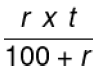
in which formula “r” is the rate of sales tax, expressed as a percentage, which was in force on the day before the fixed date and “t” is the said amount.
(11) The adjustment in terms of subsection (9) shall be made in the tax period of the registered operator under this Act which, as nearly as possible, corresponds with the tax period of the registered operator which would, but for the repeal of the repealed Act, have applied under that Act.
(12) The adjustment in terms of subsection (9) shall be made by including in the amounts of output tax accounted for in terms of subsection (3) of section fifteen in respect of the relevant tax period under this Act the amount of sales tax attributable to the amount that would have been accounted for under the repealed Act and by including in the amounts of input tax accounted for under subsection (3) of section fifteen such amount as would have been accounted for under section 28A of that Act. amended by the Finance Act 10 of 2003
(13) Notwithstanding subsection (8), where fixed property has been disposed of under an agreement for the sale of such property concluded before the fixed date, the disposal of such property under such sale shall be deemed not to be a supply of goods for the purposes of this Act:
Provided that where an agreement for the construction of improvements on such property has been concluded before the said date and the consideration payable under such agreement is in terms of the Stamp Act, required for the purpose of the payment of stamp duty to be added to the consideration payable in respect of the acquisition of such property, such agreement and the agreement for the sale of the property shall for the purposes of this paragraph be deemed to be one agreement for the sale of the property.
(14) Where any registered operator who is on or with effect from the fixed date registered under section twenty-three and on that date— amended by the Finance Act 10 of 2003
(a) carries on a construction, civil engineering or similar trade and has on hand a stock of materials acquired by him prior to that date in order to be used by him for the purpose of incorporation in any building or other structure or work of a permanent nature to be erected, constructed, assembled, installed, extended or embellished by him in the course of such trade, and sales tax has been borne by him in respect of such materials; or
(b) has on hand a stock of consumable goods or maintenance spares acquired under sales concluded by him or the importation by him prior to the fixed date for the purpose of consumption or use in the course of his trade, and sales tax has been borne by him in respect of such sales or importation;
and on or after that date any item of such stock is withdrawn by him for the purpose referred to in paragraph (a) or the purpose referred to in paragraph (b), as the case may be, the registered operator may, provided he has taken stock of such materials, consumable goods or maintenance spares, as the case may be, and he retains properly prepared stock lists in respect of such stocktaking, include in the amounts of input tax deducted by him under subsection (3) of section fifteen in respect of the tax period during which such item is withdrawn, the amount of sales tax borne by him in respect of that item:
Provided that where the registered operator does not maintain records which are adequate enough to determine when items are withdrawn from such stocks or the sales tax so borne thereon in respect of sales to him of such items, the Commissioner may, on application by the registered operator, authorise him to deduct the actual sales tax borne by him in respect of such sales or an amount of sales tax which on the basis of a reasonable calculation represents the amount of sales tax so borne by him on the stocks in equal instalments by way of inclusions in the input tax deducted by the registered operator in his tax returns over a period of 2 years or such shorter period as the Commissioner may allow.
(15) Where sales tax has been borne by any registered operator, being a person who is on or with effect from the fixed date registered under section twenty-three in respect of the acquisition of goods, other than fixed property or goods incorporated therein, under a sale or the importation of goods and such goods are held by him on the fixed date as trading stock as defined in section 2 of the Taxes Act, whether or not the registered operator is liable for normal tax under that Act, the registered operator may, provided he has taken stock of such goods and he retains properly prepared stock lists in respect of such stocktaking, include the amount of that tax in the amount of input tax deducted by him under subsection (3) of section fifteen in respect of the tax period during which such goods are supplied by him in the course or furtherance of his trade: amended by the Finance Act 10 of 2003
Provided that where it appears to the Commissioner that the keeping of records for the purposes of subsection (14) can be dispensed with without prejudice to revenue collections, the Commissioner may, on application by the registered operator, authorise him to deduct the sales tax on stocks of such goods so held by the registered operator in equal instalments by way of inclusions in the input tax deducted by the registered operator in his tax returns over a period of 6 months or such shorter period as the Commissioner may allow.
(16) Where any person—
(a) is on the day before the fixed date registered as a registered operator under the repealed Act;
(b) at the end of that day has in his possession goods, as defined in the repealed Act, which he has not disposed of or which he has disposed of under a sale but for which he has not received full payment and in either case sales tax was not borne by him on acquisition; and
(c) on the fixed date is not a registered operator for the purposes of this Act;
he shall for the purposes of the repealed Act be deemed to have applied such goods on the day referred to in paragraph (a) to a use or consumption contemplated in section 16 of that Act.
(17) Any sales tax payable under the repealed Act in respect of the taxable value of such goods as are referred to subsection (16) shall be payable at the rate specified in the Charging Act and shall be paid to the Commissioner within the period of 3 months reckoned from the day after the fixed date, without penalty.
(18) Every person who on the fixed date is a registered operator under the repealed Act shall be deemed to be a registered operator under this Act if, on that date, he is liable to be registered in terms of Part IV of this Act.
83 Act binding on State, and effect of certain exemptions from taxes
(1) This Act shall bind the State.
(2) No provision contained in any other law providing for an exemption from any tax or duty shall be construed as applying or referring, as the case may be, to the tax leviable under this Act unless such tax is specifically mentioned in such provision. amended by the Finance Act 2 of 2005 with effect from the 12th September, 2005.
84 Repeal of Cap. 23:08 and savings
(1) Subject to subsection (2), the Sales Tax Act [Chapter 23:08] is repealed.
(2) Notwithstanding the repeal of the repealed Act—
(a) anything done or commenced or any decision made in terms of the repealed Act which, immediately before the fixed date had or was capable of acquiring effect shall continue to have or be capable of acquiring, as the case may be, effect as if it had been done, commenced or made in terms of this Act;
(b) any provision of the repealed Act shall remain in force for the purposes of the levying, payment, assessment and recovery of sales tax levied under that Act which is in terms of that Act deemed to have become payable on a date falling before the fixed date and matters connected therewith.
85 Amendment of Acts
The Act specified in each Part of the Second Schedule is amended to the extent set out in that Part.
FIRST SCHEDULE
Repealed by the Finance Act 10 of 2003; inserted by Finance Act 13/2023 w.e.f. 29th December, 2023.
(Section 83A)
CIVIL PENALTY ORDERS
ARRANGEMENT OF PARAGRAPHS
Section
1. Interpretation in Schedule.
2. Power of Commissioner to issue civil penalty orders and categories thereof.
3. Variation of certain penalties and limitation of multiple of penalties.
4. Service and enforcement of civil penalties and destination of proceeds thereof.
5. Limitation on issuance and enforcement of civil penalty orders.
6. Additional due process requirements before service of certain civil penalty orders.
7. Judicial review of civil penalty orders.
8. Evidentiary provisions in connection with civil penalty orders.
9. Designated officers.
Interpretation in Schedule
1
In this Schedule, unless the context otherwise requires—
“approved”, in relation to a fiscal memory device, means such a device whose use is approved by the Authority, having been sold for registered operators to use by or on behalf of a supplier approved by the Authority;
“approved fiscal memory device” means an approved electronic device used to record sales of taxable supplies;
“citation clause”, in relation to a civil penalty order, is the part of the order in which the Reserve Bank names the defaulter and cites the provision of this Act in respect of which the default was made or is alleged, together with (if necessary) a brief statement of the facts constituting the default;
“designated officer” means an employee or the Reserve Bank or other person designated and authorised by the Governor of the Reserve Bank to undertake duties in connection with the implementation of this Schedule;
“fiscal tax invoice or receipt” means a tax invoice or receipt printed from an approved fiscal device used by a registered operator;
“fiscalised electronic register” means an electronic sales register having such features as may be prescribed;
“penalty clause”, in relation to a civil penalty order, is the part of the order that fixes the penalty to be paid by the defaulter, and “fixed penalty clause” and “cumulative penalty clause” shall be construed accordingly;
“remediation clause” in relation to a civil penalty order, is the part of the order that stipulates the remedial action to be taken by the defaulter;
“tax invoice” means a fiscal tax invoice provided by a registered operator, and printed by a fiscalised electronic register or fiscal memory device used by a registered operator for the purpose of section twenty.
Power of Commissioner to issue civil penalty orders
2
(1) Where default is made in complying with any provision of this Act or of regulations or order made under this Act for which a civil penalty is specified to be leviable, the Commissioner may, in addition to, and without derogating from, any criminal or non-criminal penalty that may be imposed by this Act or any other law for the conduct constituting the default, serve upon the defaulter a civil penalty order specified in subparagraph (2), (4), (6) or (8) or any combination of such orders as the provision in question may allow.
(2) A natural or legal person registered or required to be registered as an operator under this Act shall be guilty of a civil default if he, she or it, being required to do so by this Act or any regulations made thereunder, fails to acquire and install an electronic fiscal device for the recording of all transactions subject to tax under this Act.
(3) In the event of default in complying with subparagraph (2), the civil penalty shall provide for—
(a) the suspension of the operation of the civil penalty order for a period of 48 hours from the date of its service to enable the alleged defaulter to show cause to the designated officer why the order should not have been issued, that is to say, to show that the order was issued in error:
Provided that—
(i) if no such cause is shown within that period the order shall be deemed to have been issued with effect from the beginning of such period
(ii) if within that period it is shown that the order was issued in error the designated officer shall withdraw the order and make the appropriate notation of withdrawal in the civil penalty register;
(b) a fixed penalty of US$1,000 (or its equivalent in Zimbabwe dollars at the auction rate of exchange that prevailed on the date of service of the order); and
(c) the suspension of the penalty imposed under paragraph (b) conditionally upon the defaulter taking the appropriate remedial action, that is to say, installing the electronic fiscal device for the recording of all transactions subject to tax under this Act, no later than 96 hours after the civil penalty is served on the defaulter;
(d) a cumulative penalty over a period not exceeding 90 days—
(i) of US$25 (or its equivalent in Zimbabwe dollars at the auction rate of exchange that prevailed on the date of service of the order) for each day (beginning on the day after the day in which the 96-hour period for complying with the civil penalty order expired) during which the defaulter fails to take the appropriate remedial action; and
(ii) if the fixed penalty referred to in paragraph (b) becomes payable because the defaulter fails timeously to take the appropriate remedial action, US$25 (or its equivalent in Zimbabwe dollars at the auction rate of exchange that prevailed on the date of service of the order) for each day (beginning on the day after the day in which the 96-hour period for complying with the civil penalty order expired) during which the defaulter fails to pay the fixed penalty or any outstanding amount thereof.
(4) A natural or legal person registered or required to be registered as an operator under this Act shall be guilty of a civil default if he, she or it, being required by the Commissioner to interface with Fiscalisation Data Management System, fails to do so within 96 hours from the service upon him, her or it of a civil penalty order to do so.
(5) In the event of default in complying with subparagraph (4), the civil penalty order shall provide for—
(a) the suspension of the operation of the civil penalty order for a period of 48 hours from the date of its service to enable the alleged defaulter to show cause to the designated officer why the order should not have been issued, that is to say, to show that the order was issued in error:
Provided that—
(i) if no such cause is shown within that period the order shall be deemed to have been issued with effect from the beginning of such period;
(ii) if within that period it is shown that the order was issued in error the designated officer shall withdraw the order and make the appropriate notation of withdrawal in the civil penalty register;
(b) a cumulative penalty over a period not exceeding ninety days —
(i) of US$ 25 (or its equivalent in Zimbabwe dollars at the auction rate of exchange that prevailed on the date of service of the order) for each day (beginning on the day after the day in which the 96-hour period for complying with the civil penalty order expired) during which the defaulter fails to take the appropriate remedial action; and
(ii) if the fixed penalty referred to in subparagraph (i) becomes payable because the defaulter fails timeously to take the appropriate remedial action, US$ 25 (or its equivalent in Zimbabwe dollars at the auction rate of exchange that prevailed on the date of service of the order) for each day during which the defaulter fails to pay the first-mentioned cumulative penalty or any outstanding amount thereof (the maximum period of 90 days for the payment of the first-and second-mentioned cumulative penalties shall run concurrently).
(6) A natural or legal person registered or required to be registered as an operator under this Act shall be guilty of a civil default if he, she or it, deliberately tampers with an electronic fiscal device with the result that it fails faithfully to record any transactions subject to tax under this Act (for which purpose an allegation to that effect must be supported by an affidavit sworn by or on behalf of a supplier of an electronic fiscal device that the device in question was deliberately tampered with for that purpose, and such affidavit must be attached to the civil penalty order served upon the defaulter).
(7) In the event of default in complying with subparagraph (6), the civil penalty order shall provide for—
(a) the suspension of the operation of the civil penalty order for a period of 48 hours from the date of its service to enable the alleged defaulter to show cause to the designated officer why the order should not have been issued, that is to say, to show that the order was issued in error:
Provided that if—
(i) no such cause is shown within that period the order shall be deemed to have been issued with effect from the beginning of such period;
(ii) within that period it is shown that the order was issued in error the designated officer shall withdraw the order and make the appropriate notation of withdrawal in the civil penalty register;
(iii) the designated officer is satisfied that the electronic fiscal device was not or cannot be shown to have been deliberately falsified, the designated officer may instead issue a civil penalty order in terms of subsection (8), which shall have effect from the date of its service;
and
(b) a fixed penalty of US$1,000 (or its equivalent in Zimbabwe dollars at the auction rate of exchange that prevailed on the date of service of the order); and
(c) the rectification or replacement of the falsified electronic fiscal device and the installing of the rectified or replaced electronic fiscal device no later than 96 hours after the civil penalty is served on the defaulter; and
(d) a cumulative penalty over a period not exceeding 90 days —
(i) of US$50 (or its equivalent in Zimbabwe dollars at the auction rate of exchange that prevailed on the date of service of the order) for each day (beginning on the day after the day in which the 96-hour period for complying with the civil penalty order expired) during which the defaulter fails to take the appropriate remedial action; and
(ii) for as long as the fixed penalty or any part of it referred to in paragraph (b) remains unpaid, of US$50 (or its equivalent in Zimbabwe dollars at the auction rate of exchange that prevailed on the date of service of the order) for each day (beginning on the day after the day of the service of the civil penalty order) during which the defaulter fails to pay the fixed penalty or any outstanding amount thereof;
(8) A natural or legal person registered or required to be registered as an operator under this Act shall be guilty of a civil default if (in the absence of evidence of tampering as described in subparagraph (6)) he, she or it, fails to rectify or replace a faulty electronic fiscal device (that is to say, one that does not faithfully to record any transactions subject to tax under this Act) within 96 hours from the service upon him, her or it of a civil penalty order to do so.
(9) In the event of default in complying with subparagraph (8), the civil penalty order shall provide for—
(a) the suspension of the operation of the civil penalty order for a period of 48 hours from the date of its service to enable the alleged defaulter to show cause to the designated officer why the order should not have been issued, that is to say, to show that the order was issued in error:
Provided that—
(i) if no such cause is shown within that period the order shall be deemed to have been issued with effect from the beginning of such period;
(ii) if within that period it is shown that the order was issued in error the designated officer shall withdraw the order and make the appropriate notation of withdrawal in the civil penalty register;
(b) a cumulative penalty over a period not exceeding 90 days —
(i) of US$25 (or its equivalent in Zimbabwe dollars at the auction rate of exchange that prevailed on the date of service of the order) for each day (beginning on the day after the day in which the 96-hour period for complying with the civil penalty order expired) during which the defaulter fails to take the appropriate remedial action; and
(ii) if the fixed penalty referred to in subparagraph (i) becomes payable because the defaulter fails timeously to take the appropriate remedial action, US$25 (or its equivalent in Zimbabwe dollars at the auction rate of exchange that prevailed on the date of service of the order) for each day during which the defaulter fails to pay the first-mentioned cumulative penalty or any outstanding amount thereof (the maximum period of 90 days for the payment of the first and second-mentioned cumulative penalties shall run concurrently).
(4) A natural or legal person registered or required to be registered as an operator under this Act shall be guilty of a civil default if he, she or it, being required by the Commissioner to interface with Fiscalisation Data Management System, fails to do so within 96 hours from the service upon him, her or it of a civil penalty order to do so.
(5) In the event of default in complying with subparagraph (4), the civil penalty order shall provide for—
(a) the suspension of the operation of the civil penalty order for a period of 48 hours from the date of its service to enable the alleged defaulter to show cause to the designated officer why the order should not have been issued, that is to say, to show that the order was issued in error:
Provided that—
(i) if no such cause is shown within that period the order shall be deemed to have been issued with effect from the beginning of such period;
(ii) if within that period it is shown that the order was issued in error the designated officer shall withdraw the order and make the appropriate notation of withdrawal in the civil penalty register;
(b) a cumulative penalty over a period not exceeding 90 days —
(i) of US$25 (or its equivalent in Zimbabwe dollars at the auction rate of exchange that prevailed on the date of service of the order) for each day (beginning on the day after the day in which the 96-hour period for complying with the civil penalty order expired) during which the defaulter fails to take the appropriate remedial action; and
(ii) if the fixed penalty referred to in subparagraph (i) becomes payable because the defaulter fails timeously to take the appropriate remedial action, US$25 (or its equivalent in Zimbabwe dollars at the auction rate of exchange that prevailed on the date of service of the order) for each day during which the defaulter fails to pay the first-mentioned cumulative penalty or any outstanding amount thereof (the maximum period of 90 days for the payment of the first- and second-mentioned cumulative penalties shall run concurrently).
Variation of certain penalties and limitation of multiple of penalties
3
A single civil penalty order may be served in respect of 2 or more defaults committed by the defaulter within a single period not exceeding 6 months, but if the aggregate of such defaults results in the defaulter becoming liable (either immediately or within 7 days from the service of the civil penalty order) to a penalty or combined penalties in excess of the equivalent of US$50,000, the Commissioner may select one or any combination of those defaults which will not result in the defaulter becoming so liable, while reserving the right to serve a second or further additional civil penalty orders in respect of the defaults not so selected if the defaulter does not comply with the first civil penalty order.
Service and enforcement of civil penalties and destination of proceeds thereof
4
(1) References to the Commissioner serving upon a defaulter any civil penalty order in terms of this Act (or serving upon an alleged defaulter a show cause notice referred to in paragraph 6 (“Additional due process requirements before service of certain civil penalty orders”), are to be interpreted as requiring the Commissioner to deliver such order (or such notice) in writing to the defaulter (or alleged defaulter) concerned in any of the following ways—
(a) by registered post addressed to the defaulter’s (or alleged defaulter’s) principal office in Zimbabwe or other place of business of the defaulter (or alleged defaulter); or
(b) by hand delivery to the director, manager, secretary or accounting officer of the defaulter (or alleged defaulter) in person (through a designated officer, or a police officer), or to a responsible individual at the place of business of the defaulter; or
(c) by delivery through a commercial courier service to the defaulter’s (or alleged defaulter’s) principal office in Zimbabwe or other place of business of the defaulter (or alleged defaulter); or
(d) by electronic mail or telefacsimile at the electronic mail or telefacsimile address furnished by the defaulter (or alleged defaulter) to the Commissioner:
Provided that in this case a copy of the order or notice shall also be sent to the electronic mail or telefacsimile address of the defaulter’s (or alleged defaulter’s) legal practitioner in Zimbabwe.
(2) The Commissioner shall not extend the period specified in a civil penalty order for compliance therewith except upon good cause shown to him or her by the defaulter, and any extension of time so granted shall be noted by the Commissioner in the civil penalty enforcement register referred to in paragraph 8 (“Evidentiary provisions in connection with civil penalty orders”).
(3) If in this Act both the defaulting company and every officer of the company who is in default are said to be liable to a civil penalty order, the Commissioner may—
(a) in the same civil penalty order, name the defaulting company and every officer concerned as being so liable separately, or issue separate civil penalty orders in respect of the defaulting company and each of the officers concerned;
(b) may choose to serve the order only upon the defaulting company if, in his or her opinion (which opinion the Commissioner shall note in the civil penalty enforcement register referred to in paragraph 8, there may be a substantial dispute of fact about the identity of the particular officer or officers who may be in default:
Provided that nothing in this section affects the default liability of officers of the company mentioned in subparagraph (8).
(4) The Commissioner may, in the citation clause of a single civil penalty order, cite 2 or more defaults relating to different provisions of this Act if the defaults in question—
(a) occurred concurrently or within a period not exceeding 6 months from the first default or defaults to the last default or defaults; or
(b) arose in connection with the same set of facts.
(5) Where in this Act the same acts or omissions are liable to both criminal and civil penalty proceedings, the Commissioner may serve a civil penalty order at any time before the commencement of the criminal proceedings in relation to that default, that is to say at any time before—
(a) summons is issued to the accused person for the prosecution of the offence; or
(b) a statement of the charge is lodged with the clerk of the magistrates court before which the accused is to be tried, where the offence is to be tried summarily; or
(c) an indictment has been served upon the accused person, where the person is to be tried before the High Court;
as the case may be, but may not serve any civil penalty order after the commencement of the criminal proceedings until after those proceedings are concluded (the criminal proceedings are deemed for this purpose to be concluded even if they are appealed or taken on review).
(For the avoidance of doubt it is declared that the acquittal of an alleged defaulter in criminal proceedings does not excuse the defaulter from liability for civil penalty proceedings).
(6) Upon the expiry of the 90 day period within which any civil penalty order of any category must be paid, the defaulter shall be guilty of an offence and liable to a fine not exceeding level 6 or to imprisonment for a period not exceeding one year or to both.
(7) The amount of any civil penalty shall—
(a) be payable to the Authority and shall form part of the funds of the Authority; and
(b) be a debt due to the Authority and shall be sued for in any proceedings in the name of the Authority in any court of competent civil jurisdiction:
Provided that for this purpose, the court of the provincial magistrate for the mining province concerned shall be deemed to have jurisdiction to hear the suit even if the monetary amount sought would otherwise exceed its prescribed jurisdiction.
(8) Proceedings in a court for the recovery of a civil penalty shall be deemed to be proceedings for the recovery of a debt as if the defaulter had acknowledged the debt in writing.
(9) If the defaulter is a company, private business corporation or other body corporate, every officer of the company, corporation or body corporate, mentioned in the civil penalty order by name or by office, is deemed to be in default and any one of them can, on the basis of joint and several liability, be made by the Commissioner to pay the civil penalty in the event that the company, corporation or body corporate does not pay.
(10) If the Authority in terms of subsection (7)(b) desires to institute proceedings to recover the amounts of 2 or more civil penalties in any court of competent civil jurisdiction, it may, after notice to all interested parties, bring a single action in relation to the recovery of those penalties if the orders relating to those penalties—
(a) were all served within the period of 12 months preceding the institution of the proceedings; and
(b) were served—
(i) on the same company or private business corporation; or
(ii) in relation to the same default or set of defaults, whether committed by the same company or private business corporation or different companies or private business corporations; or
(iii) on 2 or more companies or private business corporations whose registered offices are in the same area of jurisdiction of the court before which the proceedings are instituted.
(11) Unless the Authority has earlier recovered in civil court the amount outstanding under a civil penalty order, a court convicting a person of an offence against subparagraph (6), may on its own motion or on the application of the prosecutor and in addition to any penalty which it may impose give summary judgement in favour of the Authority for the amount of any outstanding civil penalty due from the convicted defaulter.
Limitation on issuance and enforcement of civil penalty orders
5
(1) No civil penalty order may be issued more than 12 months from the date when the infringement or alleged infringement occurred or ceased to occur.
(2) Any amount owing under a civil penalty order is a debt owed to the State for the purposes of section 15(b) of the Prescription Act [Chapter 8:11].
Additional due process requirements before service of certain civil penalty orders
6
(1) Except in relation to any civil penalty order which the Authority is satisfied that it does not involve any substantive dispute of fact, the Authority must notify the alleged defaulter in writing of the Authority’s intention to serve the civil penalty order (which notice shall hereafter be called a “show cause notice”) and the Authority’s reasons for doing so and shall call upon the alleged defaulter to show cause within the period specified in the notice (which period shall not be less than 48 hours or more than 7 days from the date of service of the notice) why the civil penalty order should not be served upon him or her, and, if the alleged defaulter—
(a) makes no representations thereto within the notice period, the Authority shall proceed to serve the civil penalty order, or
(b) makes representations showing that the alleged default in question was not wilful or was due to circumstances beyond the alleged defaulter’s control or for any other reason specified in the civil penalty provision in question, the Authority shall not proceed to serve the civil penalty order; or
(c) makes no representations of the kind referred to in paragraph (b) the Authority shall proceed to serve the civil penalty order.
(2) In addition, where it appears to the Authority from written representations received under subparagraph (1) that there may be a material dispute of fact concerning the existence or any salient aspect of the alleged default, the Authority must afford the alleged defaulter an opportunity to be heard by making oral representations before the Authority, for which purpose the Authority shall have the same powers, rights and privileges as are conferred upon a commissioner by the Commissions of Inquiry Act [Chapter 10:07], other than the power to order a person to be detained in custody, and sections 9 to 13 and 15 to 19 of that Act shall apply with necessary changes in relation to the hearing and determination before the Authority of the alleged default in question, and to any person summoned to give evidence or giving evidence before the Commissioner or a designated officer.
(3) Any person who is aggrieved by a civil penalty order made after the making of representations in terms of this section may appeal against the order to a judge of the High Court, and the judge may make such order as he or she thinks fit:
Provided that the lodging of the appeal shall not of itself suspend the obligation of the defaulter to comply with the civil penalty order.
Judicial review of civil penalty orders
7
If the Authority does not issue a show cause order under paragraph 6 before issuing and serving a civil penalty order under paragraph 5. the defaulter or alleged defaulter may seek review of the Authority’s action by the High Court, but the lodging of the application for review shall not of itself suspend the obligation of the defaulter to comply with the civil penalty order.
Evidentiary provisions in connection with civil penalty orders
8
(1) For the purposes of this Schedule the Authority shall keep a civil penalty enforcement register wherein shall be recorded—
(a) the date of service of every show cause notice, the name and the physical or registered office address of the person upon whom it was served, the civil penalty provision in relation to which the alleged defaulter was alleged to be in default, and whether or not the show cause notice was followed by the service of a civil penalty order:
Provided that a record or an adequate summary of any representations made in response to a show cause notice shall be made by way of an entry or cross-reference in, or annexure to, the register, and if recorded by way of annexure or cross-reference, the representations must be preserved for a period of at least 3 years from the date when they were made to the Authority;
(b) the date of service of every civil penalty order, the name and the physical or registered office address of the person upon whom it was served, the civil penalty provision in relation to which the defaulter was in default, and the date on which the civil penalty order was complied with or the penalty thereunder was recovered as the case may be.
(2) A copy of—
(a) any entry in the civil penalty enforcement register, and of any annexure thereto or record cross-referenced therein, authenticated by the Authority as a true copy of the original, shall on its mere production in any civil or criminal proceedings by any person, be prima facie proof of the contents therein; or
(b) any civil penalty order that has been served in terms of this Act, authenticated by the Authority as a true copy of the original, shall on its mere production in any civil or criminal proceedings by any person, be prima facie proof of the service of the order on the date stated therein upon the defaulter named therein, and of the contents of the order.
Designated officers
9
(1) Any reference to the Authority in this Schedule shall be construed as a reference to a designated officer.
(2) The Commissioner shall furnish each designated officer with a certificate signed by or on behalf of the Commissioner stating that he or she has been appointed as a designated officer for the purpose of this Schedule.
(3) A designated officer shall, on demand by any person affected by the exercise of the powers conferred upon the Commissioner under this Schedule, exhibit the certificate issued to him or her in terms of subsection (2).
SECOND SCHEDULE
(Section 85)
PART I Insolvency Act [Chapter 6:04 Now replaced by Chapter 6:07 – Editor.
In section 106 by the deletion—
(a) from the heading of “Sales tax” and the substitution of “Value added tax”;
(b) of “Sales Tax Act [Chapter 23:08]” and the substitution of “Value Added Tax Act [Chapter 23:12]”.
PART II Hire-Purchase Act [Chapter 14:09]
In the Schedule in—
(a) item A 1.by the deletion of “sales tax” and the substitution of “value added tax”;
(b) item B 1.by the deletion of “sales tax” and the substitution of “value added tax”.
PART III Customs and Excise Act [Chapter 23:02]
1
In section 34 in subsection (4) by the deletion of “Sales Tax Act [Chapter 23:08]” and the substitution of “Value Added Tax Act [Chapter 23:12]”.
2
In section 46 in subsection (3) by the deletion of “Sales Tax Act [Chapter 23:08]” and the substitution of “Value Added Tax Act [Chapter 23:12]”.
PART IV Finance Act [Chapter 23:04]
1
In section 28—
(a) by the repeal of the definition of “principal Act” and the substitution of—
““principal Act” means the Value Added Tax Act [Chapter 23:12];”
(b) by the repeal of the definition of “sales tax” and the substitution of—
““value added tax”. means the tax imposed in terms of Part III of the principal Act;”.
2
By the repeal of section 29 and the substitution of—
“29 Rates of value added tax and tax on imports
The rate of value added tax and tax on imports shall be as set out in the Schedule.”
PART V Fiscal Appeal Court Act [Chapter 23:05]
1.
In section 12—
(a) by the deletion in the definition of “tax” of “(a) the Sales Tax Act [Chapter 23:08],” and the substitution of “(a) the Value Added Tax Act [Chapter 23:12],”;
(b) by the deletion in the definition of “tax Act” of “(a) the Sales Tax Act [Chapter 23:08];” and the substitution of “(a) the Value Added Tax Act [Chapter 23:12];”.
PART VI Revenue Authority Act [Chapter 23:11]
1.
In the long title by the repeal of “the Sales Tax Act [Chapter 23:08],”
2.
In section 46, in subparagraph (i) of paragraph (c) by the deletion of—
(a) “sales tax” and the substitution of “value-added tax”;
(b) “sales tax leviable under the Sales Tax Act [Chapter 23:08]” and the substitution of “the value-added tax leviable under the Value Added Tax Act [Chapter 23:12]”.
3.
By the repeal of the First Schedule and the substitution of
“FIRST SCHEDULE
(Sections 2, 21, 34A, 34B and 38)
Specified Acts
1.
Betting and Totalizator Control Act [Chapter 10:02]
2.
Capital Gains Tax Act [Chapter 23:01]
3.
Customs and Excise Act [Chapter 23:02]
4.
Income Tax Act [Chapter 23:06]
5.
Income Tax (Transitional Period Provisions) Act [Chapter 23:07]
6.
Stamp Duties Act [Chapter 23:09]
7.
Tax Reserve Certificates Act [Chapter 23:10]
8.
Value Added Tax Act, 2002.”
4
In the Third Schedule by the repeal of Part VII.
PART VII BANKING Act [Chapter 24:20]
In the Schedule by the repeal of Part IX.